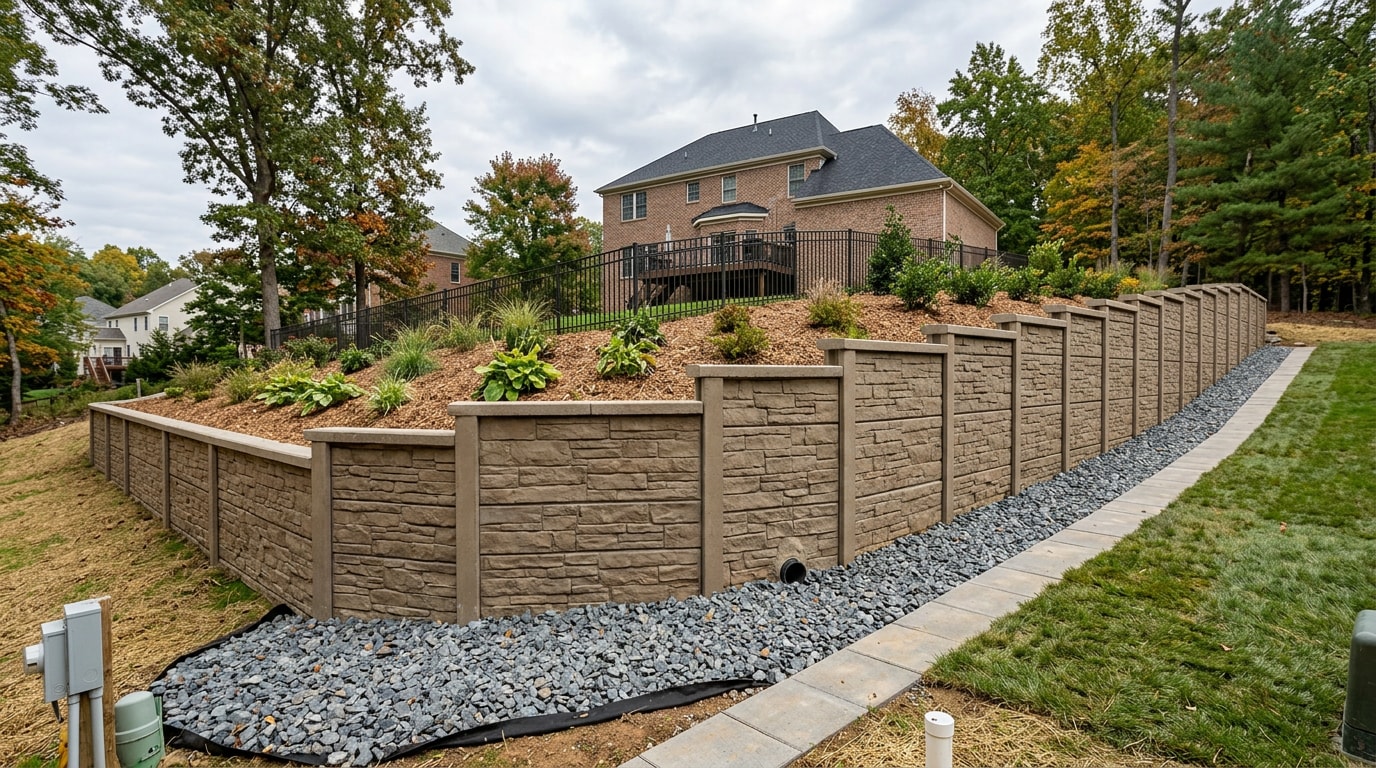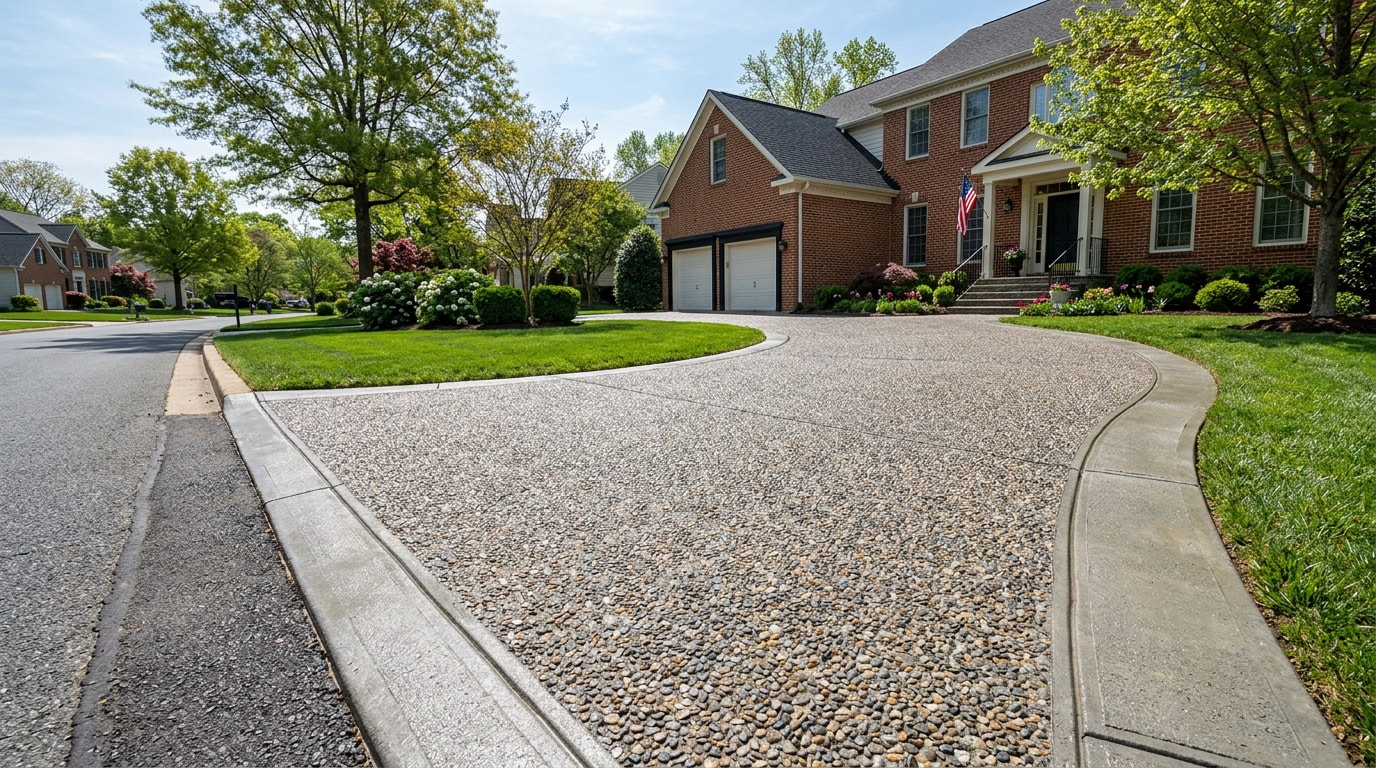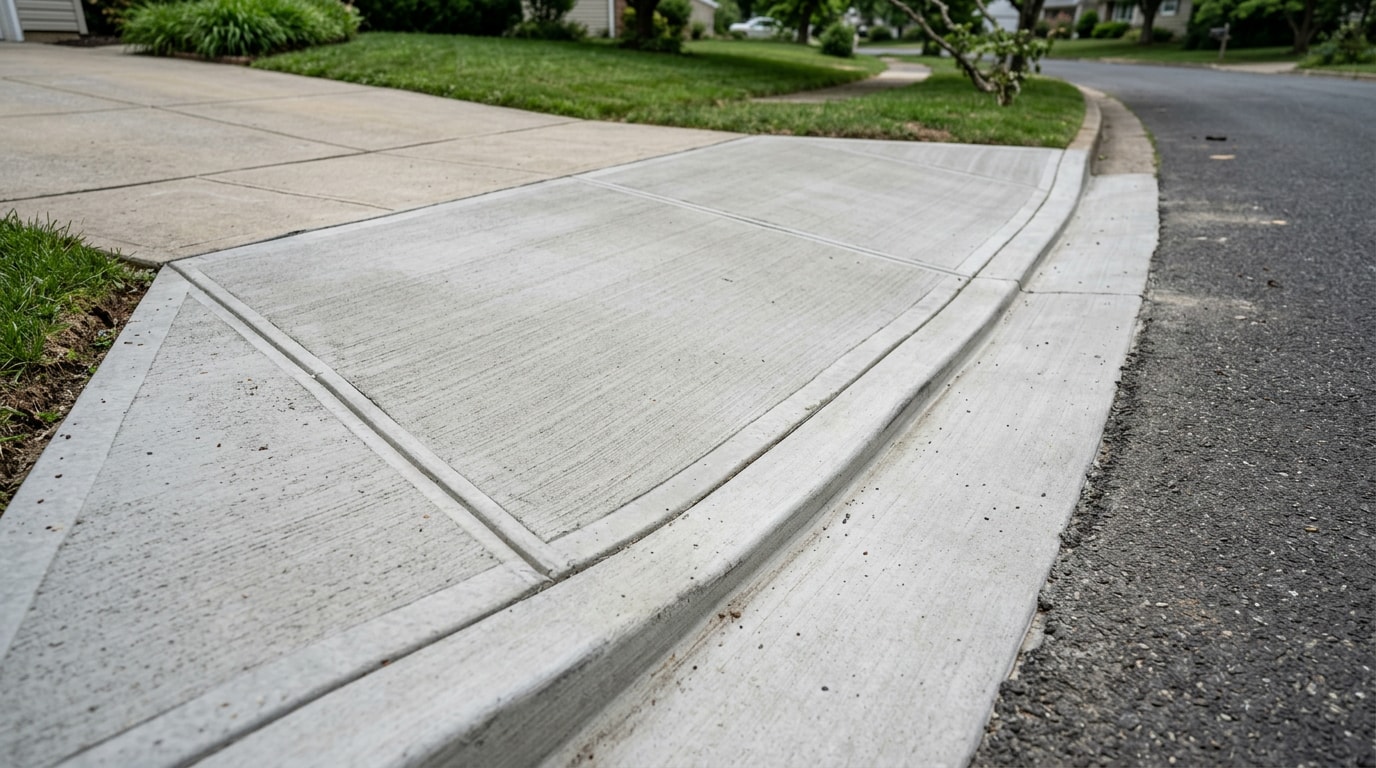
A concrete apron in Glen Burnie, MD is the thick, reinforced slab that connects your driveway to the public street. It's a small section of pavement, but it carries more weight, code scrutiny, and permit paperwork than any other part of a driveway. Here's what it actually costs, what Anne Arundel County requires, and where homeowners get surprised.
Visit SEJ Paving to see our services and request a free estimate.
Concrete Apron Cost in Glen Burnie, MD
Apron pricing comes down to three variables: material, slab size, and what's happening underneath the surface. Soil drainage and existing grade can shift a quote more than most homeowners expect, since a poor subgrade means extra excavation and base material before concrete ever gets poured.
Here's a general 2026 comparison for local material pricing:
| Material | Install Cost (per sq ft) | Typical Lifespan |
|---|---|---|
| Concrete | $8–$16 | 25–30 years |
| Asphalt | $4–$7 | 15–20 years |
| Pavers | $12–$20 | 20–25 years |
Concrete usually costs more per square foot on an apron than on the rest of the driveway. Aprons take heavier, repeated loads from vehicles turning in off the street, which means extra thickness and steel or fiber reinforcement. The National Ready Mixed Concrete Association recommends ordering concrete with a specified strength of 4,000 psi for exterior slabs, consistent with the requirements of ACI 332, the code for residential concrete , when the slab will see freeze-thaw cycles and deicing salt, exactly the conditions a Glen Burnie apron faces every winter.
Additional Costs to Budget For
Base installation estimates often leave out line items that show up once work starts:
- Removal of the old apron. A cracked slab adds demolition and haul-away cost, typically a few hundred dollars depending on thickness.
- Drainage corrections. Grading issues near the street can require added base material or a drainage pipe.
- Reinforcement upgrades. Heavier rebar schedules for high-traffic driveways cost more than wire mesh.
- Permit fees. County right-of-way review adds a fixed cost on top of the pour itself (more on that below).
Ask for a written breakdown of these line items before work starts, not after. For a number based on your actual property and street frontage, request a free concrete quote from a local estimator.
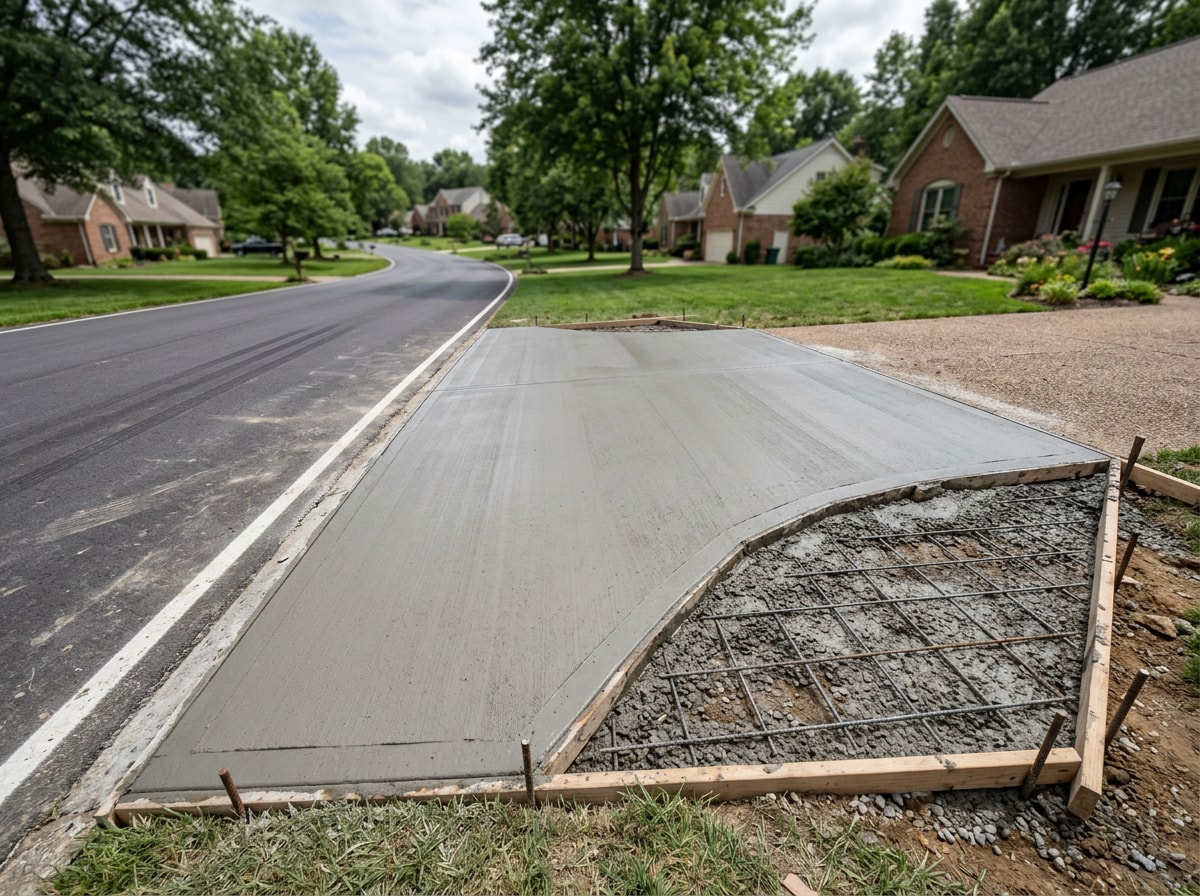
Anne Arundel County Code and Permit Rules
Glen Burnie aprons sit mostly within the county's right-of-way, not fully on private property, which is why this section of pavement answers to different rules than the rest of your driveway.
Anne Arundel County's own driveway access standards spell out some specifics most homeowners never see until they're mid-project:
- Minimum thickness. County standards call for
all driveway aprons and adjoining sidewalk to be concrete, seven inches thick minimum, using a County-approved concrete mix .
- One driveway rule.
Only one driveway, meaning one ingress and egress point, is permitted per property in Anne Arundel County .
- Intersection setback.
No portion of a driveway can be built within 50 feet of any intersection radius .
- Drainage pipe. Depending on the lot,
it may be necessary to install a minimum 12-inch-diameter pipe under the driveway to handle roadside drainage .
- Expansion joints.
County-approved expansion joint material must separate the driveway from the curb .
Because the apron extends into the right-of-way, a Residential Driveway Access Permit is required for most replacements. The current fee structure runs an Individual Permit Fee of $64 plus an Individual Permit Base Inspection Fee of $147 , though fees are subject to change, so confirm current amounts before budgeting. Full details and the online application are on the county's Right-of-Way Permitting page.
Who Pays for Apron Repairs?
Even though the slab sits in the county right-of-way, Anne Arundel County policy is clear on maintenance. Driveway aprons exist solely to provide ingress and egress between private property and the public right-of-way, so county policy makes the private property owner responsible for maintaining the apron and any drainage pipe underneath it. The full breakdown is on the county's Bureau of Highways FAQ page.
Materials: Concrete vs. Asphalt vs. Pavers
Concrete dominates apron work for a reason: it handles turning loads and freeze-thaw cycles better than asphalt without the upfront cost of pavers. Asphalt is cheaper but softens in summer heat and deforms faster under repeated turning stress. Pavers look upscale and are easy to spot-repair, but joints between units can shift under heavy vehicle traffic unless the base is compacted correctly.
For most Glen Burnie homes, a standard broom-finished concrete apron balances cost, durability, and code compliance better than the alternatives.
Installation Steps and Why Experience Matters
A proper apron pour follows a predictable sequence:
- Excavate to the correct depth below finished grade.
- Lay and compact a gravel base (6 inches minimum under most municipal specs).
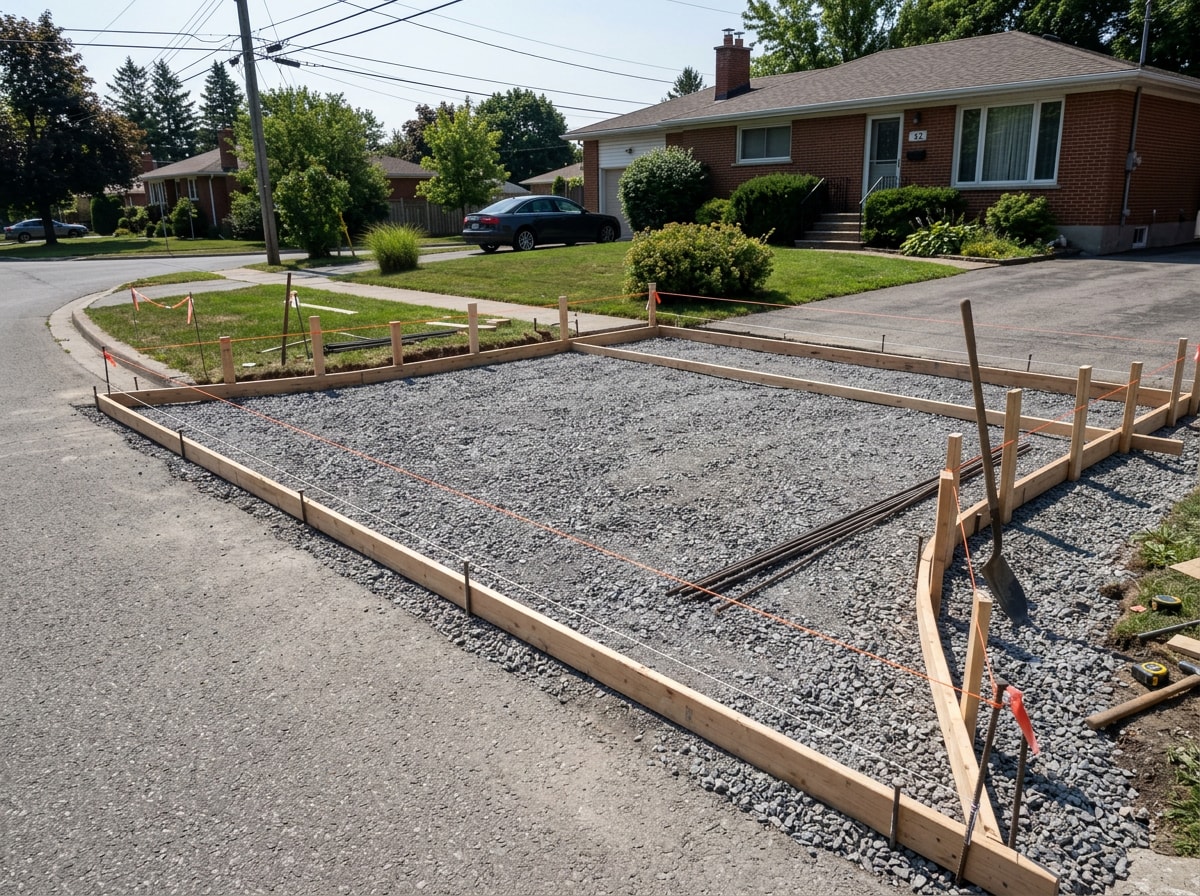
- Set forms to the required width, length, and slope.
- Install reinforcement, rebar or wire mesh, per the apron's load requirements.
- Pour in sections rather than one continuous slab, and finish with proper slope toward the gutter.
- Cure before opening to traffic. County guidance allows vehicle use
three days after the apron is poured , though full cure strength takes closer to 28 days.
None of these steps are exotic, but getting base density, slope, and curing timing right at the same time takes repetition most homeowners don't have. Skipping compaction or rushing the pour is the most common reason DIY aprons crack within a year or two. Our crews see this firsthand on repair calls: an apron poured without proper sub-base compaction almost always fails at the joint closest to the street first, well before the rest of the driveway shows any wear.
Concrete Apron Services in Glen Burnie, MD
Apron replacement rarely happens in isolation. Most homeowners pair it with other exterior work during the same mobilization to save on setup costs and keep material pricing consistent across the project. Common pairings include a full concrete driveway installation, a concrete patio installation, or concrete repair on adjoining sidewalk sections.
Site conditions matter just as much as the pour itself. Proper site preparation and a clean concrete finishing pass are what separate an apron that lasts three decades from one that cracks in three years. For a broader look at how concrete projects come together across the area, see our guide to concrete work in Glen Burnie, MD.
Browse our full concrete contractor services or visit the Glen Burnie, MD area page to see recent local work. Ready to move forward? Get a free estimate and we'll walk the site with you before quoting anything.
FAQ
What is a concrete apron?
A concrete apron is the reinforced slab that connects a driveway to the public street, creating a smooth, structurally sound transition. It's built thicker than the rest of the driveway because it absorbs the most direct traffic stress.
How thick does a concrete apron need to be in Anne Arundel County?
County standards require aprons and adjoining sidewalk sections to be a minimum of seven inches thick, poured in a County-approved concrete mix . That's noticeably thicker than the 4 to 5 inches typical of standard driveway flatwork.
Do I need a permit to replace my driveway apron in Glen Burnie?
Yes. Because the apron sits in the public right-of-way, Anne Arundel County requires a Residential Driveway Access Permit before replacement work begins. Current fees run $64 for the permit plus $147 for the base inspection, though you should confirm current rates with the county before budgeting.
Who is responsible for apron repair, the homeowner or the county?
The homeowner. County policy requires that the private property owner be responsible for the maintenance of the apron and, if present, the drainage pipe underneath , even though the slab technically sits on county-owned right-of-way.
How soon can I drive on a new concrete apron?
County guidance allows vehicle traffic three days after the apron is poured . Full design strength takes about 28 days, so avoid heavy trucks, trailers, or sharp turns on the new slab until then.
What materials are commonly used for driveway aprons?
Concrete and asphalt are the most common choices, picked for durability and weather resistance in Maryland's freeze-thaw climate. Pavers or brick show up occasionally as a decorative, higher-cost alternative.
If you're planning related concrete work nearby, our guide on precast concrete walls in Towson, MD covers a different but related permitting process worth knowing about before you start digging.