Precast concrete walls in Towson, MD let you skip weeks of job-site curing by setting factory-built panels in a single day. SEJ Paving crews work with both precast and poured wall systems across Baltimore County, and the right call depends on your soil, slope, and timeline. Here's how the two systems compare, what actually drives pricing, and what Maryland's retaining wall rules require before you break ground.
What Are Precast Concrete Walls?
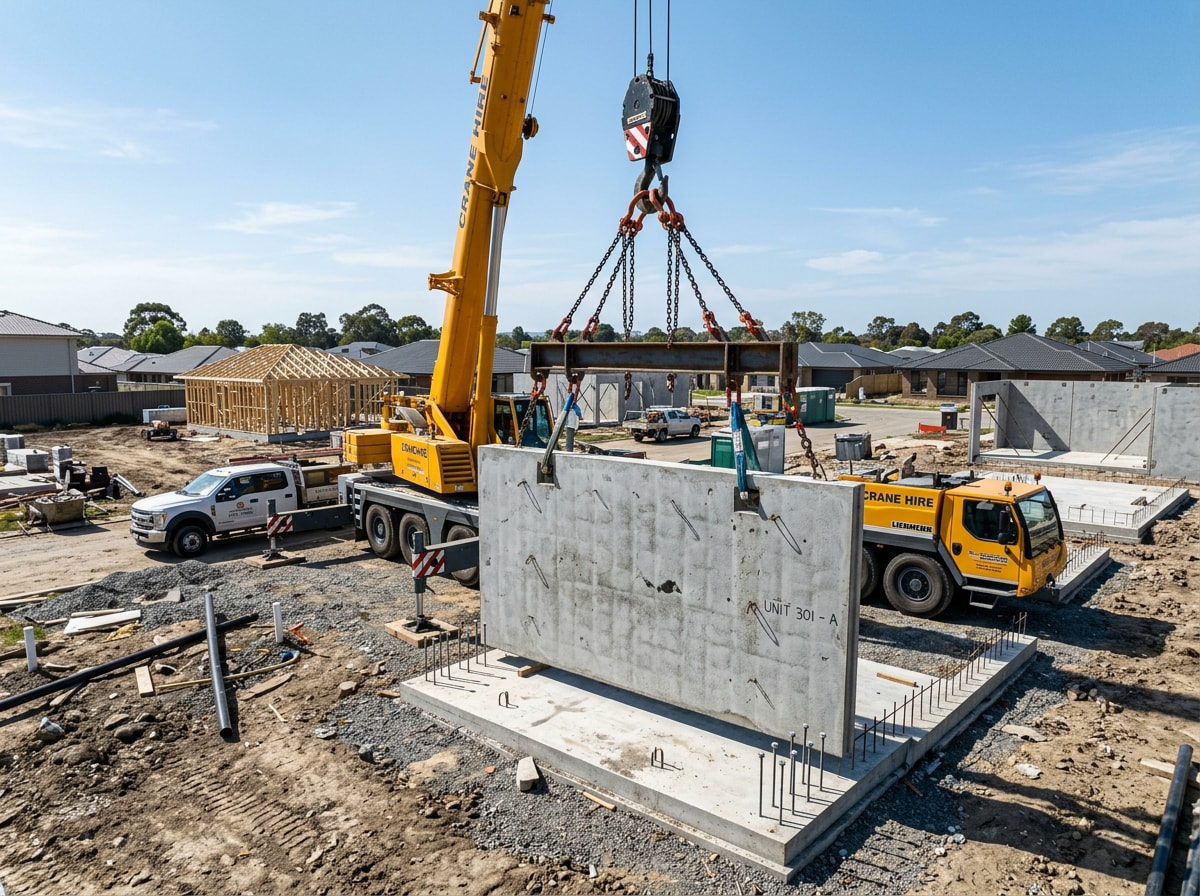
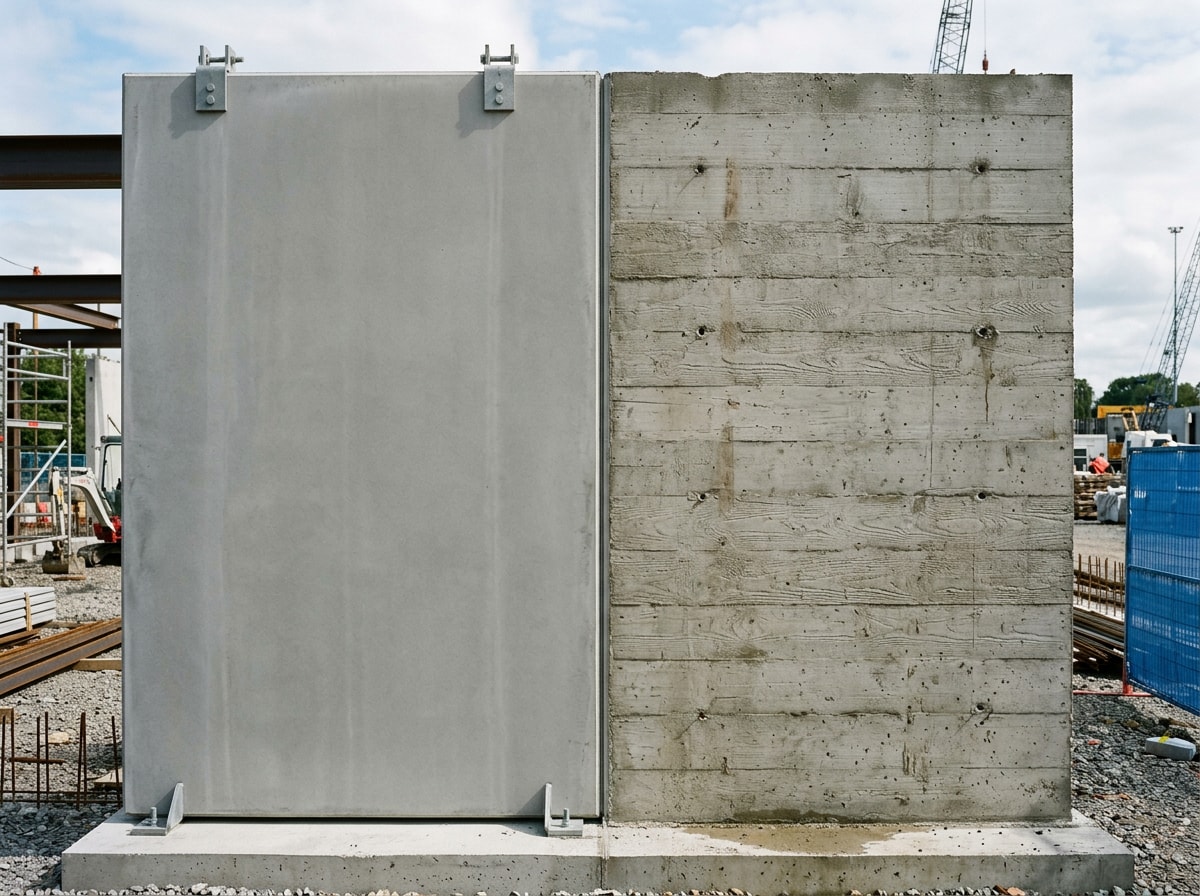
Precast concrete walls are panels cast off-site in a factory, cured under controlled conditions, then trucked in and set by crane. That's the opposite of poured-in-place concrete, which is mixed and formed right on your lot and left to cure outdoors, exposed to whatever Maryland's weather throws at it that week.
Because the panels already arrive at full design strength, site work shifts away from formwork and curing time and toward footings, grading, and connections.
Most residential and light-commercial projects around Towson use one of three panel types:
- Solid panels – dense concrete walls for foundations, property walls, and basic structural uses.
- Insulated panels – a foam core sandwiched between two concrete layers for built-in thermal performance.
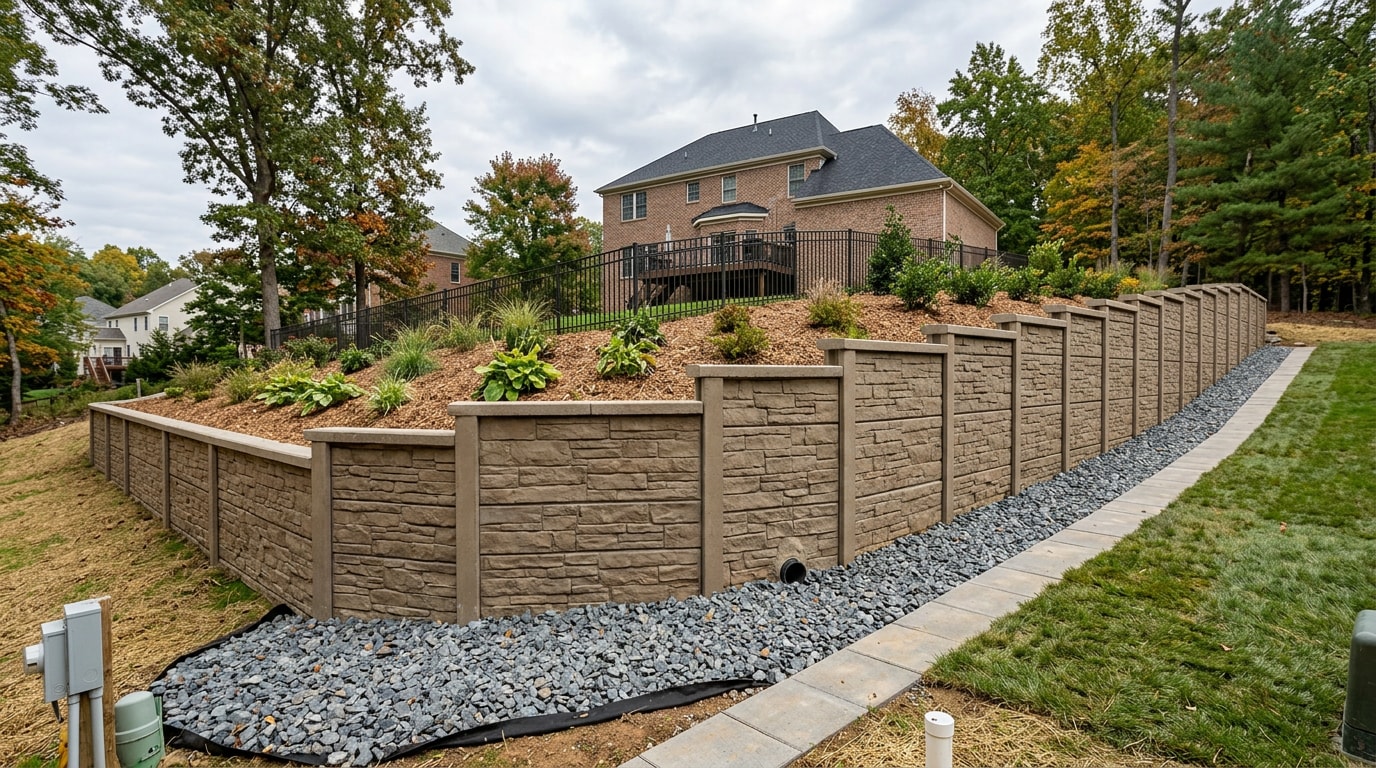
- Precast retaining panels – engineered specifically to resist lateral soil pressure on sloped lots.
Solid and insulated panels usually cover foundation and basement needs, while precast retaining walls address the sloped, erosion-prone yards common throughout Baltimore County. Commercial jobs often mix panel types depending on structural and insulation requirements.
Precast vs. Poured Concrete Walls: Cost, Speed, and Strength
This is the real decision point for most Towson-area homeowners and contractors. Both systems can deliver a durable wall, but the trade-offs around cost, speed, and site conditions usually tip the scale one way.
| Factor | Precast Concrete | Poured Concrete |
|---|---|---|
| Install speed | Panels can often be set in a single day once footings are ready | Days to weeks, including form building and cure time |
| Weather dependency | Low – panels cure in a factory, not on-site | High – rain and cold can delay a pour |
| Strength consistency | Factory-controlled mix and curing for consistent PSI | Comparable strength when properly engineered, but more variable field conditions |
| Best fit | Standard wall runs, foundations, retaining walls | Irregular foundations and custom-formed layouts |
| Cost per linear foot | Comparable to slightly higher once delivery and crane costs are added | Can edge past precast once weather delays and extended labor stack up |
Poured concrete still earns its place on irregular foundations where a custom-formed wall fits site conditions more precisely. But for standard wall runs, precast generally wins on speed and consistency.
Maryland's clay-heavy soil matters here too. Clay expands and contracts with moisture, creating uneven pressure against basement and retaining walls over time. That cycle is part of why local contractors tend to favor precast or well-engineered poured walls with proper drainage over thinner, non-engineered alternatives.
What Drives Precast Concrete Wall Pricing in Towson, MD
There's no single flat rate for precast wall projects, because so much depends on the site itself. The factors that move pricing most are:
- Panel type – solid, insulated, or engineered retaining panels each carry different material and manufacturing costs.
- Wall height and total linear footage – taller, longer runs need more material and more crane time.
- Site access – tight lots or steep driveways can slow crane setup and add labor hours.
- Delivery distance – how far the panels travel from the precast plant to your Towson address.
- Footing and foundation prep – grading, excavation, and compaction work happen before panels ever arrive.
- Finish and insulation – an insulated core or decorative finish adds cost over a basic solid panel.
Because those variables shift from lot to lot, the only reliable way to get a real number is a site-specific quote. Request a free estimate and we'll walk the site, confirm panel type, and price it against your actual grading and access conditions.
Key Benefits of Precast Concrete Walls
Precast's advantages come down to manufacturing control. Panels cure in a factory rather than outdoors, so they reach consistent strength without the weather delays that can stall a poured pour during a Maryland winter.
- Factory quality control – consistent mix ratios, steady curing temperatures, and inspection before a panel ever leaves the plant. The
National Precast Concrete Association represents manufacturing and supply companies in the precast concrete industry and publishes technical benchmarks worth reviewing before comparing bids.
- Faster installation – once footings are ready, panels can often be set in a day instead of waiting days or weeks for a poured wall to cure.
- Built-in insulation options –
insulated concrete form construction combines concrete and rigid foam for walls that are thick, sturdy, and continuously insulated , and insulated precast panels apply the same principle to cut separate insulation work later.
- Durability – properly manufactured precast holds up well against moisture and the freeze-thaw cycling common in Maryland.
For projects that need grading or excavation ahead of panel delivery, our site preparation and grading and compaction crews handle that groundwork before the crane shows up.
Precast Concrete Retaining Walls in Maryland: Permits, Soil, and Design
Retaining walls deserve their own look, since so many Towson lots sit on slopes where soil movement is a real concern. A retaining wall holds back soil and resists lateral pressure, preventing erosion and slope failure. In Maryland, clay-heavy soil intensifies that pressure because it swells when wet and shrinks when dry, creating repeated stress against the wall.
Permit rules catch a lot of homeowners off guard. A building permit is required for all retaining walls over three feet in Baltimore County, and if the retaining wall is four feet or higher, construction plans must be signed and sealed by a licensed engineer. That's a lower threshold than many homeowners expect, and it's worth confirming before you order panels or pour footings.
If your project involves demolishing or removing an old wall first, our concrete repair team can assess what's salvageable versus what needs to come out. And if you're weighing custom poured forms against precast for a foundation wall, our guide to concrete wall forms in Towson breaks down formwork options in more detail.
SEJ Paving crews serve Towson and the rest of Baltimore County, and we see the same clay-soil pressure issues on nearly every sloped lot we grade.
FAQ
How Much Do Precast Concrete Walls Cost in Towson, MD?
Cost depends on panel type, wall height and length, site access, and how far panels travel from the plant. There's no reliable flat rate, so the most accurate number comes from a site visit and a written quote.
Do Retaining Walls Require a Permit in Baltimore County?
Yes. Baltimore County requires a building permit for any retaining wall over three feet, and walls four feet or higher need construction plans signed and sealed by a licensed engineer. Confirm current rules with the county's permit office before starting work, since requirements can shift.
How Long Does a Concrete Retaining Wall Last?
A properly installed concrete retaining wall, whether precast or poured, is generally built to last several decades with minimal upkeep. Good drainage behind the wall and periodic checks for cracking or shifting are usually all that's needed to keep it performing well.
What's the Difference Between Decorative and Structural Retaining Walls?
A structural retaining wall is engineered to resist lateral soil force and typically requires permitting and design review. A decorative retaining wall is shorter, isn't load-bearing in the same sense, and mainly edges landscaping rather than holding back real soil pressure. Confusing the two can create safety and code issues, so confirm which category your project falls under early.
Do Precast Concrete Walls Require a Lot of Maintenance?
Precast walls are generally low-maintenance thanks to factory-controlled quality and a dense finish that resists weathering better than many site-poured alternatives. Occasional inspection for joint sealant wear or minor surface issues is typically all that's needed.
Ready to compare precast and poured options for your lot? Visit SEJ Paving or get a free estimate and we'll price your project against your actual site conditions.