Concrete wall forms in Towson, MD decide whether your foundation or retaining wall stays straight and crack-resistant for decades. The form material a crew chooses, and how tightly they brace it, matters more than the concrete mix itself. Here's what actually separates a wall that lasts from one that cracks before the warranty is up.
At SEJ Paving, we form footings, foundation walls, and retaining walls across Towson and the surrounding Baltimore County area on a regular basis, and the lessons from those jobs show up throughout this guide.
Concrete Wall Forms & Forming Services We Provide in Towson, MD
Concrete wall forms cover more ground than most property owners expect. For a Towson project, that typically means footings, foundation walls, structural walls for additions or commercial buildings, and retaining walls that hold back soil on sloped lots. Each of these calls for a slightly different forming approach, which is why it helps to understand the two main categories below before you start comparing contractors.
Structural Concrete, Footings & Wall Forms
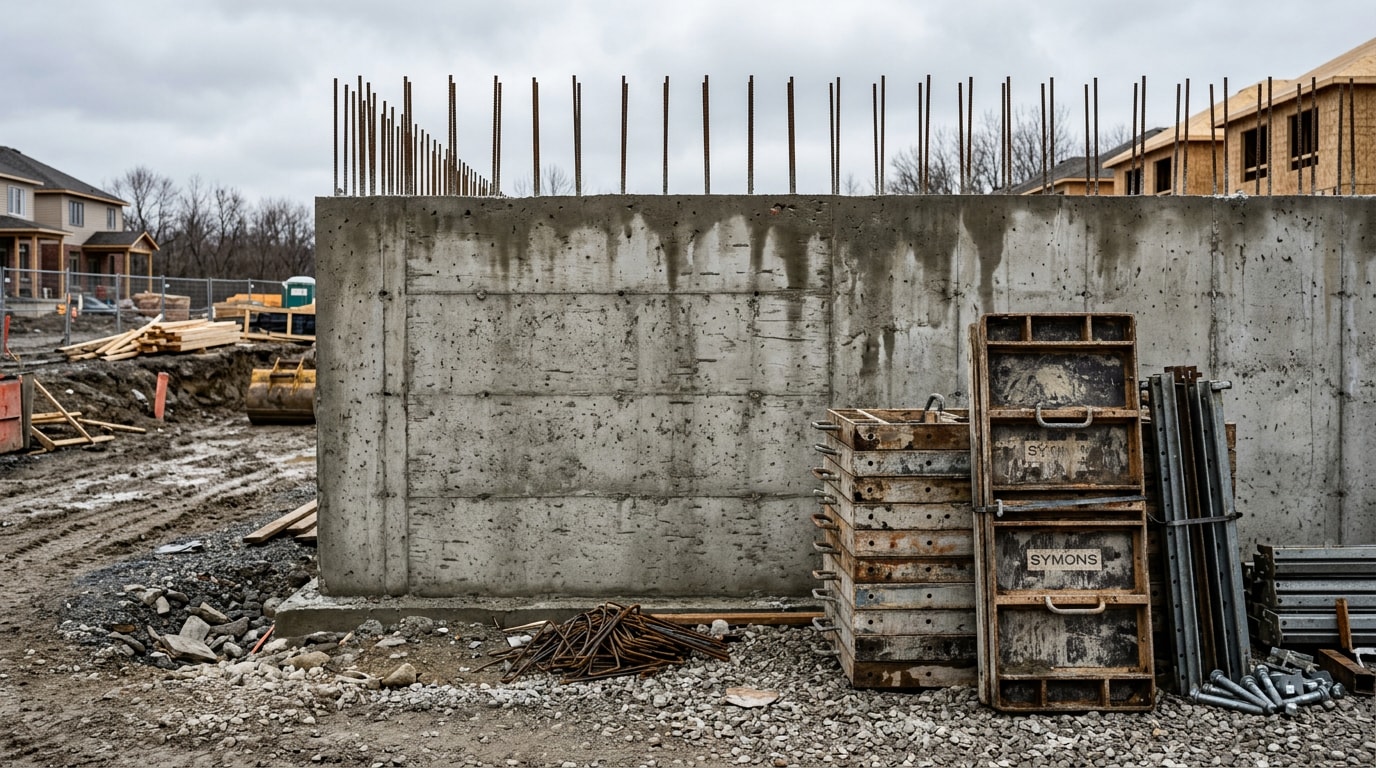
Concrete wall forms are temporary structures, built from plywood, aluminum, steel-ply, or insulated concrete forms (ICF), that hold wet concrete in place while it cures into footings, foundation walls, piers, and structural slabs. Towson contractors select the form material based on wall height, soil conditions, and how many times the forms need to be reused on future jobs.
Here's how the common options compare:
| Form Material | Relative Cost (2026) | Reuse Potential | Typical Application |
|---|---|---|---|
| Plywood/lumber | Low | Low (several pours) | Small residential footings, short walls |
| Aluminum panel | Moderate | High | Repetitive foundation walls, tract housing |
| Steel-ply | Moderate-high | Very high | Commercial foundations, high walls |
| Insulated concrete forms (ICF) | Higher upfront | Stays in place (not reused) | Energy-efficient foundation/basement walls |
Pricing varies by supplier, wall thickness, and site access, so treat the table above as general guidance, not a quote. On a recent Towson foundation-wall pour, our crew used steel-ply forms braced against a sloped lot to keep the wall plumb despite uneven grading, a reminder that form selection often comes down to the specific site, not just the structure type.
For the engineering standard that governs how crews size and brace formwork, the American Concrete Institute's guide to formwork covers aspects from planning and materials to specific design considerations for various structures like walls, slabs, and bridges, emphasizing safety, quality, and economic efficiency in formwork practices . You can review the ACI formwork resources directly. Browse our full concrete contractor services to see where wall forming fits into a larger project.
Retaining Wall Forms & Systems
Retaining walls in Towson are typically built one of two ways: segmental retaining wall block systems (including split-faced block) or poured-in-place concrete using traditional forms. Stone and timber alternatives exist but are less common for structural retaining applications today.
Poured-in-place concrete tends to be the stronger choice on steep slopes, high-water-table lots, or sites with active erosion, since a formed, reinforced wall resists lateral soil pressure better than stacked block in those conditions. Segmental systems can still make sense for shorter, decorative walls. Check our Towson service area page for examples of both wall types we've installed locally.
The Concrete Wall Forming Process: What to Expect
Once a wall-forming job is booked, the work generally follows a predictable sequence:
- Site evaluation
- Excavation and sub-base prep
- Form setup and bracing
- Reinforcement (rebar) placement
- The pour
- Stripping and finishing
Knowing this sequence ahead of time helps Towson homeowners set realistic expectations for timeline and inspections.
Preparation & Form Setup
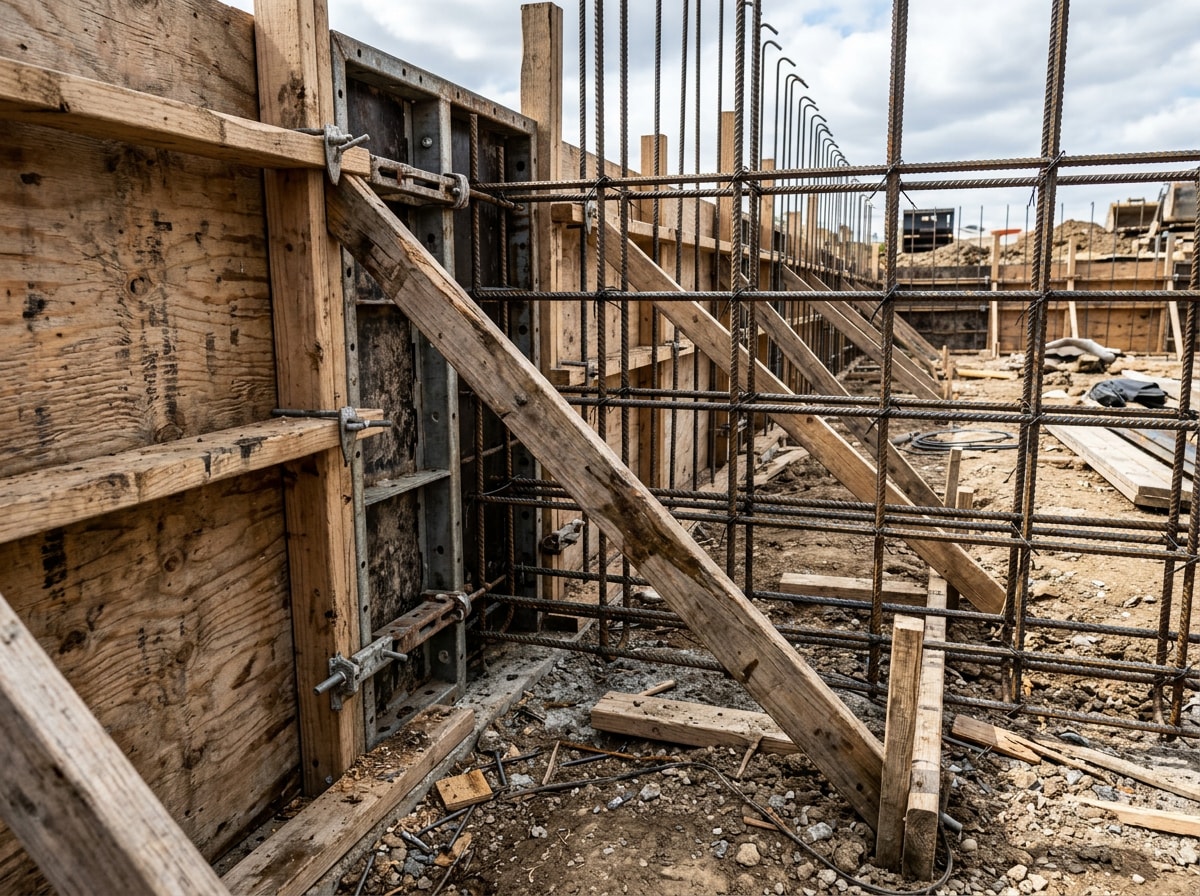
Before any concrete gets poured, the crew excavates to the required depth, grades the area for proper drainage, and compacts the sub-base so the wall has stable footing. Formwork and rebar are then installed according to Maryland building codes, with reinforcement spacing and form bracing checked before the pour is scheduled. Skipping or rushing this stage is one of the more common causes of wall problems down the road.
Built for Local Conditions and Codes
Towson's freeze-thaw cycles and clay-heavy soils put real demands on formed concrete walls. Forms need enough bracing to resist frost heave during curing, and concrete typically needs to reach a minimum strength before forms are stripped, since rushing this step risks surface damage or structural weakness.
Local permitting offices set minimum footing depths based on frost line data. Baltimore-area jurisdictions commonly require footings bearing on undisturbed soil, with a minimum depth below frost line (minimum 30 inches finish grade to bottom) , per Anne Arundel County's construction and inspection requirements, which many neighboring Baltimore County projects follow as a practical benchmark. Control joints are also planned into walls to manage shrinkage cracking rather than let it happen randomly, and drainage planning, gravel backfill, weep holes, or perimeter drains, matters most for retaining walls holding back saturated soil after Maryland's wetter seasons.
Why Work With Us
Before hiring anyone for concrete wall forms, Towson property owners generally want to know two things: will the work hold up, and will it be handled correctly the first time. Experience and planning tend to answer both questions better than price alone.
Experienced Planning
Engineered site prep, drainage planning, and deliberate control-joint placement reduce the odds of long-term cracking and heaving in a formed concrete wall. This kind of planning happens before the first form panel goes up, not after problems appear. See the full range of our concrete contractor services to understand how wall forming fits into driveway, patio, and foundation projects alike. Ready to compare options for your project? Get a free estimate before you commit to a form system.
If you're also weighing concrete options for a driveway or patio, our Glen Burnie concrete guide breaks down pricing and process for those projects too.
Superior Workmanship at Competitive Prices in Towson, MD
Pricing for wall-forming work varies based on form material, wall height and thickness, reinforcement requirements, and site access. A walk-out basement wall costs differently than a retaining wall on a tight urban lot. A free consultation lets us walk your site, discuss your goals, and put together a clear, competitive estimate before any work begins. Request your free estimate to get a project-specific number.
Frequently Asked Questions
Here are the questions we hear most often from Towson-area homeowners and builders before they commit to a wall-forming contractor.
What services do you provide for concrete wall forming in Towson, MD?
We provide footings, foundation and structural walls, piers, columns, and retaining walls for residential and commercial properties throughout Towson, MD, using formwork sized and braced to match each project's load and soil conditions.
How do you ensure quality on structural wall-forming projects?
Quality comes down to careful site preparation, quality materials, experienced crews, and disciplined finishing and curing practices. Every step gets checked against local code requirements before moving to the next phase.
Do you pour concrete walls in extreme winter and summer conditions?
Yes. We adjust mix design, curing time, and form insulation for cold-weather pours, and manage hydration and finishing timing during hot summer conditions. The ACI provisions most applicable to this topic are ACI 305 Guide to Hot Weather Concreting and ACI 306 Guide to Cold Weather Concreting , and you can see a practical breakdown of both in this overview of hot and cold weather concreting.
How long do concrete wall forms stay in place before they're stripped?
It depends on the wall, the mix, and the weather, but forms generally stay in place until the concrete reaches enough strength to support itself without surface damage. Cold weather slows this timeline, so winter pours often need extra curing days before stripping.
Do I need a permit for a retaining wall in Baltimore County?
In most cases, yes, especially once the wall exceeds a few feet in height or holds back a slope near a structure. Your local permitting office can confirm the exact height threshold and footing depth required for your lot.
Do you handle renovation and remodel wall-forming work?
Yes, we handle repair and replacement wall-forming projects alongside new construction, including partial wall replacement and foundation repair work for existing Towson properties.