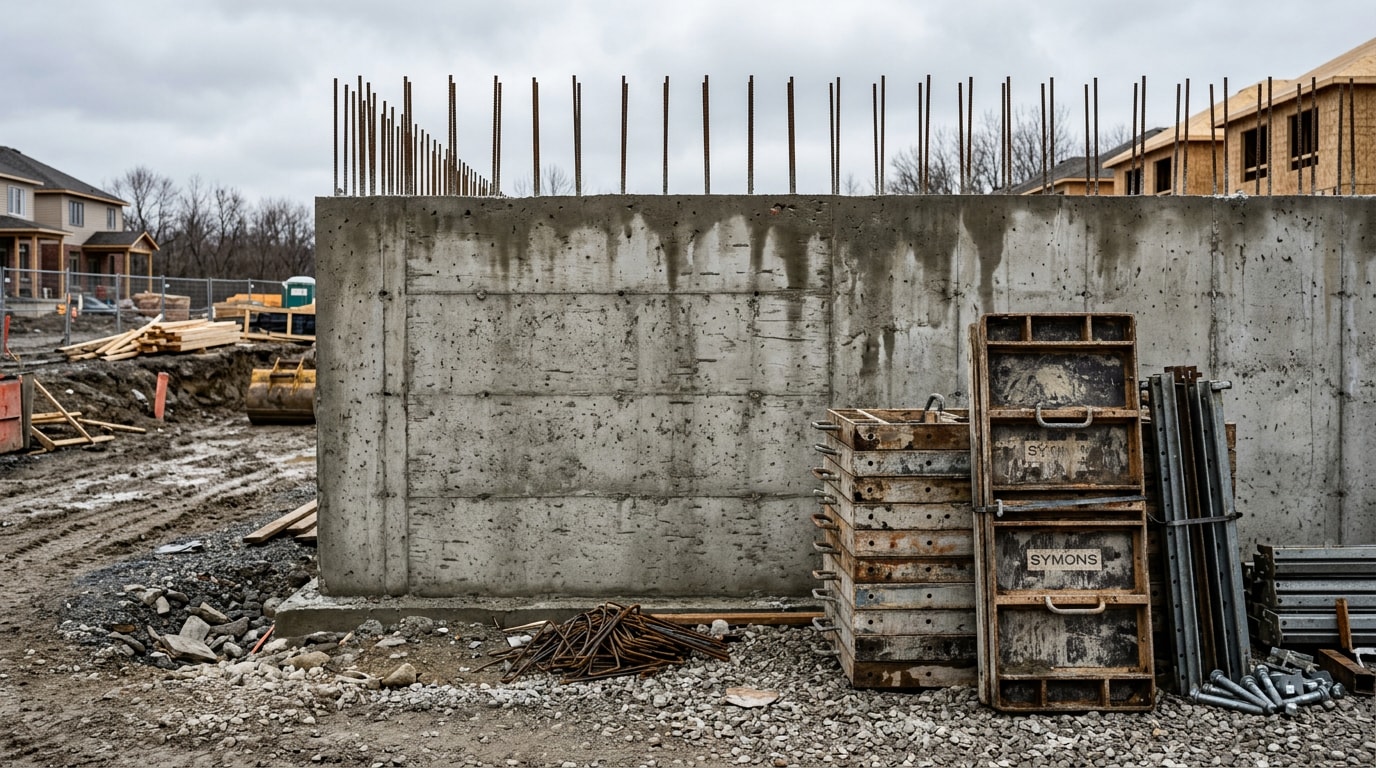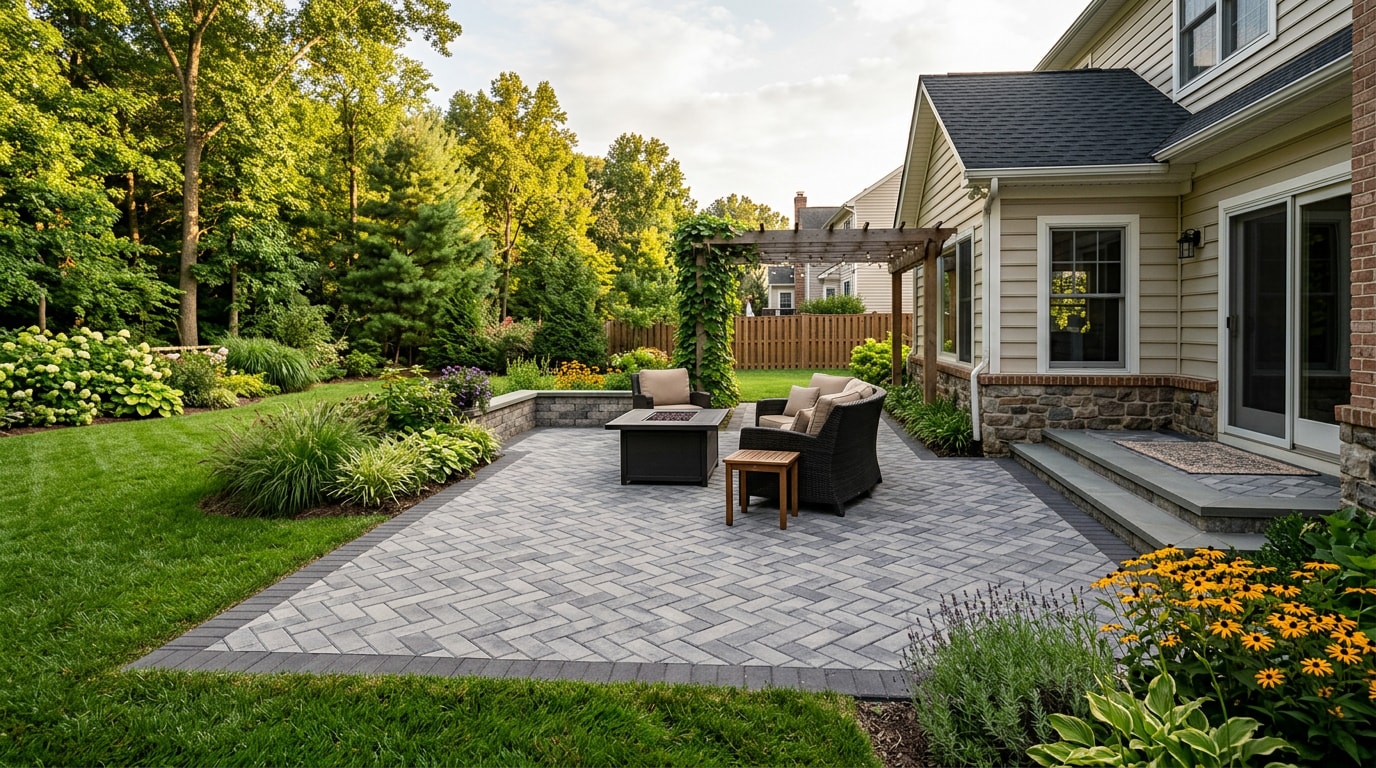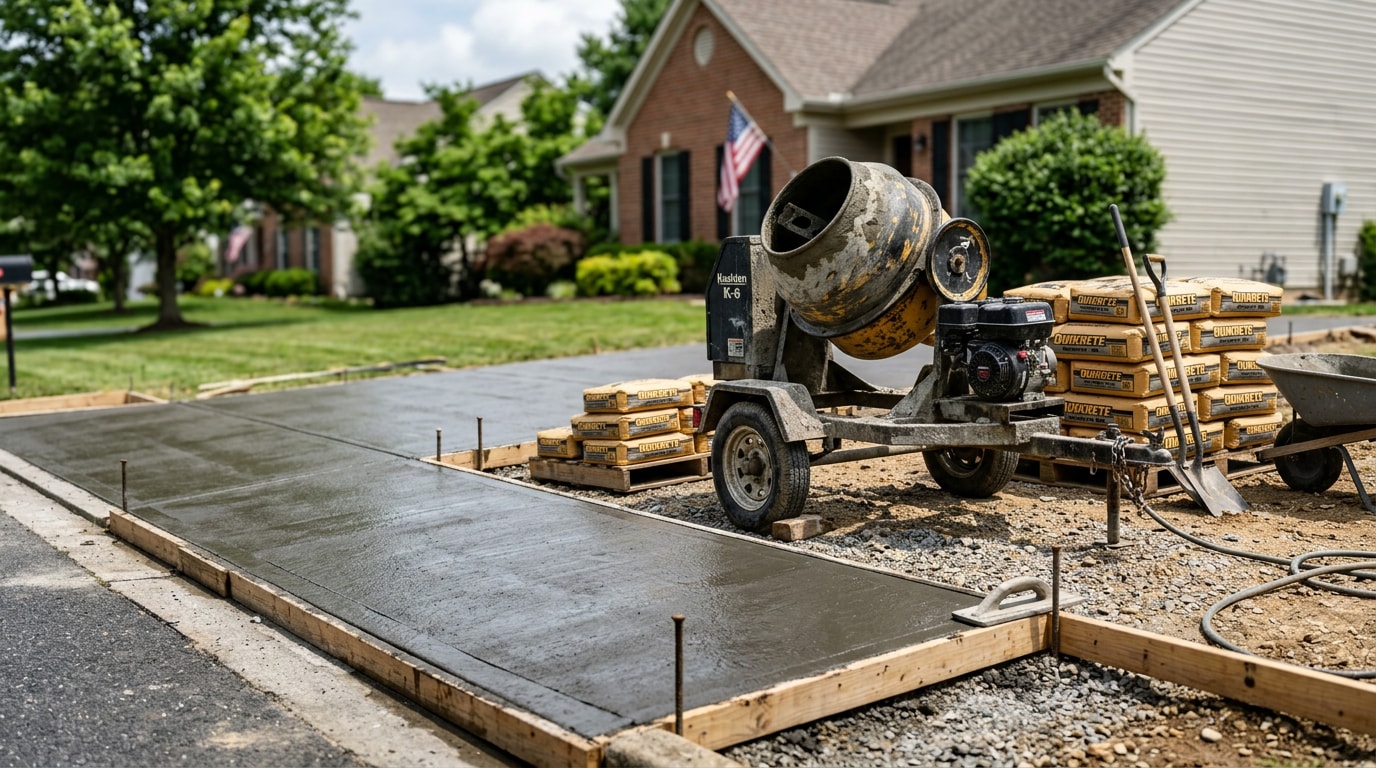
Searching for a concrete mixer for sale in Baltimore County, MD usually means you're staring down a driveway, patio, or foundation pour and wondering what it'll take to mix your own concrete. Capacity, mix type, drum design, and new-versus-used all change how a machine performs on your actual job site. We pour concrete across Baltimore County for a living, so here's the buying advice we'd give a neighbor before they spend money on equipment.
Rent, Hire a Pro, or Buy? Do This Math First
Before you browse a single listing, run the numbers on your actual project. A mixer only pays for itself if you'll use it enough to justify the cost, storage, and maintenance.
Here's a real-world example from our own estimating sheet: a typical 16x25-foot driveway section (400 square feet) poured 4 inches thick needs just under 5 cubic yards of concrete. A 9-cubic-foot towable mixer only holds about one-third of a cubic yard per batch, meaning that single driveway would take roughly 15 separate mixes back to back. That's the math that pushes most driveway and patio jobs toward ready-mix delivery or a professional crew instead of a backyard mixer.
| Option | Best For | Rough Cost | Tradeoff |
|---|---|---|---|
| Rent a mixer | One-time small project | $50-$150/day | No ownership cost, but you're tied to a rental window |
| Buy a mixer | Frequent DIY or small-contractor use | $300-$6,500+ | You own maintenance, storage, and repairs |
| Hire a concrete contractor | Driveways, patios, foundations, larger pours | Project-based quote | No equipment hassle, professional finish, warranty on workmanship |
If your project is bigger than a sidewalk patch or a few fence posts, it's worth comparing that cost against a professional concrete installation quote before you buy anything. A free estimate takes a few minutes and gives you a real number to compare against equipment cost.
Understanding Your Concrete Mixing Needs
Picking the right mixer starts with the project, not the machine. Before browsing any concrete mixer for sale listing, think through your project size, the capacity you'll actually need, and how often you'll use it on jobs around Baltimore County.
Types of Projects and Required Mixer Capacity
For most homeowners, a 1-2 cubic foot mixer handles sidewalks and small patio slabs without trouble. Larger or more complex projects, like foundations, retaining walls, or driveway pours, usually call for 3-8 cubic feet of capacity to keep pace with the work.
A bigger mixer isn't just about volume. It also saves time, since mixing more concrete per batch means fewer stops and starts over the course of a day. DIY and contractor needs diverge here: a weekend project rarely justifies the largest drum size, while a crew pouring foundations regularly benefits from the added capacity.
Type of Concrete Mix
The concrete mix type you're working with should guide your mixer choice as much as project size does. Pan mixers are best for precast concrete operations because they mix a homogenous batch quickly, while reversing drum mixers handle dry concrete mixes more effectively.
Matching mixer to mix type isn't a minor detail. It affects batch consistency and how much rework you'll avoid down the line.
Frequency of Use and Durability Considerations
Anyone using a mixer frequently should invest in a durable machine with a powerful motor. Occasional use, say one or two projects a year, often only needs a smaller, less expensive mixer.
Durability and maintenance matter just as much as upfront cost. Check parts availability and manufacturer support before buying. Long-term value usually favors paying a bit more for a machine that won't need constant repair.
Types of Concrete Mixers For Sale
"Concrete mixer" actually covers several distinct machine types, each suited to different jobs. Knowing the differences between a drum mixer, pan mixer, and continuous mixer helps narrow your search before you start comparing listings around Baltimore County.
Drum Mixers
Drum mixers come in three main variants. Tilting drums allow easy dumping of mixed batches, non-tilting drums suit smaller projects, and reversing drums are built for dry concrete mixes. They're the most common type of cement mixer on the market, available in both electric and gas-powered models with capacities ranging from 3-12 cubic feet, versatile enough for small residential jobs or large commercial pours.
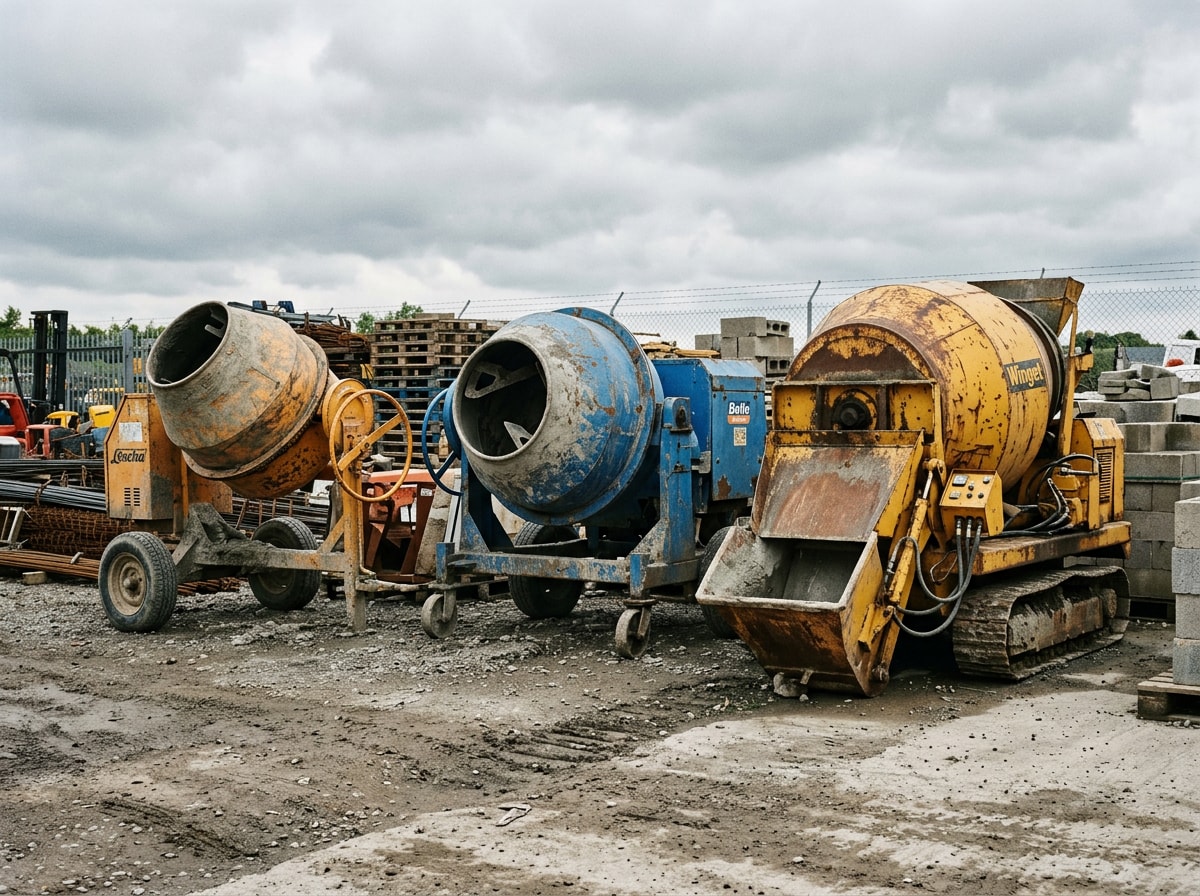
Here's a snapshot of drum mixer categories commonly seen in the Baltimore/Mid-Atlantic market:
| Model Type | Capacity | Power Source | Typical Price Range |
|---|---|---|---|
| Portable tilting drum | 3-4 cu ft | Electric | $300-$700 |
| Commercial tilting drum | 6 cu ft | Gas or electric | $2,500-$4,500 |
| Reversing drum | 6-9 cu ft | Gas | $3,500-$6,000 |
| Towable commercial drum | 9-12 cu ft | Gas | $4,000-$6,500 |
Prices vary by dealer and condition, so treat these as a starting point rather than a fixed quote.
Pan Mixers
Pan mixers use a static pan with rotating blades instead of a rotating drum. They're known for fast mixing times and are common in precast concrete production because they deliver a consistent, homogenous mix. Both stationary and portable versions are available, depending on whether the mixer needs to move between job sites.
Continuous Mixers
Continuous mixers provide a steady concrete supply, mixing ingredients as you add them rather than in separate batches. They're ideal for sites where concrete is needed without interruption, improving job site efficiency on larger or time-sensitive pours where stopping to reload a batch mixer would slow the crew down.
Key Features to Look for in a Concrete Mixer
Once you've settled on a mixer type, the specific features of that model determine how well it holds up and how safely it operates.
Drum Material and Design
Look for drums that resist corrosion and abrasion. A low-quality drum wears faster and drags down overall performance over time. Drum design also affects the finished product. A well-designed drum mixes concrete more thoroughly, producing a more consistent batch after batch.
Mixing uniformity standards and testing guidance are outlined in the American Concrete Institute's guide to measuring, mixing, and placing concrete, a useful reference if you want to understand what "consistent mix" actually means in technical terms.
Ease of Operation and Maintenance
Intuitive controls and a simple interface reduce operator mistakes. Portability matters too; a mixer that's awkward to move around a cramped job site slows everyone down. A design that's easy to clean also saves real time at the end of each pour.
Safety Features
Lockable control panels, automatic shut-off switches, and overload protection all help prevent accidents and equipment damage. These aren't optional extras. Federal construction standards specifically require guardrails and clearing mechanisms on larger mixers, as detailed in OSHA's concrete and masonry construction standard, which is worth reviewing if you're outfitting a job site crew rather than buying for occasional personal use.
New vs. Used Concrete Mixers
Deciding between new and used really comes down to budget versus risk tolerance. Both paths can work well for Baltimore County buyers. It depends on what you're willing to inspect and wait for.
Buying new:
- Guaranteed quality and the latest features
- Backed by a manufacturer's warranty
- Costs more, and some models include features you may never use
Buying used:
- Real cost savings, possibly a higher-quality mixer than new budgets allow
- No warranty if something breaks after purchase
- Requires careful inspection for wear and hidden damage
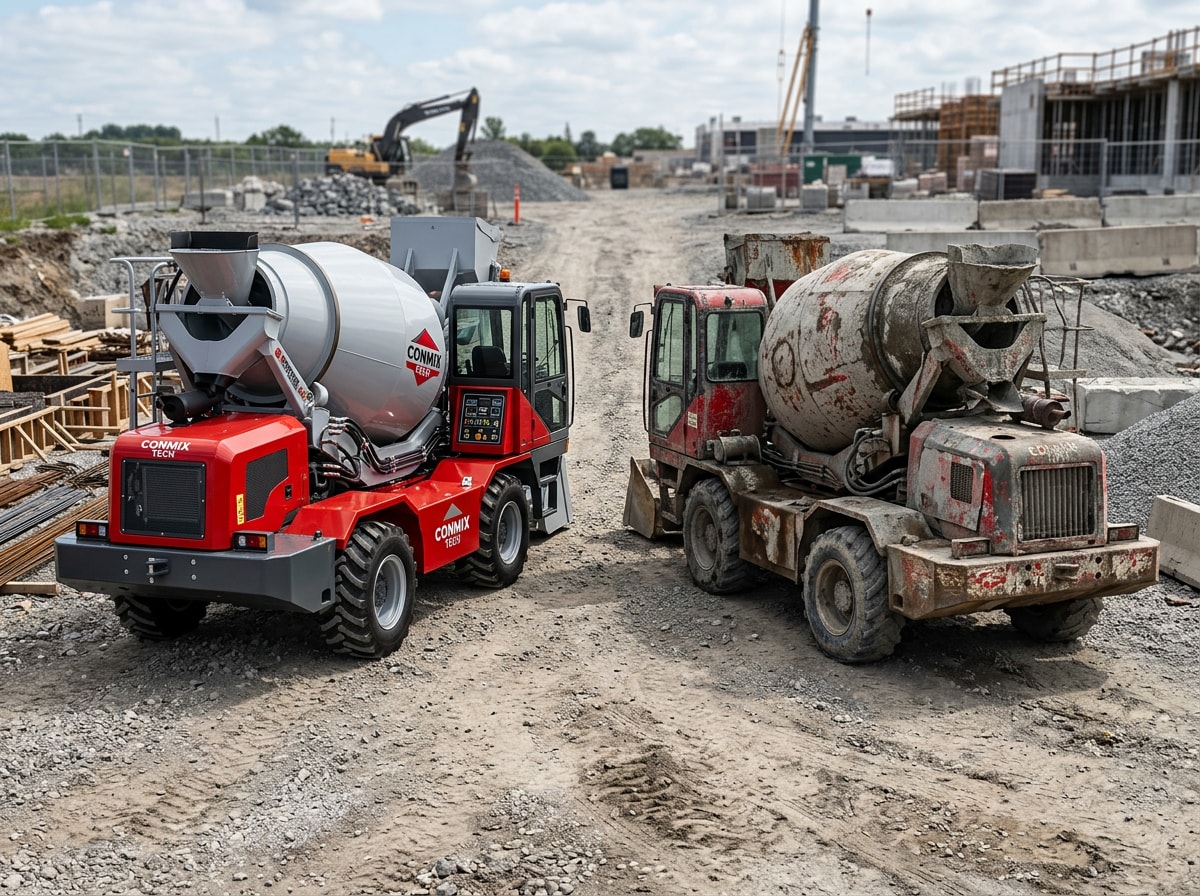
Tips for Inspecting a Used Mixer
Inspect any used mixer thoroughly before handing over payment:
- Check the frame for damage or cracking.
- Examine the drum closely for wear patterns or dents.
- Look at the motor, gears, and controls for corrosion or excessive wear.
- Ask to see the mixer run before you buy, if possible.
- Request any maintenance records the seller has kept.
A quick walk-around isn't enough. Skipping these steps is how buyers end up with a mixer that needs $400 in repairs within the first month.
How Much Does a Concrete Mixer Cost?
Concrete mixer prices vary widely by capacity and power source. A rough 2026 price ladder looks like this:
| Mixer Type | Price Range |
|---|---|
| Portable/wheelbarrow mixer | $225-$900 |
| Commercial drum mixer (6 cu ft) | $2,500-$5,500 |
| Towable/highway mixer (9-12 cu ft) | $4,000-$7,000 |
| Self-propelled mixer | $8,000+ |
In Baltimore County, delivery and shipping fees can add a meaningful amount to the out-the-door price, especially for towable or self-propelled units that require flatbed transport rather than a simple pickup truck haul. Equipment cost trends, including shifts tied to construction machinery pricing nationally, are tracked in the Bureau of Labor Statistics' construction machinery and equipment price index, which gives useful context on whether prices are trending up or holding steady.
Maintenance Tips for Longevity
Mixer maintenance habits determine whether a machine lasts five years or fifteen.
- Clean the drum daily after use. Hardened concrete buildup is difficult to remove later.
- Check and lubricate bearings on a regular schedule.
- Inspect belts and pulleys for wear or slippage before they fail mid-pour.
- Tighten bolts and frame connections monthly, since vibration loosens hardware over time.
- Change engine oil according to the manufacturer's schedule rather than guessing.
None of these steps take long, but skipping them consistently costs far more in repairs down the road.
Where to Buy a Concrete Mixer in Baltimore County
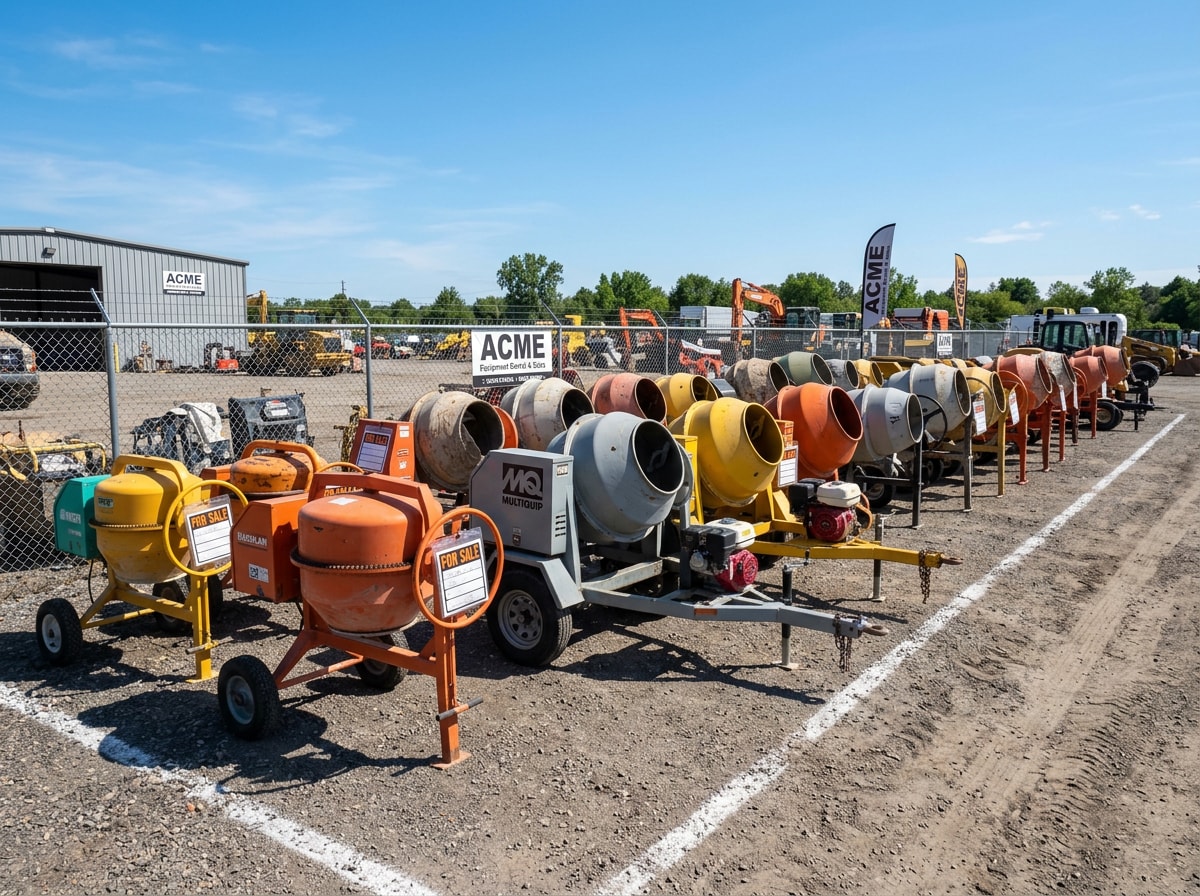
Choosing where to buy matters almost as much as choosing the mixer itself. Ask any dealer about current promotions, open-box models, or combo deals, and always verify the length and coverage of warranties, especially for engine and drum components, which tend to be the most expensive parts to repair.
Buying from a reputable equipment supplier means competitive pricing, warranty support, and access to authentic parts and service when something eventually needs replacing. Local buyers have an advantage here: in-person inspection of used units before purchase, and the option of local pickup instead of paying delivery fees on heavier models.
When Hiring a Concrete Contractor Beats Buying a Mixer
Here's the part most equipment guides won't tell you: for the majority of residential projects we see in Baltimore County, buying a mixer ends up costing more time and money than it saves. A homeowner pouring one driveway, patio, or walkway typically spends more on the mixer, delivery, storage, and cleanup than a contractor would charge for the finished slab, and they still have to haul and store a machine they may never use again.
We've poured driveways, patios, and walkways throughout Baltimore County, Towson, and Glen Burnie, and the jobs that go smoothest are the ones where the homeowner called for a quote before buying equipment, not after a DIY pour went sideways. If you want the finished result without the equipment learning curve, our concrete driveway installation and concrete patio installation crews handle everything from grading to finishing. If you're dealing with cracked or settled concrete instead of a new pour, concrete repair is usually faster and cheaper than renting equipment to patch it yourself.
For more on what a professional concrete project actually involves in this market, see our guide to concrete work in Glen Burnie, MD.
Final Thoughts: Is a Concrete Mixer Worth It?
A concrete mixer is a genuinely useful tool for frequent small jobs: fence posts, mailbox bases, small repairs, and the occasional slab. Buyers should weigh project scale, concrete mix type, portability, durability, maintenance needs, and cost together rather than focusing on just one factor.
For anything larger than a weekend project, though, run the comparison against a professional quote first. Get a free estimate before you spend money on a mixer you might use once. You can also browse our full range of concrete contractor services or visit our homepage to see everything we handle across Baltimore County.
FAQ
When Do You Need a Concrete Mixer?
Mixing by hand works fine for minor tasks like small repairs or planters. Larger jobs such as patios, walkways, and foundations generally need a mixer for consistent results and faster turnaround than hand-mixing allows.
Should You Rent or Buy a Concrete Mixer?
It depends on how often you'll use it, your budget, and whether you have storage space. Renting suits one-time projects where buying wouldn't pay off. Buying makes more sense for frequent use across multiple jobs.
Is It Cheaper to Rent or Buy a Concrete Mixer in Baltimore County?
For a single project, renting is almost always cheaper. A rental runs roughly $50-$150 a day, while even an entry-level mixer costs $300 or more to buy outright, plus storage afterward. Buying only pencils out if you'll use the mixer on multiple projects a year.
What Size Concrete Mixer Do I Need for a Driveway?
Most driveway pours need more concrete than a portable mixer can realistically produce in one day. A 400-square-foot driveway section needs close to 5 cubic yards of concrete, far beyond what even a 9-cubic-foot towable mixer batches per load. For driveway-sized pours, ready-mix delivery or a professional crew is usually more practical than mixing on-site.
What Factors Should I Consider When Buying a Used Concrete Mixer?
Check the mixer's capacity, engine condition, and drum integrity before buying. Also verify the machine's age, previous usage patterns, and maintenance history to confirm it actually meets your project needs.
What Are the Most Popular Concrete Mixer Brands?
Kobalt, Kushlan, and YARDMAX are among the most popular brands for smaller and mid-range mixers. A broader assortment is also available from TK Equipment, BILT HARD, and BRAVE, depending on capacity and budget.