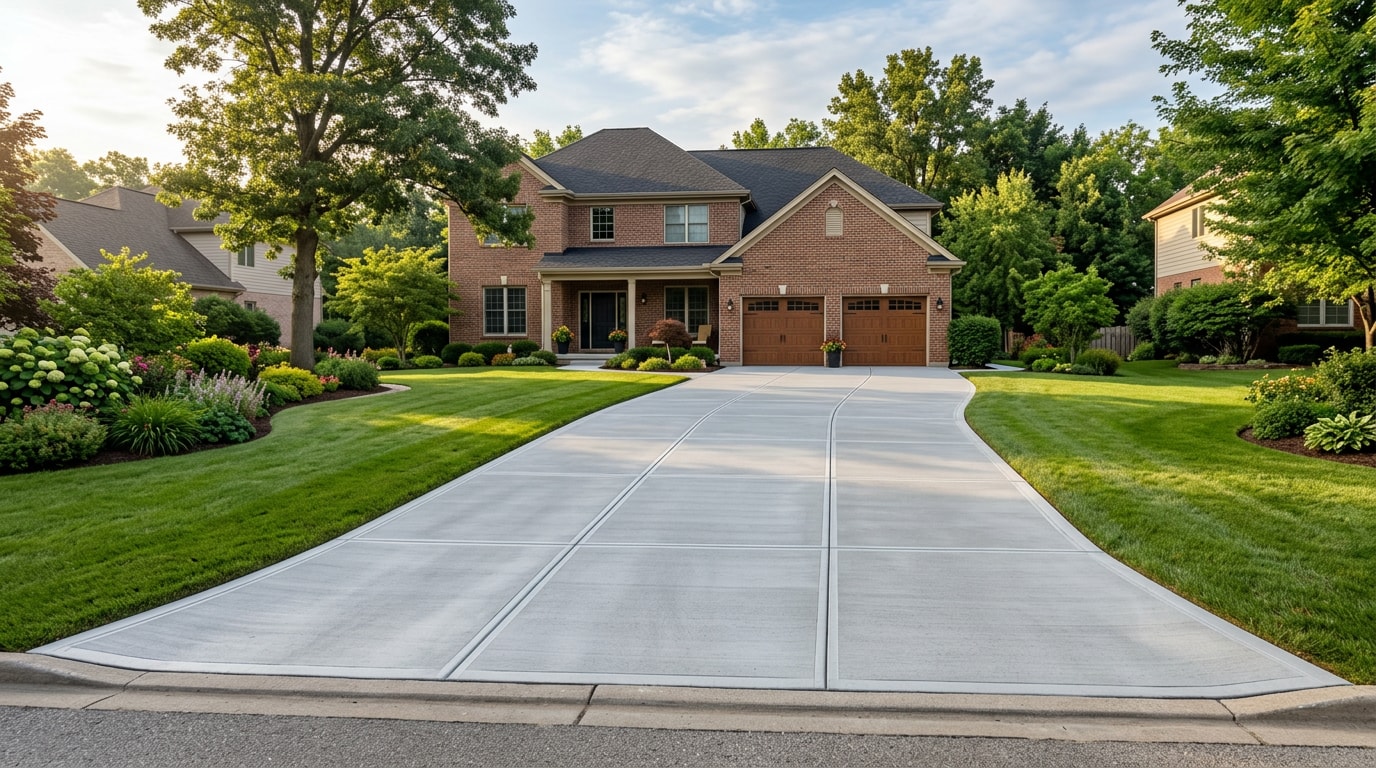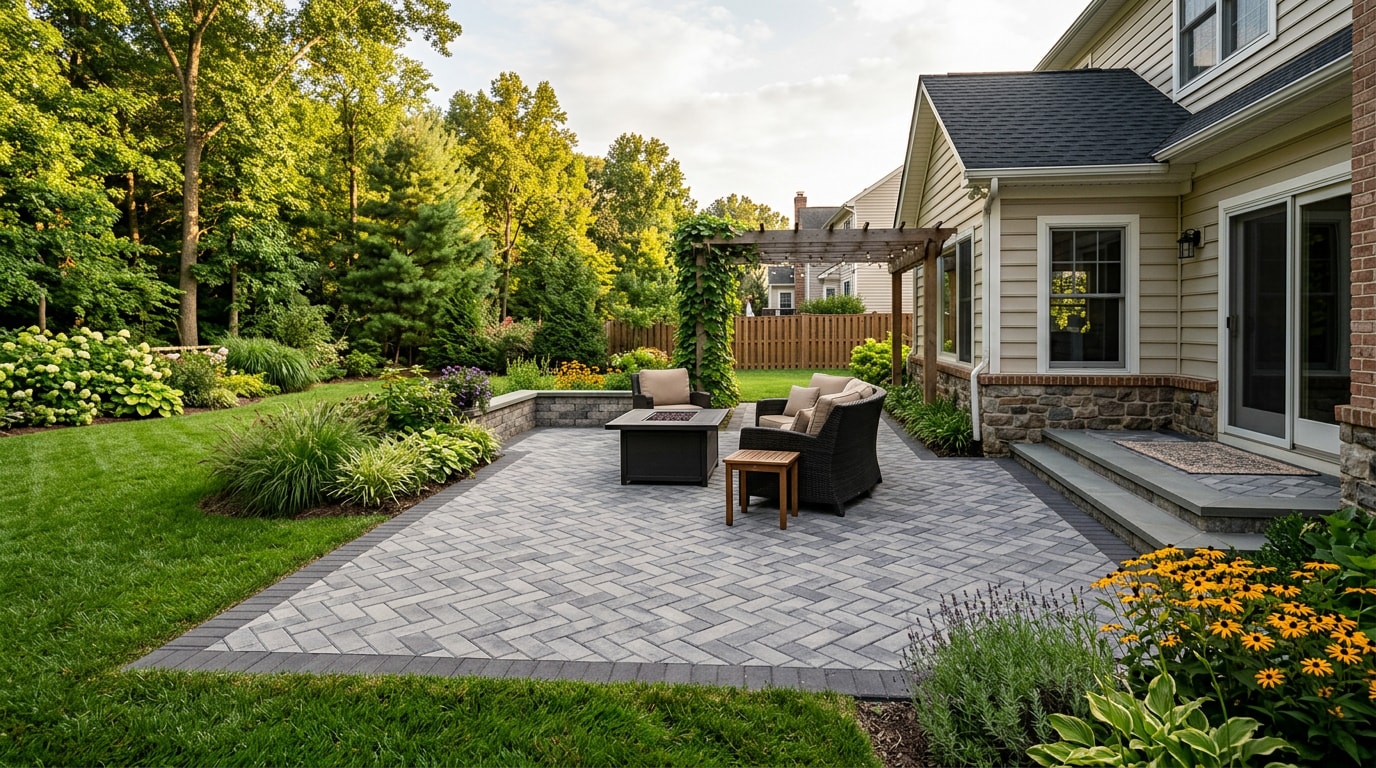
Concrete pavers in Pasadena, MD turn cracked walkways, bare patios, and worn driveways into surfaces built for Chesapeake Bay weather. This guide breaks down the project types, installation steps, permit rules, and real cost ranges homeowners ask about most before hiring a crew. Read it before your first estimate call so you know exactly what questions to ask.
Concrete Paver Services We Install in Pasadena, MD
Pavers work for nearly every hardscape project around a typical Pasadena property. The most common requests we see fall into a few categories:
- Paver patios – turn an unused backyard into space for grilling, entertaining, or relaxing after work.
- Paver walkways – connect a driveway to the front door without the heaving or puddling that plain concrete can develop.
- Paver driveways – boost curb appeal while standing up to daily vehicle loads.
- Pool deck pavers – slip-resistant and noticeably cooler underfoot than poured concrete on a July afternoon.
- Stamped concrete sidewalks – a decorative concrete alternative that mimics brick, slate, or natural stone through staining and stenciling.
Homeowners in neighborhoods like Southgate and Lake Shore often start with a patio or walkway project, then come back for a driveway once they see how the surface holds up through a Maryland winter.
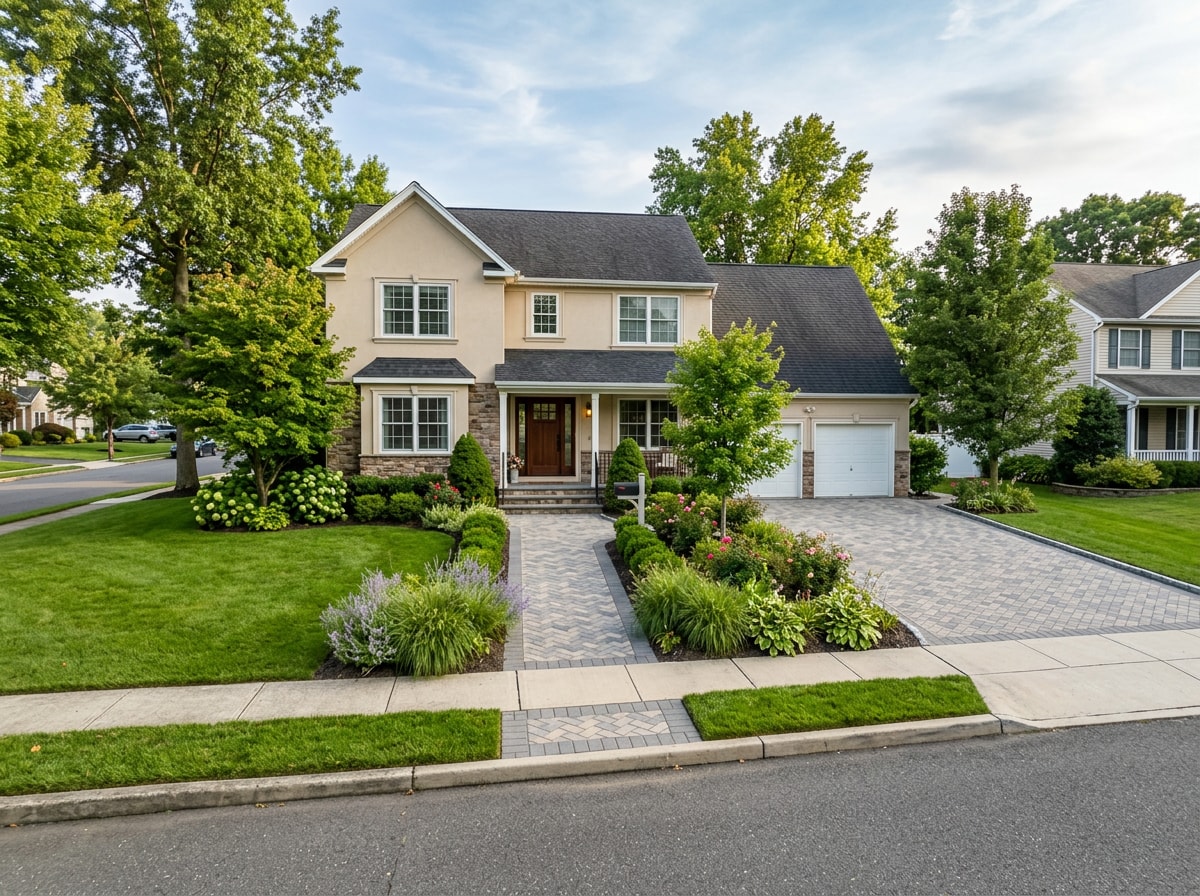
Browse our patio installation services or driveway paver options to see which layout fits your property. If interlocking pavers aren't the look you're after, our concrete finishing team can also stamp, stain, or texture a poured surface to get a similar visual effect at a different price point.
For lots near the water, permeable pavers are worth a look too. They let rain soak through the joints instead of running toward storm drains, which is useful on properties close to the Chesapeake Bay Critical Area. The EPA's permeable pavement program notes that these surfaces let rain and snowmelt seep through to the soil below while helping filter out pollutants that would otherwise wash into local waterways .
Benefits of a Paver Patio vs. a Poured Slab
The benefits go beyond looks. A properly installed paver patio resists cracking, drains well, and holds up through freeze-thaw winters better than a single poured slab.
- Color and pattern variety – enough options to match almost any home style.
- Low maintenance – rarely needs more than occasional rinsing and resealing.
- Repairable by design – a stained or cracked unit can be lifted and swapped without redoing the whole surface.
- Resale support – well-built hardscaping is commonly cited as a feature buyers notice.
Compare that to a damaged concrete slab, which usually needs a full-section patch through a service like concrete repair rather than a quick spot fix.
Pavers vs. Poured Concrete: Which Holds Up to Maryland Winters?
Pavers are made of smaller interlocking units instead of one continuous slab, and that changes how they handle stress, repairs, and weather. The difference shows up most in repairability and long-term crack resistance.
| Factor | Pavers | Poured Concrete | Stamped Concrete |
|---|---|---|---|
| Upfront cost | Moderate | Lower | Moderate |
| Repairability | Swap individual units | Full-section patch/replace | Difficult to match pattern |
| Freeze-thaw cracking | Flexes, resists cracking | More prone to cracking | Prone to cracking at joints |
| Typical lifespan | 25-50 years | 20-30 years | 15-25 years |
Freeze-thaw cycling matters more here than most homeowners realize. The Maryland State Climatologist Office reports that Baltimore-area locations average around 70 to 80 days per year with a low temperature at or below freezing , which means a patio or driveway near Pasadena goes through dozens of freeze-thaw cycles every winter. Segmental pavers are engineered for exactly that kind of movement. The Concrete Masonry & Hardscapes Association publishes construction guidelines confirming that stabilized aggregate bases are recommended under heavy loads or in climates with numerous freeze-thaw cycles , which is the exact base-building standard a Pasadena crew should be following.
If poured concrete still fits your project better, see our concrete paving service for driveways, slabs, and flatwork.
How Paver Installation Works: From Site Prep to Finished Surface
Quality installation follows a specific sequence, and skipping steps is usually why patios fail early.
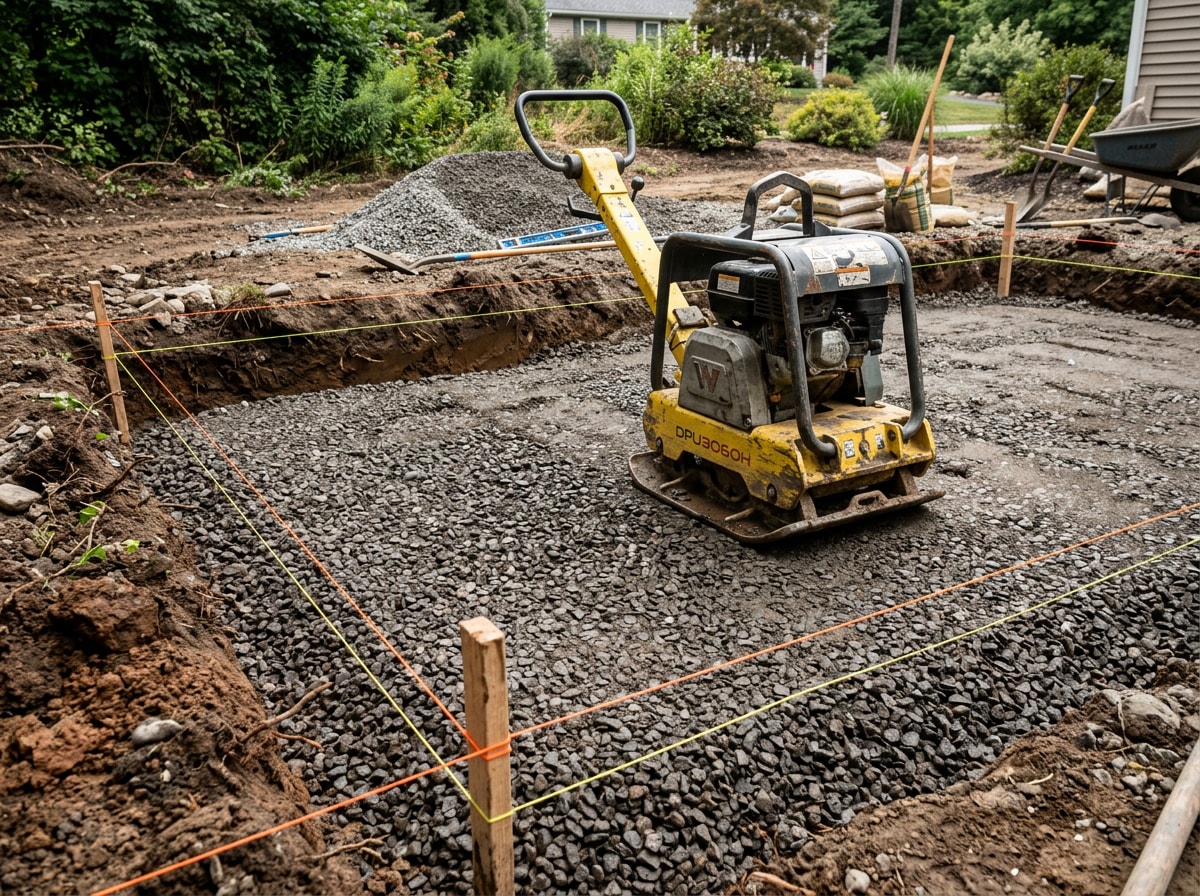
- Site preparation – excavate the area and remove soft or organic soil. See our site preparation service for details.
- Base and grading – compact layers of crushed stone and grade the site so water drains away from the surface instead of pooling underneath. Our grading and compaction crews handle this step.
- Edge restraint and laying pattern – pavers are set in pattern and cut around edges, then locked in place with an edge restraint.
- Joint sand and sealing – sand is swept into the joints and compacted, with an optional sealer applied for stain resistance.
Cost of Concrete Pavers Installation in Pasadena, MD
Pricing varies by project, but understanding the main cost drivers helps you evaluate quotes.
What affects the price:
- Paver material type and thickness
- Project size and site access
- Design complexity (patterns, borders, curves)
- Site prep needs, including grading, drainage, or old concrete removal
- Extras like edging, lighting, or sealing
| Item | Typical Cost |
|---|---|
| Basic paver installation | $10–$15 per sq. ft. |
| High-end paver installation | $20–$30 per sq. ft. |
| Site preparation | $1,000–$2,500 |
| Edging installation | $5–$10 per linear foot |
| Standard driveways/patios | $2,500–$5,000 |
| Large-scale installations | $5,000–$15,000 |
These are directional estimates for the Pasadena area, not fixed quotes. Actual cost per square foot depends on your site's condition. Request a free estimate for specifics on your property.
Do You Need a Permit for Pavers in Anne Arundel County?
This is one question most paver guides skip entirely, and it matters in Pasadena because so many lots sit inside the Chesapeake Bay Critical Area.
Anne Arundel County's permitting office classifies a residential patio as a ground-level outdoor living space, typically constructed of materials such as concrete, stone, pavers, or brick , which determines how it's reviewed. Driveways are handled differently: driveways don't require a building permit on their own, but they may need a Standard Grading Plan Application, a grading permit, or Department of Public Works approval depending on your lot.
Rules shift if your property sits within 25 feet of the Critical Area boundary, so it's worth confirming with the county before pouring a base or signing a contract. If you want help figuring out whether your project needs a permit, contact us and we'll walk through it with you.
FAQ
What are concrete pavers used for in outdoor spaces?
Concrete pavers are commonly used for patios, walkways, driveways, and pool decks to create durable, visually appealing hardscape surfaces that hold up to foot and vehicle traffic.
How much do concrete pavers cost per square foot in Pasadena, MD?
Most projects run $10 to $15 per square foot for basic paver installation and $20 to $30 per square foot for high-end materials and patterns. Site condition, access, and design complexity can push either figure higher.
Is it cheaper to install pavers or pour a concrete slab?
Poured concrete usually has a lower upfront cost per square foot. Pavers cost more at installation but are cheaper to repair long-term since a single damaged unit can be replaced instead of patching an entire slab.
Do I need a permit for a paver patio or driveway in Anne Arundel County?
Ground-level patios are reviewed under the county's residential permitting system, and driveways typically skip a building permit but may need a grading or right-of-way permit. Properties near the Chesapeake Bay Critical Area face additional review, so check with the county before starting.
What paver material handles Maryland's freeze-thaw cycles best?
Quality manufactured concrete pavers handle repeated freeze-thaw cycles well because the joints let the surface flex instead of cracking. Natural stone and permeable pavers can also perform well depending on drainage needs and budget.
How long does paver installation take in Pasadena, MD?
Most residential paver installations take three to ten days, depending on project size, material choice, and site complexity.
How long do concrete pavers last?
With proper base preparation and periodic sealing, concrete pavers typically last 25 to 50 years. Lifespan drops considerably if the base was compacted poorly or drainage wasn't addressed during installation.
If you're ready to move from research to a real number, get a free estimate from our team, or visit our homepage to see the full range of services we bring to Pasadena properties. For a look at how we handle concrete projects just up the road, check out our guide to concrete work in Glen Burnie.