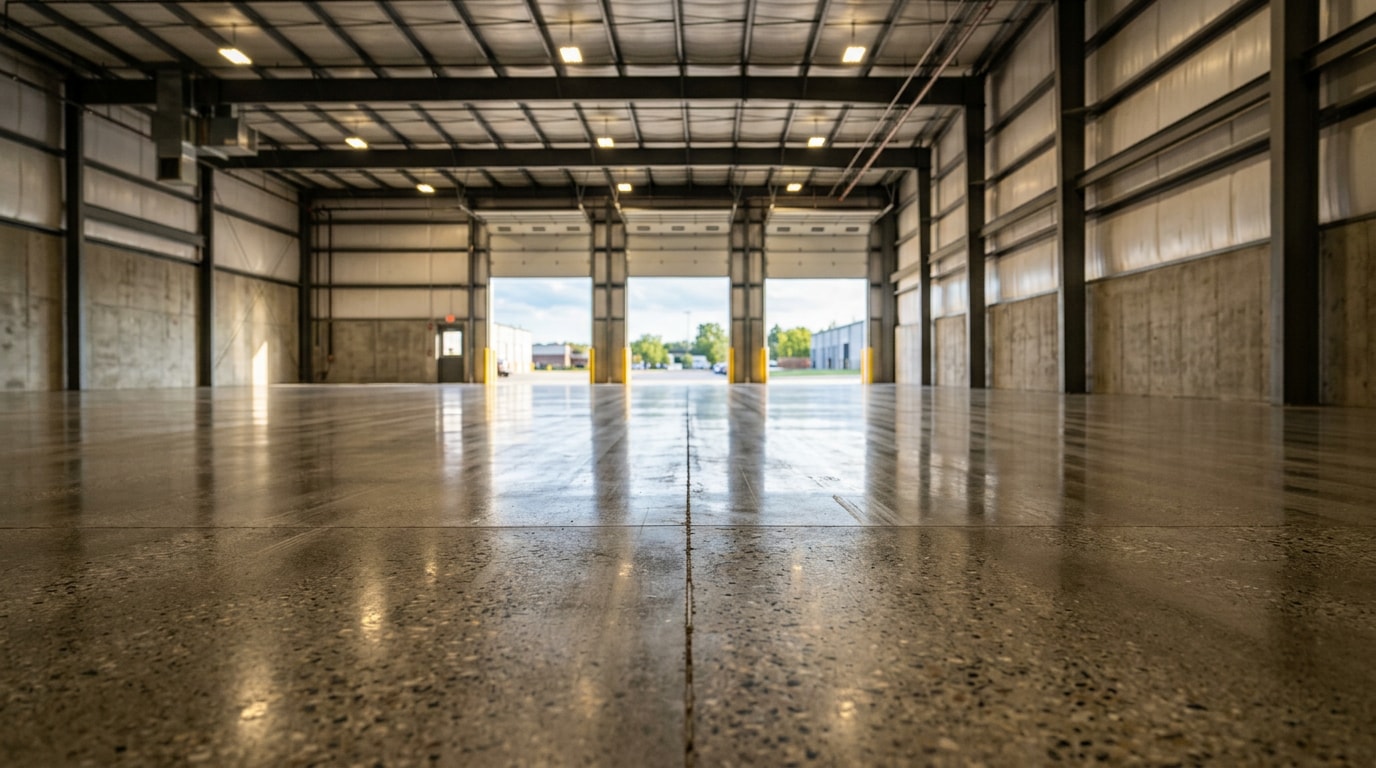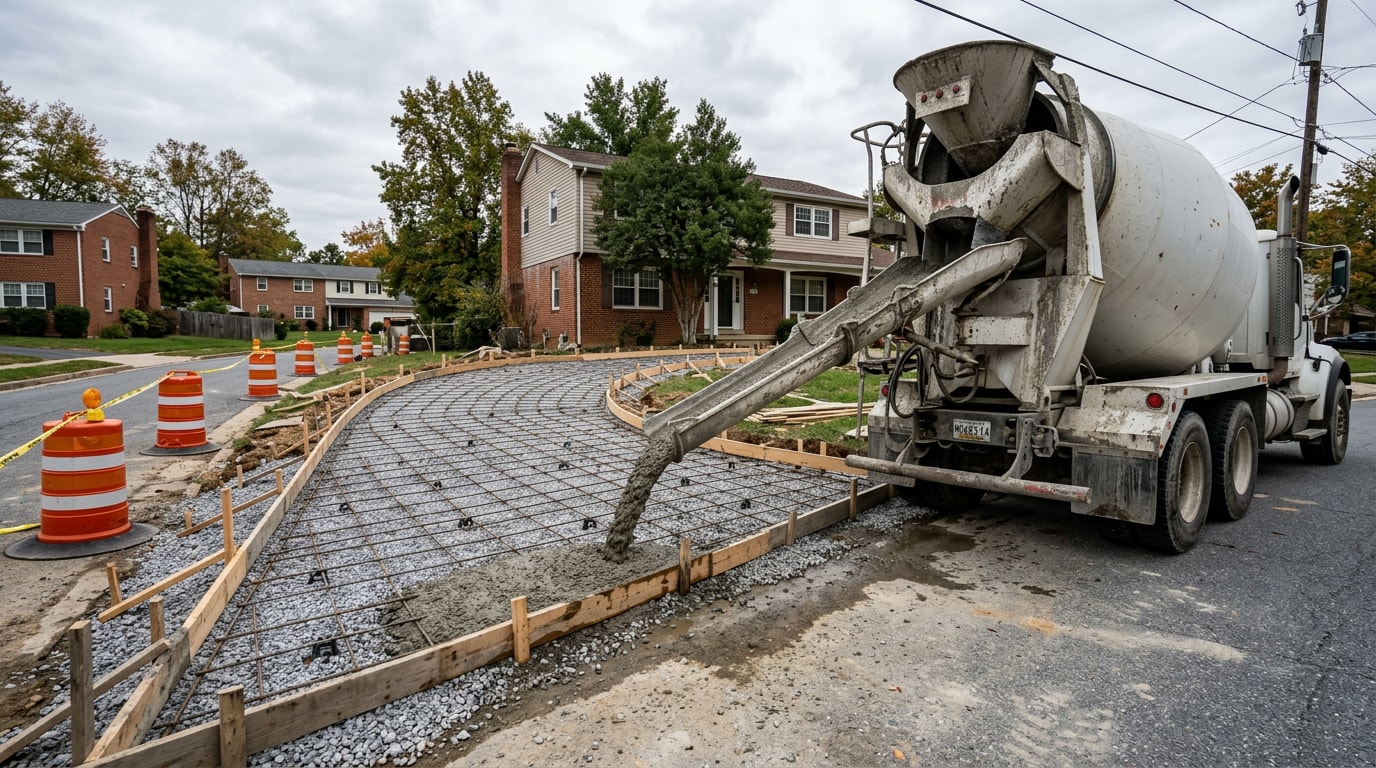
A concrete batching plant in Baltimore County, MD does more than mix sand, water, and cement. It decides whether your driveway, patio, or commercial pad pours on schedule or sits waiting on a truck. At SEJ Paving, we coordinate deliveries from these plants on local jobs every week, and the gap between a well-run plant and a stretched-thin one shows up fast on pour day. This guide breaks down what separates a reliable batching plant from a risky one, and how to vet one before you commit a crew to a date.
How to Vet a Concrete Batching Plant Near You
A true batching plant operator owns and runs its own mixers, aggregate silos, and delivery fleet. A broker, by contrast, just resells concrete scheduled from someone else's plant.
Knowing which one you're dealing with matters. Plant operators control quality, scheduling, and driver training directly. Brokers are a middleman layer that can slow down problem-solving if a load shows up wrong or late.
On our own jobs across Baltimore County, we ask every new supplier the same opening question: do you batch this yourself, or are you booking it from another plant? The answer changes how much flexibility we have on pour day. You can see examples of the concrete work we've coordinated through local suppliers on our projects page.
Plant Location and Delivery Radius
Plant location drives everything else: transit time, concrete temperature on arrival, and whether a crew can realistically schedule a same-day pour.
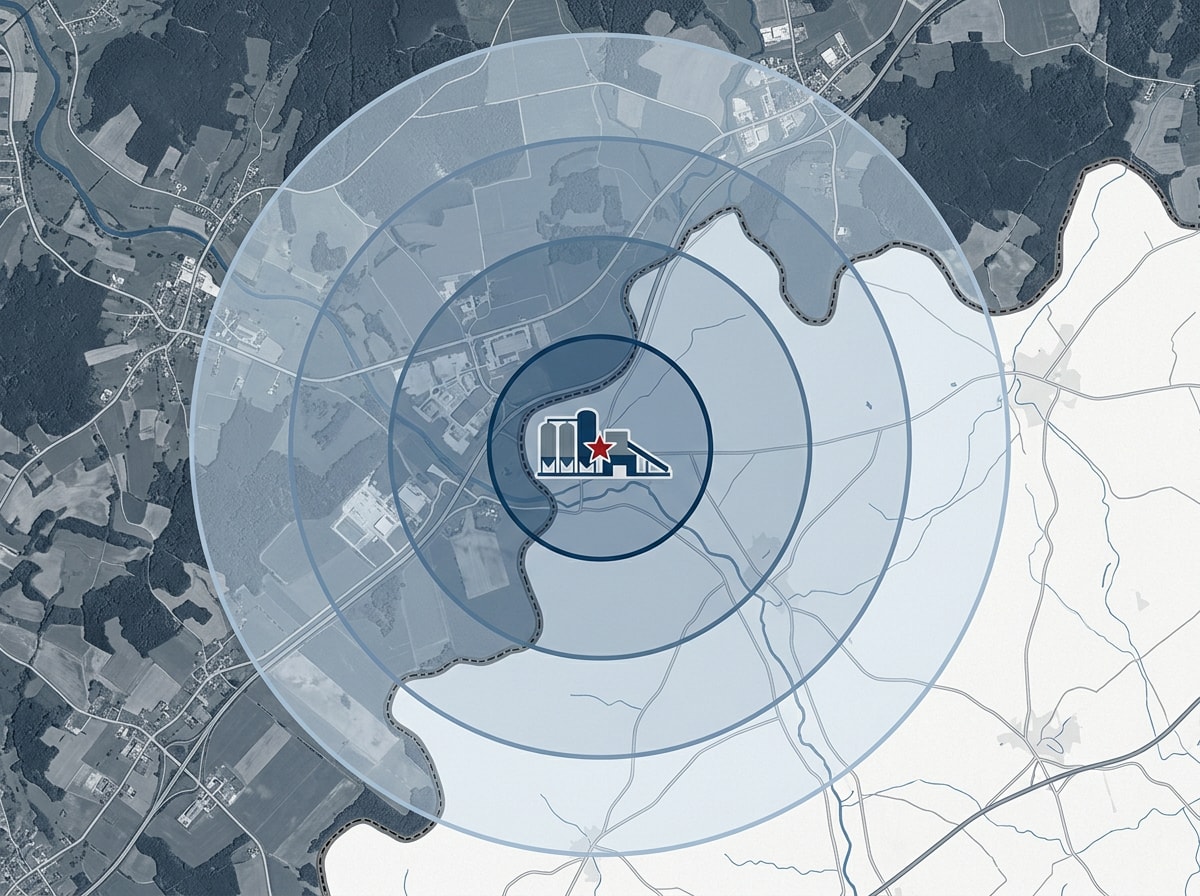
Suppliers typically position plants near county edges so coverage overlaps. One plant might cover the western side of the county, while another handles the city line and eastern communities. Delivery radius varies by company size. A multi-plant network can reach well beyond Baltimore County's borders, while a smaller operator sticks closer to one or two counties.
If your job site sits near Pikesville or another spot along the county's western edge, ask specifically which plant would dispatch your order. The nearest plant on paper isn't always the fastest once traffic and route restrictions get factored in.
Batching Plant Equipment and Mixer Trucks
Modern batching plant equipment combines computer-controlled mixers, automated measuring for water and cement ratios, and aggregate silos that keep sand and stone dry and ready to load.
For a non-technical buyer, the short version is this: automated batching reduces human error in the mix, which means more consistent strength from load to load. OSHA's construction standards for concrete equipment, including mixers and pumping systems, exist because that equipment carries real risk on an active site. OSHA's requirements for concrete mixers and tools outline the lockout and guarding rules a reputable plant's maintenance crew should already follow.
The trucks that carry the mix to your site matter just as much as the plant itself.
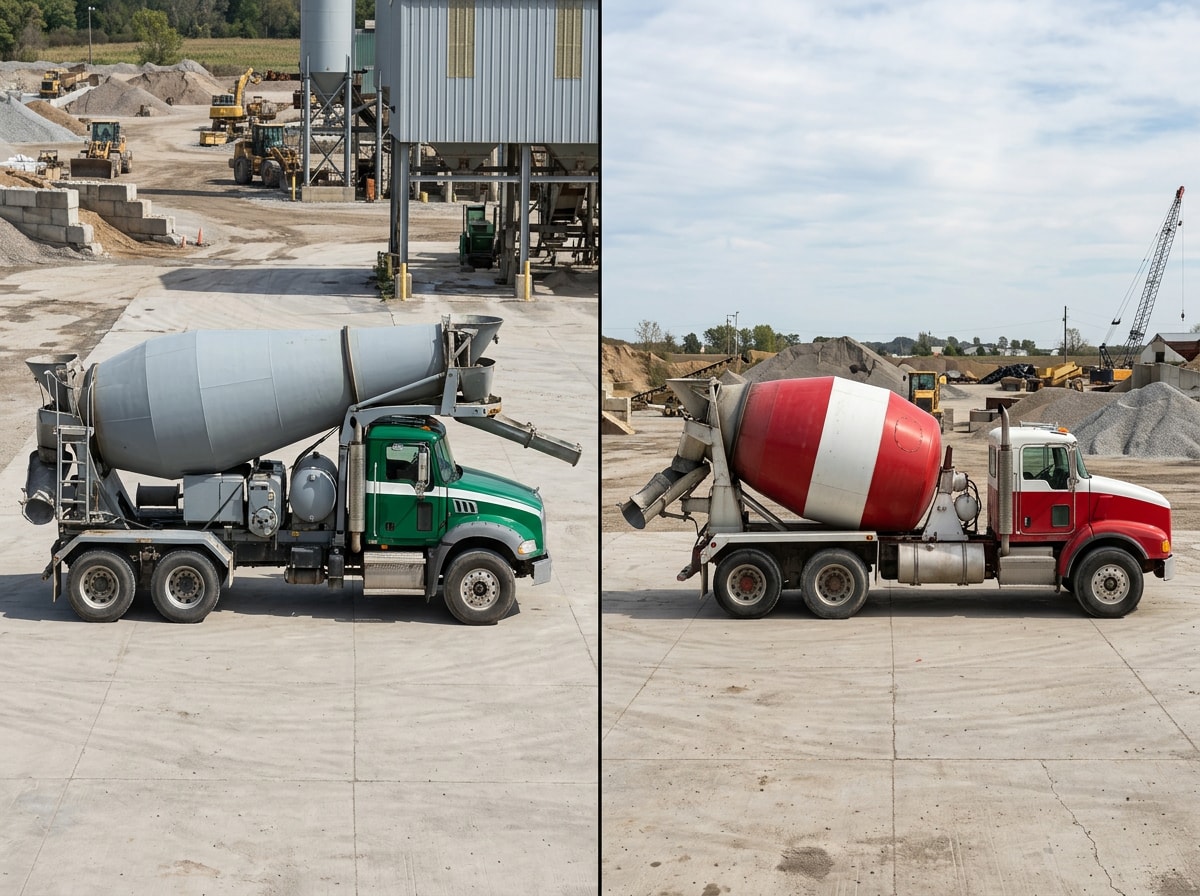
Front-Discharge vs. Rear-Discharge Mixer Trucks
- Front-discharge mixers let the driver steer the chute and pour without a second spotter, which matters most on tight residential driveways.
- Rear-discharge trucks need a helper to guide placement from behind the vehicle, but they often carry slightly larger loads and work well on open commercial sites with clear access.
Ask your supplier which trucks they run before assuming either option is available for your address. If you're weighing whether to buy your own mixing equipment instead of ordering ready-mix, our guide to concrete mixers for sale in Baltimore County covers what to check before you buy.
Ready-Mix vs. Volumetric Concrete: Which Fits Your Project
Baltimore County buyers generally run into two production models.
Ready-mix concrete is batched at a stationary plant and delivered pre-mixed in a rotating drum. Volumetric concrete is mixed fresh on-site through a mobile batching plant, measuring cement, water, sand, and aggregate at the moment of placement instead of back at a central plant.
Volumetric mixing is built around an industry standard, ASTM C685, maintained with input from the Volumetric Mixer Manufacturers Bureau, the trade group that sets performance and calibration requirements for this equipment. That standard is part of why a properly certified volumetric mixer can match ready-mix on strength and consistency.
| Factor | Volumetric (mobile batching) | Transit-Mix Ready-Mix |
|---|---|---|
| Waste | Pay for what you use | Often rounded up to the nearest yard |
| Cost per yard (small jobs) | Competitive for small or split pours | Can carry minimum-load fees |
| Multiple mix designs in one visit | Yes, adjustable on-site | No, one mix per truckload |
| Best suited for | Driveways, patios, repair work | Large, continuous commercial pours |
Because volumetric concrete is mixed to order, a crew can adjust the mix design mid-job if conditions change. That flexibility matters on jobs with multiple small pours spread across a day, or when the exact volume isn't locked in ahead of time. A mobile plant can also be driven directly to a remote site, which removes the transit-time pressure of racing a drum truck before the mix starts curing.
DOT-Approved Mix Designs and Commercial Concrete Services
A full-service batching plant supplies more than basic ready-mix. For public or commercial work, expect DOT-approved mix design options, along with ancillary services like concrete pump truck access for hard-to-reach pours and wash-out or disposal handling after the job wraps up.
In Baltimore County, Portland Cement Concrete mix designs used on county projects need approval from the Maryland State Highway Administration before they're accepted. The Baltimore County Department of Public Works materials specification lays out exactly which mix numbers and admixtures apply to which conditions. If your project touches a county right-of-way, this is the document your supplier's mix design needs to match.
Both homeowners pouring a patio and contractors managing a commercial pad should be able to specify strength requirements up front. Whether that means a concrete driveway installation, a concrete patio installation, or a larger pad, the supplier's mix sheet should match the load and exposure the slab will actually see. Proper site preparation and grading and compaction before the truck arrives also do as much for long-term performance as the mix design itself.
Reliable Supply Protects Your Timeline
Inconsistent batching doesn't just delay one truck. It can stall an entire crew standing idle on a paid clock.
A reliable concrete supply partner protects both your construction timeline and your labor budget, since workers, forms, and equipment are often committed to a pour date regardless of whether the concrete shows up on time. Batching plant reliability is one of the harder things to judge from a website, which is why asking about on-time delivery history matters more than it might seem.
Safety on the Pour
Reputable plants train drivers on load securement, backing procedures, and site hazards. Concrete plant safety extends past the plant floor to job site safety standards drivers follow once they arrive: clear communication with the site foreman, proper chute handling, and awareness of overhead lines or uneven grading.
Federal construction rules cover this ground directly. OSHA's Subpart Q standards for concrete and masonry construction require that concrete mixers, pumping systems, and buckets meet specific guarding and safety-latch requirements before they're used on an active site. A supplier who can talk through their safety program without hesitation is usually the one running it correctly.
Scheduling, Minimums, and Plant Hours
Most Baltimore County plants operate five days a week, with same-day delivery often available through a single call to dispatch. Availability tightens during peak construction season, so calling a day ahead is still the safer bet. Confirm plant hours directly, since they can shift seasonally.
Minimum loads matter too. The National Ready Mixed Concrete Association advises against ordering small clean-up loads, since partial loads typically carry a short-load fee from the producer, as outlined in its guidance on ordering ready-mixed concrete. Ask upfront what counts as a partial load and how it's billed before you schedule a small pour.
How Much Concrete Do You Need?
Cubic yardage is calculated as length times width times depth, divided by 27, the number of cubic feet in a cubic yard.
Here's a worked example: a 10x10 ft patio slab poured 4 inches deep.
- Convert 4 inches to feet: 4 ÷ 12 = 0.33 ft.
- Multiply: 10 x 10 x 0.33 = 33 cubic feet.
- Divide by 27: 33 ÷ 27 is about 1.22 cubic yards.
NRMCA's own ordering guidance recommends ordering 4 to 10 percent more than your calculated volume to cover form loss and subgrade variation, rather than rounding to a flat number. For this patio, that puts a realistic order closer to 1.3 cubic yards. If the math feels uncertain, most plant staff will walk through the numbers with you over the phone, or you can contact our team and we'll help you size the order correctly the first time.
Questions to Ask Your Concrete Supply Company
Before committing to a supplier, run through this short list:
- Is the plant certified, and what quality-control checks happen before dispatch?
- What's the realistic delivery radius and typical transit time to my site?
- Is there a minimum order, and how is a partial load billed?
- What mix designs are available, and can they meet Maryland DOT specs if needed?
- How is same-day availability handled during busy seasons?
These questions help separate a plant that's genuinely ready for your project from one stretched thin. If you'd rather have someone manage that vetting for you, get a free estimate and we'll line up the right mix and delivery window for your address.
FAQ
What is volumetric concrete?
Volumetric concrete is mixed on-site using a mobile batching plant, measuring cement, water, sand, and aggregate at the moment of placement rather than ahead of time at a central facility.
How is volumetric concrete different from ready-mix concrete?
Ready-mix is pre-mixed at a stationary plant and delivered in a rotating drum. Volumetric concrete is mixed fresh on-site, so the exact quantity and mix design can be adjusted right up to placement.
What are the benefits of using volumetric concrete?
Volumetric concrete offers consistent quality, reduces waste since you pay only for what's used, and provides flexibility for multiple pours or mix changes in a single visit.
How do I find a concrete batching plant near me in Baltimore County?
Start by asking local contractors which plants they use regularly, then call the plant directly to confirm their delivery radius covers your exact address. Transit time matters more than straight-line distance.
Is there a minimum order for ready-mix concrete delivery?
Most producers discourage small clean-up loads and charge a short-load fee below a set cubic yard threshold. Ask your supplier for their specific minimum before you schedule.
Can I get same-day or weekend concrete delivery in Baltimore County?
Same-day delivery is often possible on weekdays if you call dispatch early. Weekend and holiday availability is limited and varies by plant, so confirm hours directly rather than assuming coverage.
Does a batching plant need special certification for Maryland DOT work?
Yes. Plants supplying concrete for Maryland Department of Transportation or Baltimore County public projects need mix designs approved by the Maryland State Highway Administration before that concrete can be used.
Are mixer trucks equipped for all project sizes?
Mixer trucks are generally built to handle projects of all sizes, from small residential repairs to large commercial applications, with control over the mix at each stop. Confirm truck size and discharge type match your site access before delivery day.
Ready to put this guide into action? Request a free estimate from SEJ Paving and we'll help you line up the right concrete, mix design, and delivery window for your Baltimore County project. You can also learn more about our full range of concrete contractor services and see completed work on our homepage.