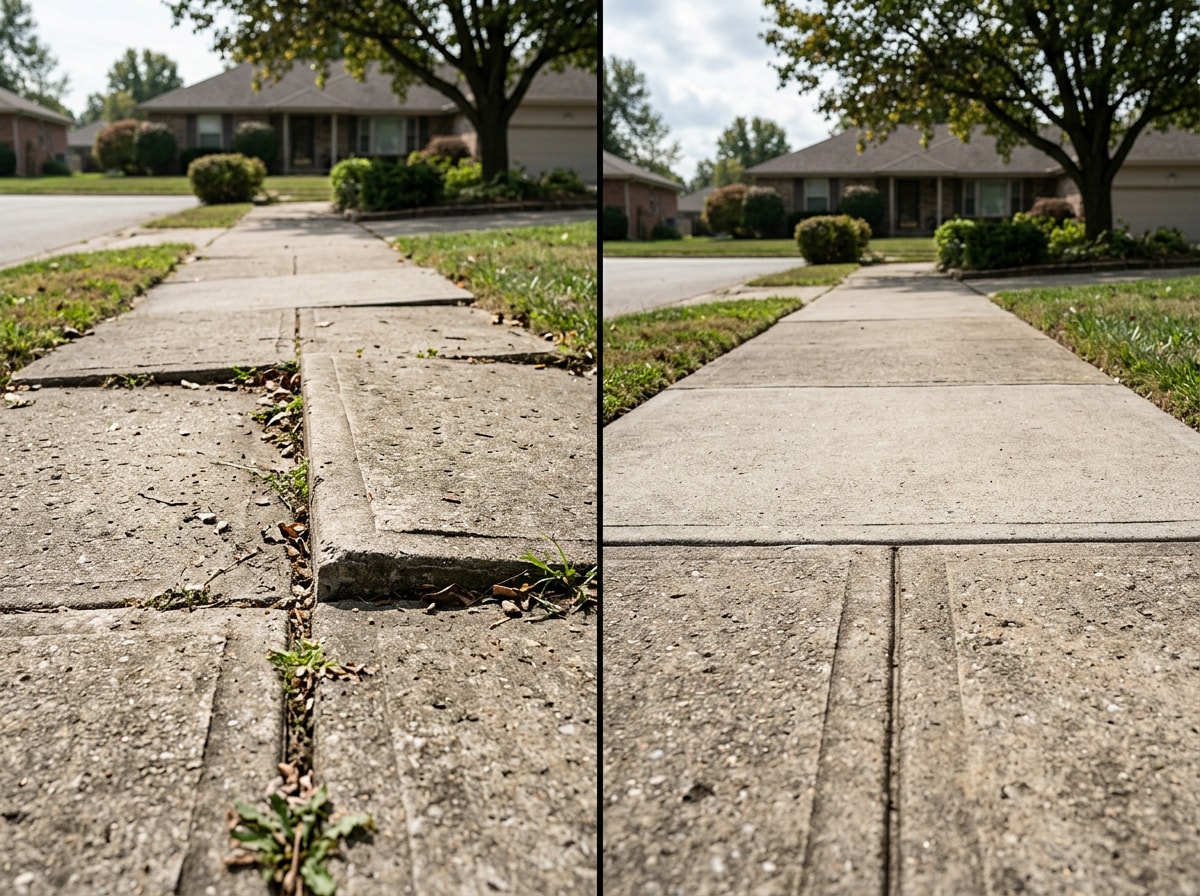
Concrete raising in Anne Arundel County, MD lifts sunken driveways, patios, and walkways back to level by pumping material beneath the slab to fill the voids causing it to sink. Most jobs wrap up in a single visit, at a fraction of the cost and mess of tearing out and repouring. Here's what actually determines whether your slab is a good candidate, and what it takes to raise it correctly.
Signs You Need Concrete Raising in Anne Arundel County
A few warning signs show up again and again on local driveways, sidewalks, and patios:
- One slab edge sits higher or lower than the panel next to it, creating a trip hazard near steps or walkways.
- Water pools on a driveway or sidewalk after rain, usually pointing to a sunken low spot nearby.
- Gaps or voids are visible along a slab's edge.
- Cracks keep widening instead of staying the same size season to season.
Any one of these is worth a closer look before the gap gets big enough to need full replacement instead of a lift.
Why Concrete Raising Beats Full Slab Replacement
Full replacement means demolition crews breaking out old concrete, hauling away debris, and pouring new concrete that still needs days to cure. Concrete raising skips most of that. Projects typically finish in a single visit, cost a fraction of replacement, and remove the trip hazard immediately rather than after a multi-day cure.
Minimally Disruptive Technique
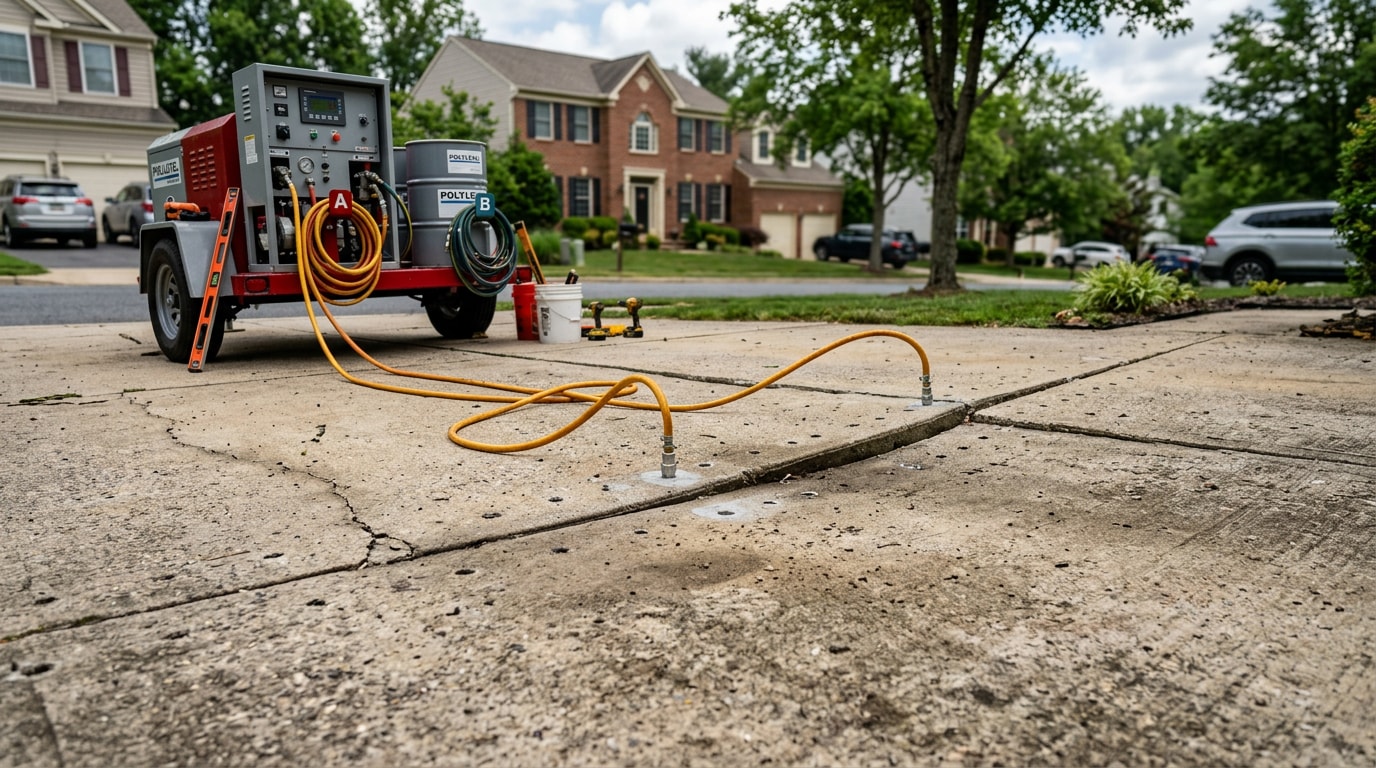
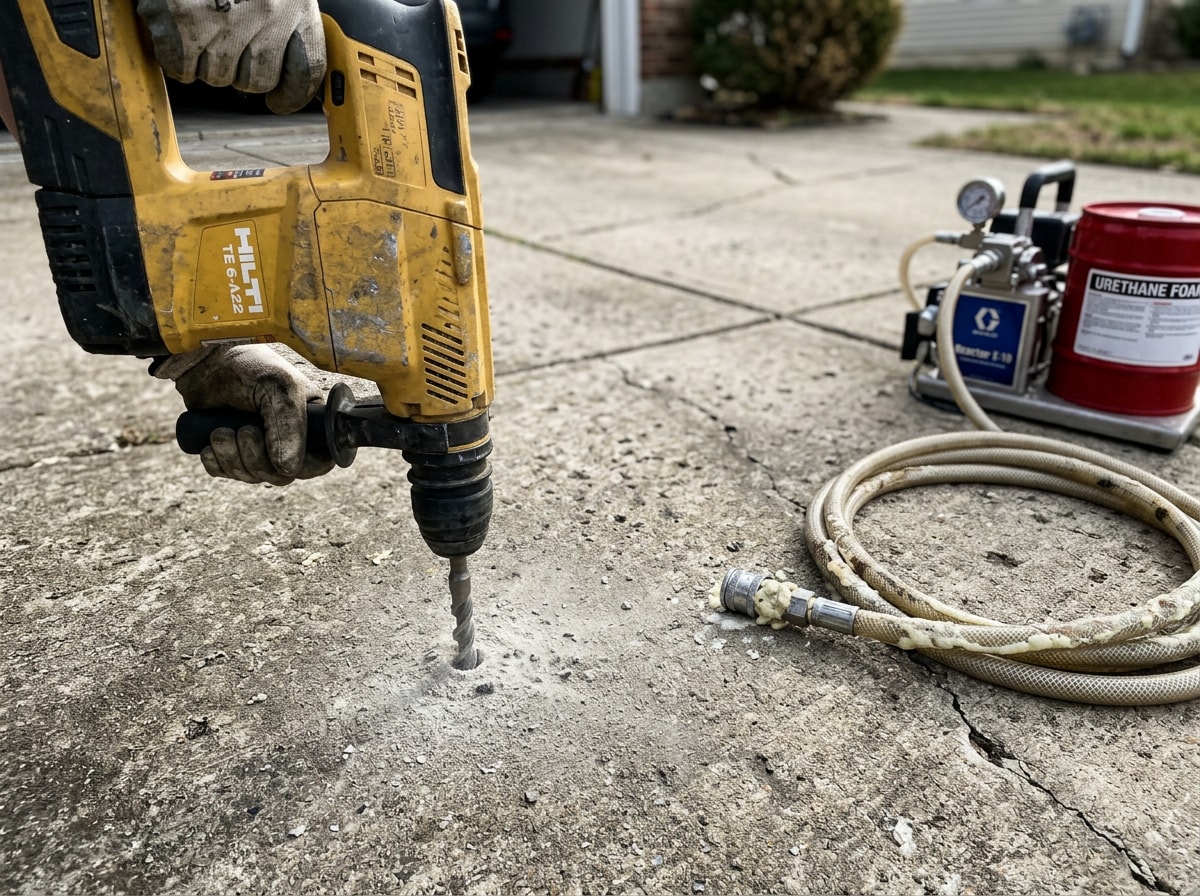
Instead of tearing out an entire slab, technicians drill a series of small injection points across the settled area. Material is pumped through these dime-sized openings. Surrounding grass, shrubs, mulch beds, and existing slab edges stay largely untouched.
Cleanup typically takes minutes rather than days. That matters for anyone trying to preserve established landscaping around a driveway or patio.
What Causes Concrete to Settle in Anne Arundel County
Settled concrete here usually traces back to what's happening underground: shifting soil, seasonal freeze-thaw cycles, poor drainage, and erosion that washes material out from beneath a slab. Each of these creates voids the concrete eventually sinks into.
Soil composition varies more across the county than most homeowners assume. Parts of Anne Arundel County are in the Coastal Plain, which gives way to the Piedmont area as it approaches the counties to the west, which is more likely to have more clay. That means a driveway in a western neighborhood may settle for different reasons than one closer to the Bay, where erosion and high water tables tend to do more of the damage. You can check your own property's soil classification using the USDA's Web Soil Survey before scheduling an inspection.
Winter freeze-thaw cycles add further movement, while runoff in waterfront communities accelerates erosion near foundations and walkways. In every case, lasting results depend on whether the underlying drainage issue gets addressed too, not just the lift itself. If drainage grading is part of the problem, our grading and compaction service corrects the slope before it causes a repeat sink.
Our Concrete Leveling Process
A typical job follows three steps:
- Inspect. Technicians review the settled slab and surrounding drainage to understand why it sank.
- Drill. A pattern of small holes, often no larger than a dime, is drilled through the low areas of the concrete.
- Inject. Expanding material is pumped through those holes to fill the voids underneath and gently raise the slab back toward level.
On jobs across Pasadena and Glen Burnie driveways, voids tend to concentrate near downspouts and expansion joints, where runoff cuts into the subgrade fastest. Crews check those spots first before drilling anywhere else. Most driveways, walkways, and patios are ready for normal use the same day.
Where Concrete Leveling Works Best in Anne Arundel County
Concrete leveling works well on most flatwork around a home or small business, including driveways, sidewalks, patios, garage floors, and pool decks. It suits slabs that are structurally sound but unevenly settled.
Badly cracked, crumbling, or severely damaged concrete usually needs replacement instead, since leveling restores position rather than rebuilding structural integrity. If that's the case for your slab, our concrete repair and concrete driveway installation teams can scope a replacement instead.
Common Surfaces & Projects We Raise
Projects commonly raised include driveways, sidewalks, entry steps, porches, patios, garage floors, basement floors, and pool decks. Each surface responds a little differently depending on slab size and soil conditions, which is why every job starts with a site-specific look. See the full concrete contractor services list, or browse the Anne Arundel County area page to see neighborhoods regularly served.
How Long Does Concrete Raising Last?
Lifespan depends heavily on the material used and the condition of the soil underneath. Polyurethane foam is engineered to be lightweight and resistant to water intrusion. AP Lift 475 is a two-component, high-strength, high-density, hydro-insensitive structural polyurethane foam. That hydro-insensitive, closed-cell structure is why foam generally holds up better than heavier materials in wet, clay-heavy ground.
Traditional mudjacking relies on a heavier soil-cement slurry, which adds weight to soil that may already be soft, making it more prone to re-settling over time. Self-leveling compounds and stone slurry generally fall somewhere between the two. In every case, lasting results depend on whether the drainage issue that caused the original settling gets corrected, not just the lift itself.
Cost of Concrete Raising in Anne Arundel County
Pricing varies with slab size, how far it settled, and how much material the void requires. Across the county, concrete raising is consistently far less expensive than tearing out and repouring a slab.
| Project Type | Typical Scope | Relative Cost |
|---|---|---|
| Single sidewalk panel or small stoop | One or two injection points | Lowest |
| Standard driveway or patio section | Multiple panels, moderate settlement | Moderate |
| Pool deck or multi-slab commercial area | Large footprint, several injection points | Highest |
Treat this table as planning guidance, not a quote. Every slab settles differently, and the only way to get an accurate number is a site visit. Request a free estimate based on your specific project before budgeting around a guess.
Do You Need a Permit for Concrete Raising in Anne Arundel County?
In most cases, no. Anne Arundel County's Department of Public Works treats slab leveling as a maintenance activity rather than new construction. Maintenance activity that makes no material change to the footprint of an existing facility or structure, makes no material change to the surface or sub-surface of a right-of-way, and does not disrupt or impede traffic generally does not require a Right-of-Way permit.
That exemption applies to raising an existing slab back to its original position. It does not cover widening a driveway, changing a curb cut, or any work that alters the footprint connecting to a county road. If your project touches the right-of-way, confirm requirements with the county's permitting office before work starts.
For a related repair question, see our guide on whether you can pour concrete over existing concrete in Anne Arundel County.
FAQ
How long does concrete leveling take?
Most residential jobs finish within a few hours, start to finish, since the lifting material sets quickly. Larger driveways or multiple-slab projects may take a full day.
Is leveling better than replacing concrete?
For slabs that are structurally sound but uneven, leveling is usually faster, less disruptive, and considerably cheaper than full replacement. Replacement only makes sense when the concrete itself is badly damaged.
Will my concrete look brand new after leveling?
Leveling restores a slab's position and function, not its original color or texture. Existing stains, discoloration, or surface cracks will still be there, though sealing or pressure washing afterward can improve the cosmetic appearance.
Is concrete leveling a permanent solution?
Results are long-lasting, but not guaranteed permanent. If the underlying drainage or soil problem that caused the settling isn't addressed, the slab can shift again over time.
Do I need a permit for concrete raising in Anne Arundel County?
Usually not, since the work is classified as maintenance rather than new construction. Projects that change a driveway's footprint or touch a county right-of-way are the exception and need a permit first.
What's the difference between mudjacking and polyurethane foam leveling?
Mudjacking uses a heavier soil-cement slurry pumped through larger holes, while polyurethane foam uses a lighter, water-resistant material through smaller, dime-sized holes. Foam generally cures faster and puts less added weight on already-soft soil.
Explore the homepage at {{SITE_URL}} to see the full range of concrete and paving services available across the county, or get a free estimate to find out whether raising, repair, or replacement is the right call for your slab.
This guide is maintained by the concrete crew at SEJ Paving, which performs concrete raising, repair, and flatwork projects across Anne Arundel County. Have a specific slab in mind? Contact us for a free on-site evaluation.