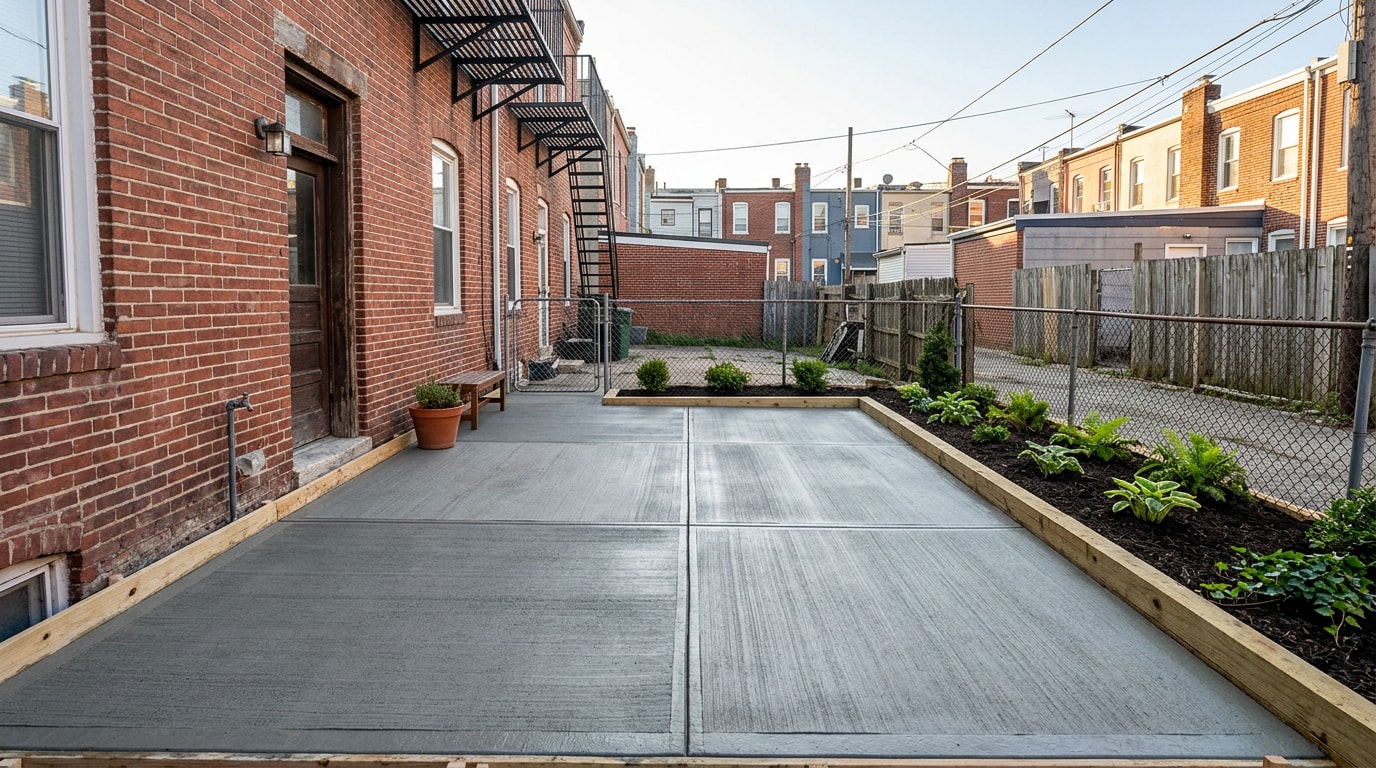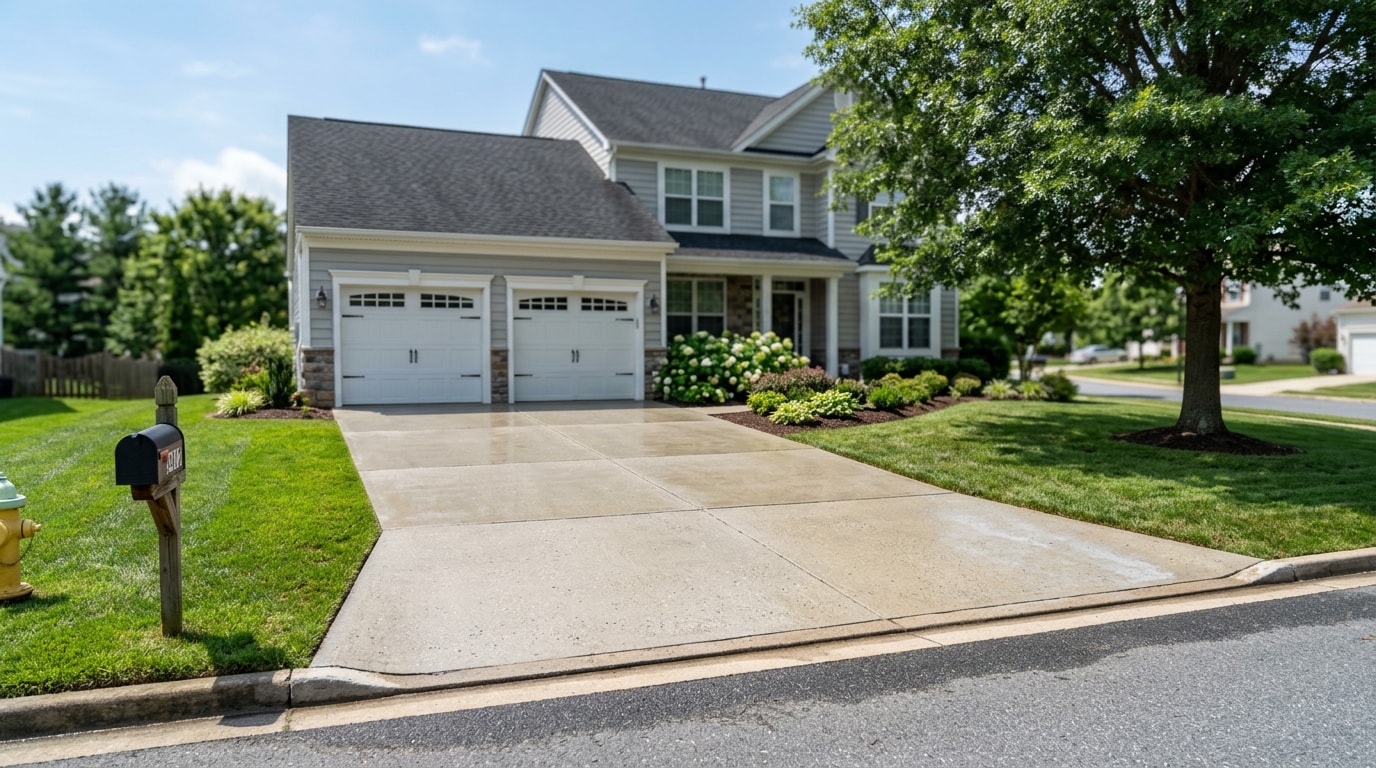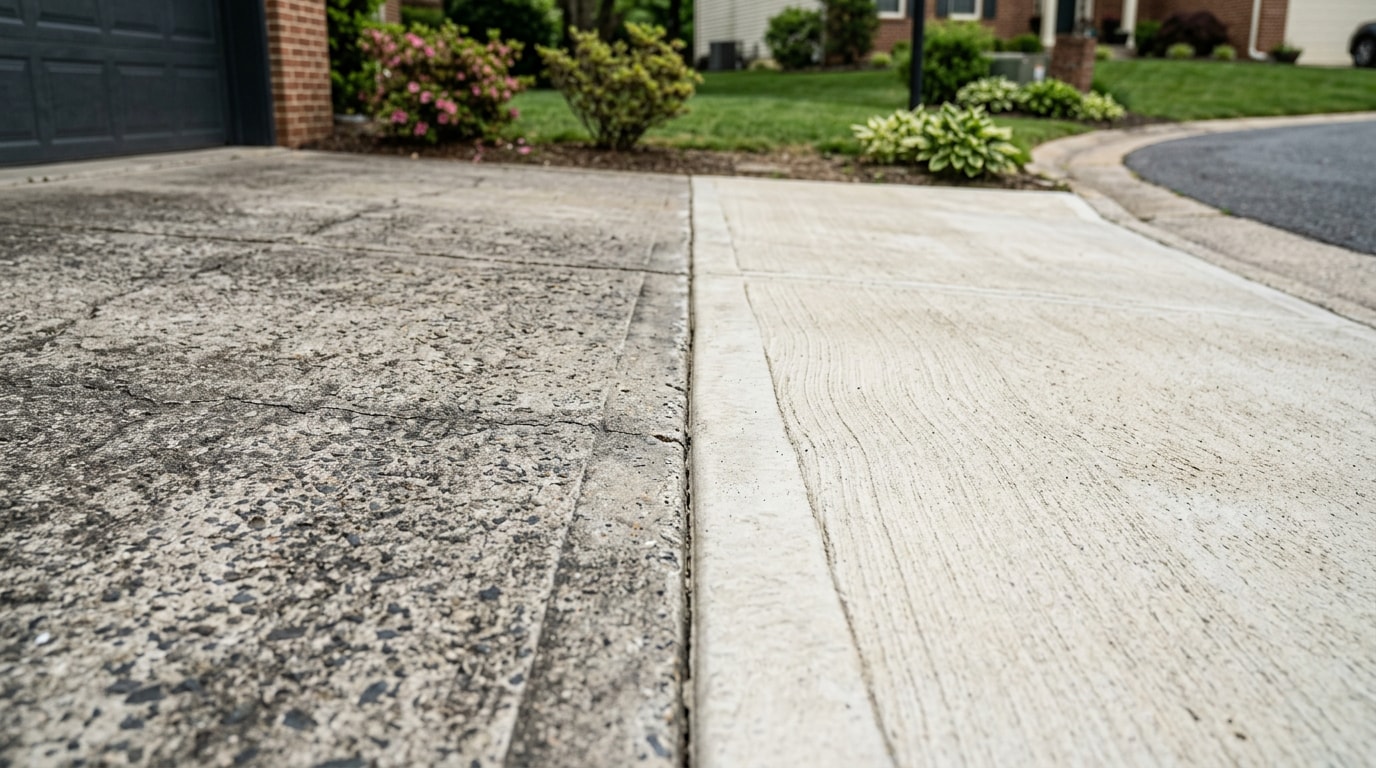
Yes, you can pour concrete over concrete in Anne Arundel County, MD, but only when the existing slab is structurally sound, free of major cracks, and the new layer goes down at least two inches thick. Get that wrong and you're not fixing your driveway, you're hiding the problem under a fresh surface for a year or two. This guide breaks down exactly when a concrete overlay makes sense here, when it doesn't, and what the county's clay soil and winters do to a pour-over job that looks fine on day one.
Can You Pour Concrete Over Concrete in Anne Arundel County? The Short Answer
Pouring new concrete directly on top of an old slab works as a resurfacing shortcut, but it only succeeds when the base slab is sound. If the old concrete is settling, heaving, or riddled with deep cracks, a new layer won't correct that movement, it will just ride along with it.
Concrete-over-concrete resurfacing is sometimes possible but rarely as simple as it looks online. Success depends on three things: the old slab's condition, how well the new layer bonds to it, and whether anyone actually fixed the structural issues before pouring. Skipping that last step is where most Anne Arundel County overlay projects go wrong, and it's the single most common callback we see on jobs that were originally done as a DIY shortcut.
When You Can Pour Concrete Over Existing Concrete
A slab is a good candidate for an overlay when it checks these boxes:
- Only minor, hairline cracks or cosmetic surface flaws, nothing structural
- Sits on a base that isn't shifting, settling, or holding water underneath
- The problem is surface-level wear (fading, scaling, minor pitting), not a structural failure
- No active heaving or movement visible across a full freeze-thaw season
When to pour concrete over concrete comes down to one question: is the problem cosmetic, or is it structural? If you're not sure which one you're looking at, that's exactly what a professional assessment is for.
What Local Contractors Actually Check Before Saying Yes
New concrete poured over an old slab is only a real bargain when the base is stable, because deep cracks, spalling, heaving, or settlement will telegraph straight through to the fresh surface. We've walked more than a few Anne Arundel County driveways that looked fine from the porch but had hollow spots or standing water underneath once we probed the slab. A proper assessment includes checking for hollow sections, verifying drainage, and confirming the subbase hasn't eroded, not just a glance at the surface cracks.
If you want that kind of walkthrough before committing to a pour-over, our concrete contractor team can evaluate the slab on-site and tell you honestly whether it qualifies.
When NOT to Pour Concrete Over Concrete
Skip the overlay and remove the old slab instead if any of these apply:
- The slab is actively settling or sinking in sections
- Large or spreading cracks run through the surface
- Tree roots have grown underneath and are lifting the concrete
- The slab sits next to a doorway or staircase where added height becomes a trip hazard
- Drainage pools on the surface after rain instead of running off
New concrete should never be used to hide structural issues like significant settlement, active movement, frost heave, or poor drainage. Problems such as significant settlement, active movement, frost heave, poor drainage, and extensive deterioration must be addressed before additional concrete is placed, because covering these issues usually results in recurring damage. Pouring over a damaged slab doesn't fix the problem, it just delays the moment you have to deal with it, usually at a higher cost.
Anne Arundel County's clay-heavy soil holds water longer than sandy or loamy ground, which can erode the subbase under a cracked slab faster than most homeowners expect. Pair that with a Maryland winter and an already-compromised driveway tends to get worse fast once moisture works its way underneath.
It's also worth knowing what the county itself will and won't touch. Anne Arundel County does not endorse, inspect, guarantee, or handle payment for county contractors performing work on private property such as driveways or sidewalks when initiated by the property owner. The county's own program is limited to public infrastructure: the Bureau of Highways follows certain criteria when implementing its replacement and maintenance program, where localized concrete or asphalt that is heaved, sunken, perpetually holding water, or severely cracked and deteriorated is considered for localized replacement. That's public curbs and sidewalks, not your driveway or patio. You're on your own for the inspection, which is exactly why a second set of eyes matters before you pour. You can review the county's public concrete program scope directly if you want to see where the line is drawn.
Does Concrete Actually Bond to Concrete?
Not on its own, no. If you pour a new layer of concrete right on top of the old one without preparation, you won't get proper adhesion. You have to properly prepare the slab and then apply a chemical bonding agent on top of it so the new concrete adheres properly.
New concrete doesn't fuse to old concrete the way fresh material bonds to itself while curing. Without the right bonding agent or mechanical surface prep, like shot blasting or grinding, an overlay can delaminate or shear off within a few seasons. The American Concrete Pavement Association's guide to concrete overlays covers this in detail: concrete pavements that are structurally sound but in need of increased structural capacity or improved rideability, skid resistance, and reflectivity can be resurfaced, but care has to be taken when vehicles will be on the existing concrete during the process.
Minimum Thickness for Pouring Concrete Over Concrete
Your new layer needs to be at least two inches thick. The minimum recommended thickness for pouring concrete over existing concrete is generally 2 inches, approximately 50 millimeters. Go thinner and it cracks easily under normal pressure, since it won't bond adequately to the surface below it.
| Overlay Thickness | Result |
|---|---|
| Under 2 inches | Cracks early, poor bond, not recommended |
| 2 inches (minimum) | Workable for light foot traffic, cosmetic resurfacing |
| 2.5–4 inches | More durable, better for driveways with vehicle loads |
| Over 4 inches | May need extra reinforcement, check door and step clearances first |
Going thicker isn't automatically better. Extra overlay height can create problems at door thresholds and exterior steps, and deeper sections sometimes need added reinforcement to distribute loads properly. The right thickness is a judgment call made after measuring the existing slab and the surrounding grade, which is part of why we walk the site before quoting anything.
Pros of Pouring Concrete Over Concrete
- Skips demolition costs.
Concrete removal contractors typically charge between $2 and $6 per square foot , depending on location, thickness, and reinforcement, so pouring over a qualifying slab can mean real savings on demo and disposal fees.
- Faster turnaround. No tear-out, no hauling debris, no waiting on a new subbase to compact.
- Opens the door to decorative finishes. A stamped overlay can mimic brick, slate, or natural stone, which is a dramatic upgrade over a plain gray slab. If you want ideas for what that can look like, our stamped concrete pattern guide walks through pattern and color options.
Cons and Risks of Pouring Concrete Over Concrete
- Inherited problems.
If your existing surface isn't structurally sound or has issues such as cracking, your newly poured concrete will have the same issues.
- Height conflicts.
Adding a new layer of concrete adds height to the surface, and that extra height may pose problems in front of doorways, next to stairs, or in spots where concrete meets other paving.
- Freeze damage risk.
The added layer may make the slab more prone to damage from freezing temperatures. Anne Arundel's coastal location keeps winters milder than inland Maryland, but it still gets enough freeze-thaw swings to stress a thin, poorly bonded overlay. The annual number of nights below freezing in Maryland ranges from more than 100 nights in the northwest to fewer than 20 nights in the southeast , and Anne Arundel sits on that lower end, which is exactly why a poorly bonded overlay here tends to fail at the bond line first, not from sheer cold.
- Shorter lifespan. A layer poured over a much older slab generally won't match the service life of a standalone new pour, because the aging base underneath tends to shift or settle sooner, forcing an earlier full replacement than either layer alone would need.
- Reflective cracking. Cracks in the old slab, caused by improper leveling, tree roots, or a shifting subbase, tend to reappear in the same spots in the new layer within a season or two if the underlying cause wasn't addressed first.
Need the old slab evaluated for any of these red flags before deciding? Our concrete repair team can check for hollow spots, drainage issues, and subbase erosion before you commit either way.
Pour Over vs. Remove and Replace: Quick Comparison
| Factor | Pour Over Existing Slab | Remove and Replace |
|---|---|---|
| Demolition required | No | Yes, roughly $2–$6/sq ft to remove |
| Added height | Yes, 2+ inches | No, matches original grade |
| Best for | Cosmetic wear on a sound slab | Settling, deep cracks, poor subbase |
| Expected lifespan | Shorter than a standalone slab | Full standard service life |
| Bonding required | Yes, bonding agent or mechanical prep | Not applicable |
How to Pour Concrete Over Concrete: Step-by-Step
Once a slab actually qualifies, the process follows a fairly standard sequence:
- Clean the existing slab thoroughly of all dirt, debris, oil, and dust.
- Set a perimeter with string and stakes to guide the pour and control final grade.
- Install rebar or fiber mesh across the base for reinforcement.
- Choose bonded or unbonded. Bonded means priming the old layer with a bonding agent so the two slabs act as one. Unbonded means using a bond-breaking material, like sand or tar paper, between the layers so they move independently.
- Mix and pour the new concrete to the planned thickness.
- Level, smooth, and finish the surface with screeds and floats.
- Cut control joints to manage where future cracking happens.
- Cure properly before allowing any foot or vehicle traffic.
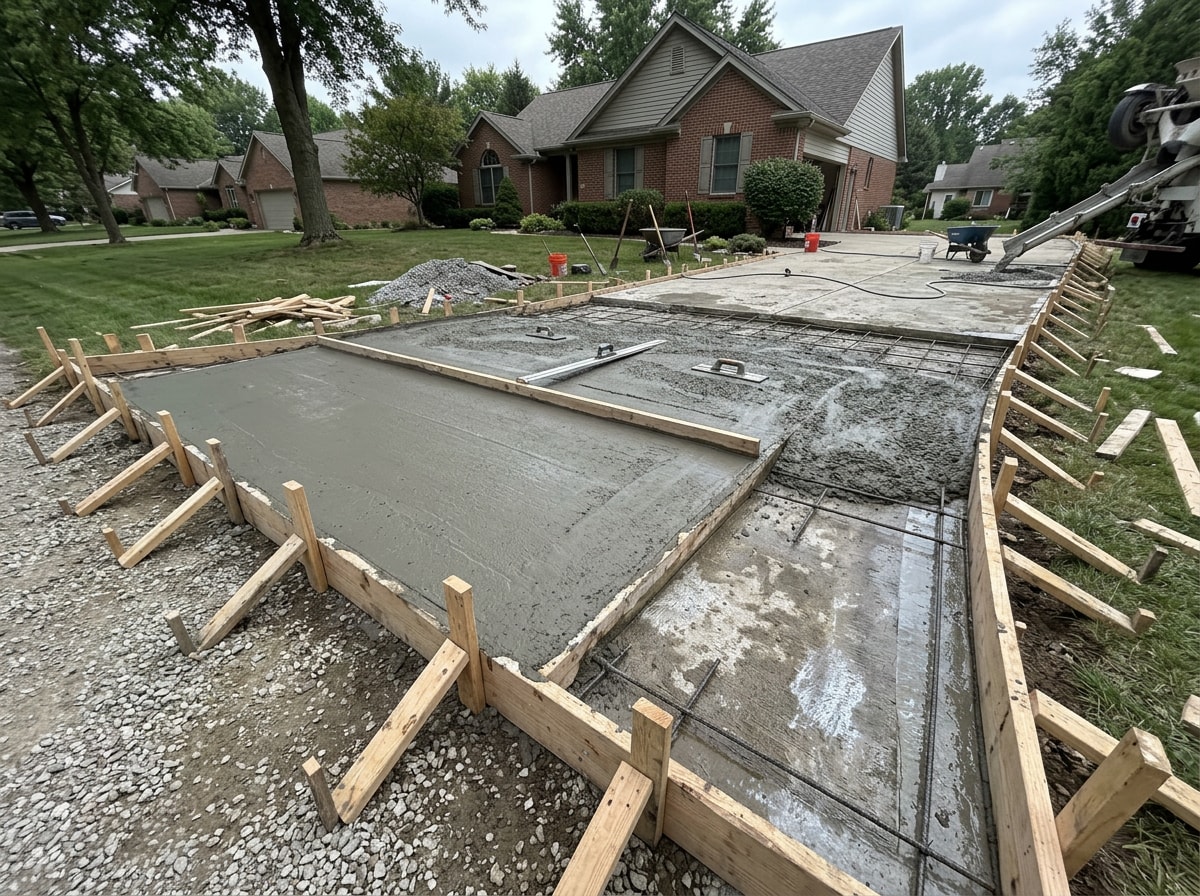
Skipping any one of these steps is usually what leads to the bond failure and reflective cracking covered earlier. If you'd rather hand this off than DIY it, a concrete finishing specialist can handle prep through cure correctly the first time.
Quick Checklist Before You Pour
- Inspect the slab for cracks, hollow spots, or movement
- Pressure-wash and degrease the surface
- Roughen the surface mechanically if needed
- Apply a bonding agent for a bonded overlay
- Pour at a minimum of 2 inches, more for vehicle traffic
- Add control joints before the pour sets
- Begin curing immediately after finishing
A Note on Local Conditions
Anne Arundel County sits in Maryland's coastal plain, where clay content in the soil runs high in many neighborhoods, from Glen Burnie to Pasadena to Severn. The average frost penetration in extreme southern portions of Maryland runs about five inches or less , which sounds mild compared to western Maryland, but it's still enough to shift an unstable subbase every winter. Combine that with clay soil that expands and contracts with moisture, and a slab that was marginal in October can fail outright by March. That's the pattern we see most often when a homeowner calls us after a pour-over job starts cracking in its first winter.
If you're in the area and want a straight answer on your specific slab, start with our Anne Arundel County service page or read through our Glen Burnie concrete guide for more on how local conditions shape these decisions.
FAQ
Can You Pour Concrete Over Cracked Concrete?
Not without repairing the cracks first. Pouring a new layer of concrete over heavily cracked concrete will not fix the problem, it will only eventually crack again, because unresolved issues simply transfer to the new concrete. Whatever caused the original cracking, a shifting subbase, tree roots, poor drainage, is still there, and it will affect the new surface the same way, just on a delay.
Is Pouring Concrete Over Concrete Cheaper Than Removing and Replacing It?
Often, yes, upfront. Concrete contractors typically charge between $2 and $6 per square foot for demolition and removal, and pouring over a qualifying slab skips that cost along with disposal fees. That savings only holds up if the slab actually qualifies. Pouring over a damaged slab to save money upfront usually costs more later in repairs or a full replacement anyway.
How Thick Does the New Layer Need to Be?
At least 2 inches. Anything thinner cracks easily under normal foot or vehicle traffic and won't bond properly to the old surface. For driveways carrying vehicle weight, 2.5 to 4 inches performs better long-term.
Does Anne Arundel County Inspect or Permit Driveway Overlays?
No. The county's Concrete Program covers public curbs, gutters, and sidewalks, not private driveways or patios. Homeowners are responsible for verifying their own slab's condition and checking whether a permit applies to their specific project before pouring.
What Are Other Options If Pouring Over Concrete Isn't Right for You?
Sometimes the right move is removing the existing concrete and starting fresh, not ideal, but necessary when a surface is severely damaged. Lighter-touch resurfacing coatings are another option worth discussing with a contractor. A concrete driveway installation from scratch also gives you a clean slate without the compromises of building on top of an old slab.
---
Not sure which category your slab falls into? Get a free estimate and we'll tell you straight whether a pour-over will hold up or whether you're better off starting fresh. You can also browse our full concrete and paving services to see everything we handle across Anne Arundel County.