If you're searching for how to get oil out of concrete in Severn, MD, the right method depends almost entirely on one thing: how long that stain has been sitting there. Fresh spills lift out in under an hour with the right absorbent. Stains baked in by a few Maryland summers need a poultice and some patience. This guide walks through both situations step by step, plus when it makes more sense to call a local concrete crew instead of fighting the stain yourself.
Why Oil Soaks Into Concrete Instead of Sitting on Top
Concrete looks solid, but it's full of microscopic air pockets and capillaries. Oil takes advantage of that structure, working its way below the surface instead of staying put where a rag could wipe it away. That's why soap and water alone rarely finish the job on anything but the lightest residue.
In Severn and the rest of Anne Arundel County, this problem gets worse with heat cycling. Hot asphalt-adjacent slabs expand during humid summer afternoons and contract overnight, which can draw oil deeper into the pores with every cycle. On driveways we've serviced near the BWI corridor, oil that's sat through even one full summer almost always needs more than one poultice treatment before it fully disappears.
Treat Fresh Oil Spills in the First 30 Minutes
The first half hour after a spill decides whether you're dealing with a quick cleanup or a permanent shadow. Work in two stages: stop the spread, then pull the oil out before it sinks deeper.
- Blot, don't wipe. Press a clean rag or paper towel straight down onto the spill. Dragging it across the surface just smears the oil over a wider area and pushes it further into the pores.
- Cover the spot with a dry absorbent.
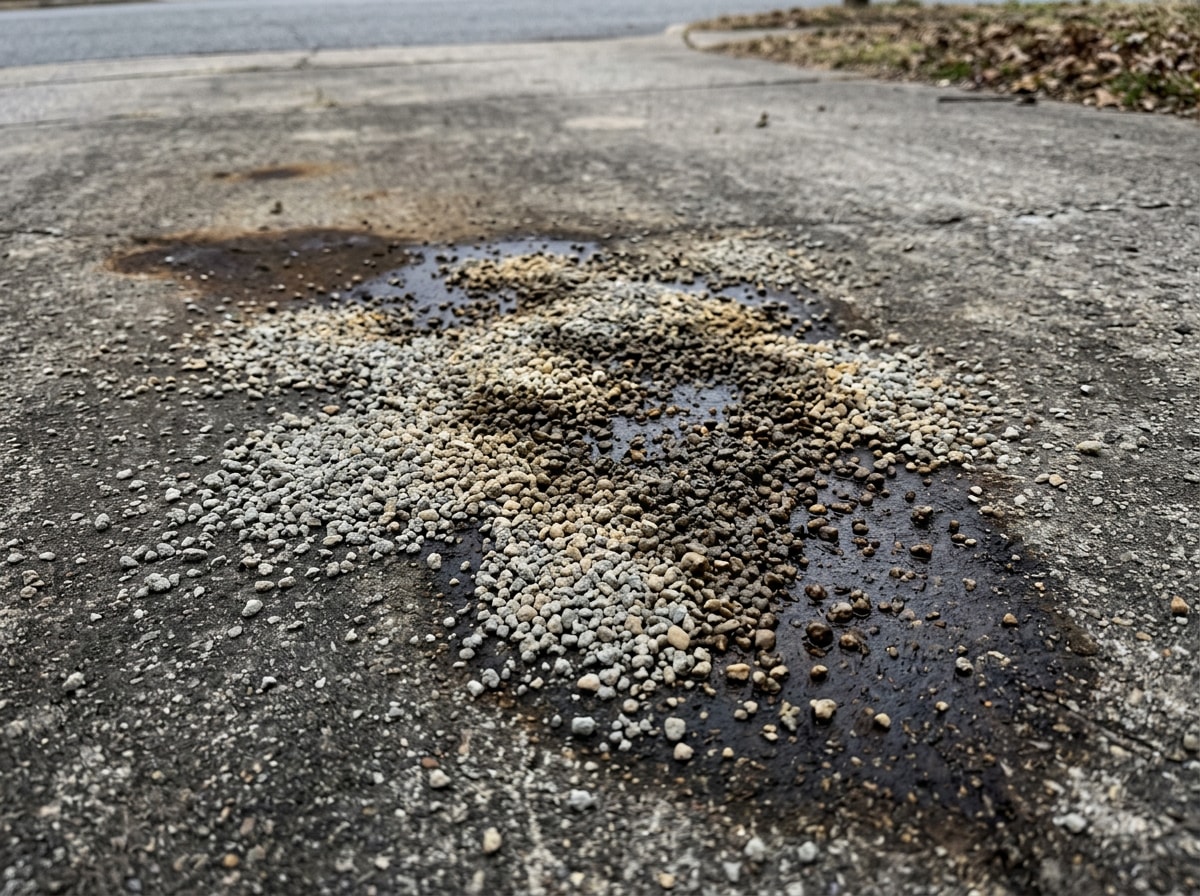
For fresh, wet stains, absorbents like cat litter or baking soda could do the trick . Clay-based litter and cornstarch work fastest; sawdust is a reasonable last resort if that's what's in the garage.
- Let it dwell, then sweep.
Cover the stain completely with cat litter and let it sit for 30 minutes for small stains, or overnight for larger ones , then sweep it up.
Household Methods for Leftover Residue
Once the bulk of the oil is absorbed, these common products handle whatever's left. They're listed from mildest to most aggressive.
| Method | Dwell Time | Best For | Caution |
|---|---|---|---|
| Dish or laundry detergent | 20–60 minutes | Light, fresh residue | Bleach boosts power but can discolor sealed or decorative surfaces |
| Baking soda | 30 min (fresh) to overnight (set-in) | General driveways, sidewalks | Can react with concrete's pH on polished or stained surfaces |
| Cat litter (clay-based) | 15–30 minutes, ground in with your shoe | Fresh spills, garage floors | Less effective once oil has fully dried |
| WD-40 | ~30 minutes, then scrub | Light surface residue | Works as a solvent, not a deep extractor |
| Commercial concrete degreaser | 10–20 minutes | Older, set spots household items can't touch |
Alkaline degreasers loosen oil but don't work as well on large spills or spills sitting for a long time
|
For dish soap specifically, a mild detergent like Dawn mixed with warm water is enough for small, fresh spots. Scrub with a stiff brush, then rinse completely so no residue runs toward the lawn or a storm drain.
Old, Set-In Oil Stains: The Poultice Method
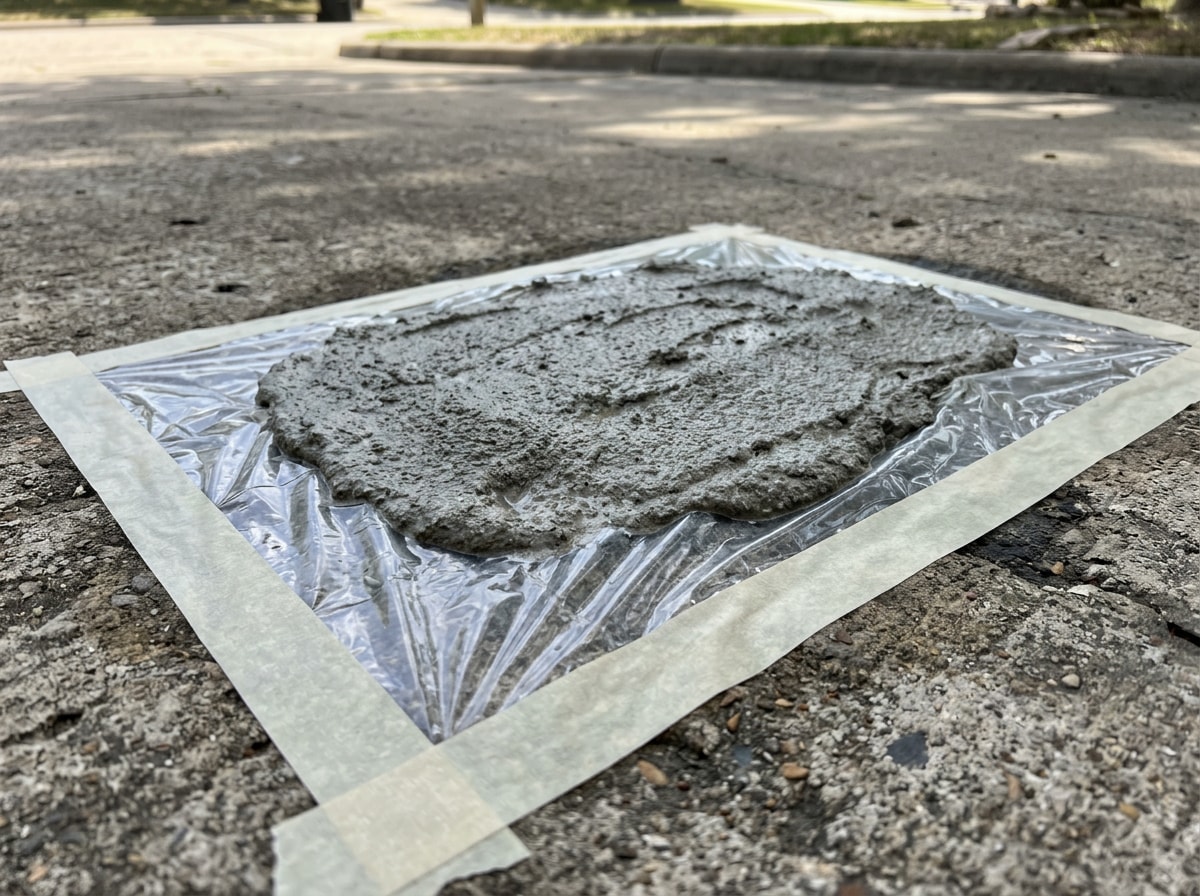
For stains that have soaked in for weeks or months, a poultice is the most reliable fix. Creating a poultice from a mix of cat litter or sawdust and a solvent like acetone, applied to the stain and left to sit for several hours, then scraped away draws the oil out through capillary action instead of just agitating the surface.
Here's the process:
- Mix an absorbent powder (baking soda or diatomaceous earth) with acetone or mineral spirits until it forms a thick, spreadable paste.
- Spread the paste about 1/4 inch thick directly over the stain.
- Cover with plastic sheeting and tape down the edges to slow evaporation.
- Let it dry fully.
Trowel it over the stain, let it sit for 24 hours, then scrape away .
- Rinse the area with water and repeat if any shadow remains.
Set realistic expectations here. A stain that's penetrated deep over several years may lighten noticeably without disappearing completely, even after multiple poultice cycles.
Pressure Washing: When It Helps and When It Hurts
Reaching for a pressure washer as your very first move on a fresh spill is one of the most common mistakes homeowners make. High-pressure water can drive oil deeper into the pores instead of lifting it out, especially before any degreaser has had a chance to break the oil's bond with the slab.
Used correctly, pressure washing works best as a final rinse step, after a degreaser or poultice has already loosened the stain. A wide-fan nozzle and moderate pressure, rather than a narrow turbo tip, reduces the risk of etching the surface or exposing the aggregate underneath.
If you're using chemical degreasers alongside a pressure washer, treat it like any other chemical-handling task. Protective equipment for eyes, face, and extremities should be provided and maintained in a reliable condition wherever chemical hazards or mechanical irritants are present , according to OSHA's general PPE standard. Gloves and eye protection aren't overkill for a weekend DIY job involving solvents.
DIY vs. Calling a Concrete Pro
Large stains, years-old spots, or driveways with several overlapping stains are often faster and cheaper to hand off to a professional than to keep treating yourself. If you've run a poultice cycle twice with little improvement, that's usually the signal to stop DIY-ing.
A professional job typically starts with a degreasing pre-treatment matched to the specific stain, followed by commercial-grade cleaning equipment, and often finishes with a protective sealer to keep the spot from restaining. If a stain has eaten into the surface finish itself, that's less a cleaning problem and more a concrete repair issue, and worth a second opinion before you keep scrubbing. Our team at SEJ Paving also handles full concrete driveway installation when a slab is too far gone to save. For a deeper walkthrough of the cleaning side specifically, see our companion guide on how to remove oil stains from concrete in Baltimore City.
Prevent Future Oil Stains on Concrete
Cleaning up today's stain is only half the job. Preventing the next one keeps you from repeating this whole process in six months.
Seal your concrete. A penetrating sealer reduces the porosity that lets oil soak in, so new spills bead on the surface instead of sinking in. As a general rule of thumb, higher-traffic and UV-exposed areas should get new sealer every 2-3 years, while lighter-traffic and interior areas can last 4-5 years , according to the American Society of Concrete Contractors' sealer guide. Our concrete finishing crews can advise on which sealer type fits your driveway's traffic and sun exposure.
Use a drip pan or absorbent mat. If a vehicle has a slow leak, a simple drip pan or mat under the problem spot catches drips before they ever touch the concrete. It's a low-cost line of defense while you get the leak fixed.
Dispose of used oil and oil-soaked absorbents properly. Dumping either down a storm drain is both illegal and bad for local waterways. Check with local automobile maintenance facilities, waste collectors, and government waste officials to find out when and where you can drop off used oil for recycling , per EPA guidance on managing used oil.
If you're weighing a full driveway refresh instead of another round of stain-chasing, start on our homepage or browse concrete contractor services to see what a reset looks like. For homeowners specifically in Severn, our local area page has more on what we handle nearby.
FAQ
Will a pressure washer remove oil stains from concrete?
Not by itself. A pressure washer needs to be paired with a degreaser or poultice treatment first. Used as a standalone first step, it can spread the stain and push oil deeper into the pores, making the problem harder to fix later.
How do you get old, set-in oil stains out of concrete?
The poultice method is the most reliable approach: an absorbent paste mixed with a solvent draws oil out through capillary action as it dries. Expect to repeat the process two to four times on stubborn spots, and understand that stains several years old may lighten significantly without vanishing completely.
Does vinegar work on concrete oil stains?
Vinegar can remove oil stains from concrete, though it doesn't work as well on asphalt driveways, because it contains acetic acid that breaks down oil residue . It's milder than a degreaser, so treat it as a light-duty option for small, fresh spots rather than old, set-in stains.
How often should a Severn, MD driveway be professionally cleaned?
Most driveways benefit from professional cleaning every 12 to 18 months. Homes with heavy vehicle traffic or frequent oil exposure may need annual service to stay ahead of buildup.
Will high-pressure cleaning damage my concrete?
It can, if the pressure is too high or the nozzle is held too close to the surface. A wide-fan nozzle and moderate pressure, used only after a degreaser or poultice has loosened the stain, typically avoids etching or exposing the aggregate underneath.
What should I avoid when treating an oil stain at home?
Skip gasoline as an absorbent or solvent ; it's flammable and leaves a persistent odor that's worse than the original stain. Also avoid scrubbing a fresh spill before absorbing the bulk of it, since that just grinds the oil further into the surface.
---
Have a stain that won't budge, or a slab that needs more than cleaning? Get a free estimate from SEJ Paving's concrete crew. We serve Severn and the rest of Anne Arundel County, and we're happy to tell you honestly whether it's a cleaning job or a repair job.