If you want to remove oil stain from concrete Baltimore City, MD rowhouse driveways and alley pads keep collecting every summer, the right fix depends on how long that stain has been soaking in. Older rowhouse concrete drinks oil faster than a newer suburban slab, so the trick that worked for a cousin out in the county might just smear the mark around here. Below are the methods that actually lift Baltimore's stubborn oil stains, ranked from easiest to toughest.
Step-by-Step Methods to Remove Oil Stains from Concrete
Fresh spills respond well to absorbent powders and dish soap. Older, set-in stains usually need a baking soda paste, a commercial degreaser, or professional hot-water pressure washing.
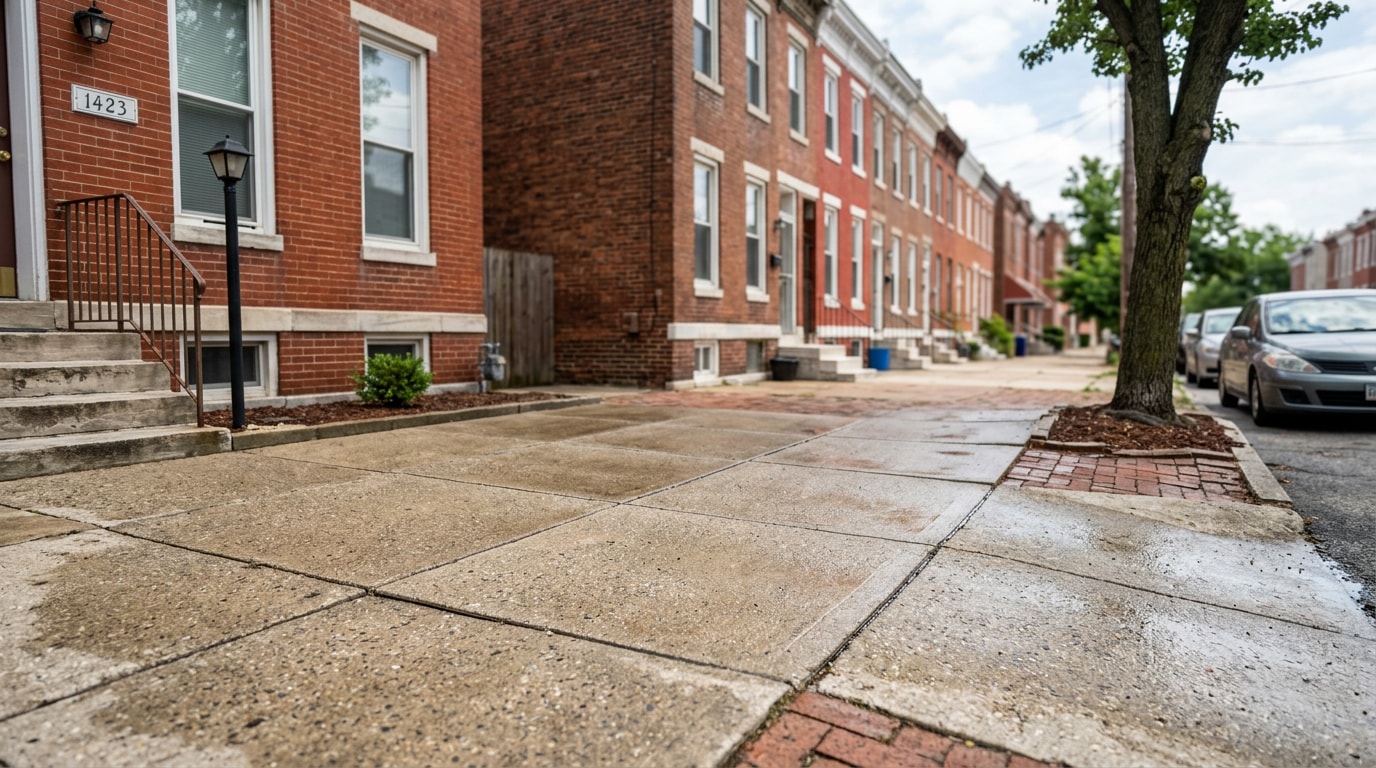
Baltimore's housing stock adds a wrinkle. Many rowhouse driveways and alley pads were poured decades ago, and older concrete tends to be more porous, letting oil soak in deeper before anyone notices the stain. That's one reason methods that work fast on a newer suburban slab can take longer here.
| Method | Best For | Typical Cost | Difficulty | Baltimore Notes |
|---|---|---|---|---|
| Cat litter | Fresh spills (under 1 hour) | $5–8 | Easy | Works on almost any surface |
| Baking soda paste | Moderate, days-old stains | $2–4 | Easy | Apply sooner on older, porous rowhouse concrete |
| Dish soap scrub | Stains under a week old | $3–5 | Easy–Moderate | Good for small alley pads |
| Commercial degreaser | Set-in, months-old stains | $15–30 | Moderate | Common on wide driveway aprons in South Baltimore |
| Professional pressure washing | Deep, large, or recurring stains | $150–400 | Pro job | Recommended for pre-WWII slab driveways |
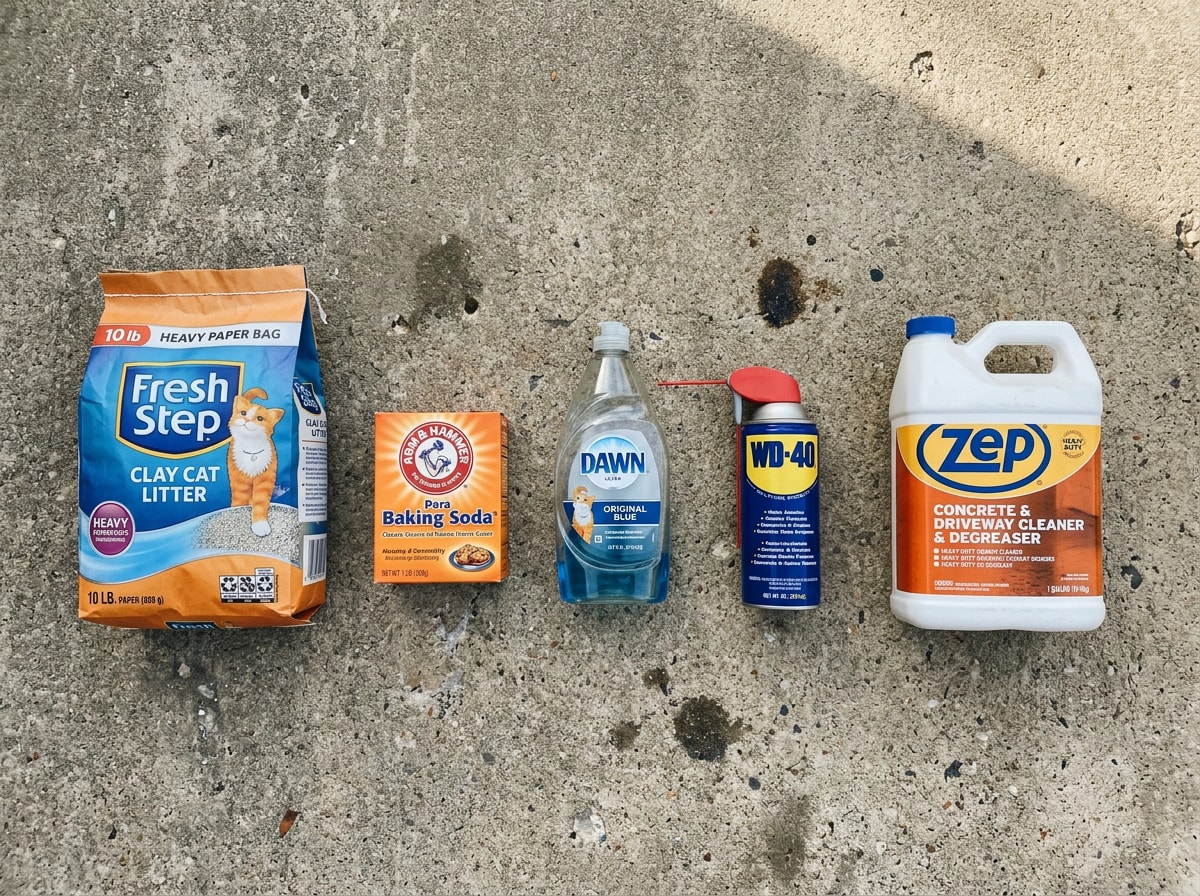
A degreaser is the standard recommendation for an oil stain, while dry methods like grinding are reserved for stains that have already soaked deep into the slab. Remove stains from concrete using wet or dry methods, choosing the approach according to stain type: a degreaser may work on an oil stain, an acid-based cleaner may lift rust, and dry methods such as sandblasting or grinding may be necessary if a substance has soaked in. That last point matters most for Baltimore's older rowhouse slabs, where a stain that's been there since last winter has usually gone past the point where soap alone will finish the job.
Cat Litter
Plain clay litter (not clumping) is the fastest, cheapest first response to a fresh spill.
- Blot excess oil with a cloth before you start.
- Cover the stain completely with litter and let it sit several hours, or overnight for large spills.
- Sweep it away, then scrub any faint residue with dish soap and hot water.
- Repeat once more if the mark is still visible.
Baking Soda
Baking soda is cheap, gentle, and already in most kitchens, which makes it one of the most recommended fixes for moderate stains.
- Mix baking soda with a little water into a thick paste.
- Spread it over the stain and let it sit 15–30 minutes.
- Scrub with a stiff bristle brush, then rinse with warm water.
- Repeat for stubborn spots, letting it sit overnight if needed.
Baking soda's mild alkalinity can dull decorative or polished concrete finishes with repeated use, so test an inconspicuous spot first if your driveway has a sealed or stamped surface.
Dish Soap
Dish soap paired with hot water and a stiff nylon brush works well on stains under a week old.
- Wet the area with warm water.
- Apply dish soap directly to the stain.
- Scrub in small circles, rinse often, and repeat two or three times if needed.
Laundry Detergent
Powdered laundry detergent made into a paste is a fallback when dish soap alone isn't cutting it, but it only handles superficial stains well. It's also slightly more abrasive, so repeated use on the same spot can wear the surface over time. Treat it as a backup, not a first choice.
WD-40
Spraying WD-40 directly onto an oil stain, letting it sit, then scrubbing and rinsing can loosen residue that soap alone won't touch. It works as a solvent that breaks the stain's grip rather than a full remover, so plan on following up with a soap-and-water rinse. It's a useful middle step between household products and a dedicated degreaser.
Commercial Concrete Degreaser
When household methods stall, it's time for a dedicated concrete degreaser.
- Follow the product's dilution instructions closely; overly strong mixes can damage sealed or decorative surfaces.
- Let the cleaner sit long enough to penetrate before scrubbing.
- Rinse thoroughly with hot water.
One safety note worth repeating for Baltimore City homeowners: oily wash water should never be hosed straight into a street storm drain. More on why below.
Protect Baltimore's Storm Drains When You Clean
This is the part most generic driveway-cleaning guides skip, and it's worth taking seriously here. Baltimore's storm drains don't run to a treatment plant. They flow straight to the harbor, and from there into the Patapsco River and Chesapeake Bay.
Baltimore City's own code addresses this directly. City law prohibits allowing oil, naphtha, benzine, or gasoline to be pumped, discharged, or otherwise escape into the harbor from land, piers, wharves, or warehouses adjacent to it. Rinsing degreaser-and-oil wash water into a curbside storm inlet runs afoul of that same intent, even on a residential rowhouse block.
The scale of the risk is bigger than most people assume. A single quart of spilled oil can contaminate up to 250,000 gallons of groundwater and make it unsafe to drink. If you're scrubbing a degreaser into a driveway apron that slopes toward the street, direct the rinse water onto a grassed area or a gravel strip instead of letting it run to the gutter.
Our Favorite Oil Stain Removers
Beyond basic degreasers, two product categories stand out for different situations.
A heavy-duty gel-based remover clings to vertical or sloped surfaces and works well on deep, set-in stains that have had months to soak in. It costs more, but it's worth it for a driveway apron that's been neglected for a while. A slower microbial or bio-based remover uses oil-eating bacteria instead of harsh chemicals, which fits eco-conscious households or stains close to plant beds and storm drains.
If you're weighing options for a specific driveway, it helps to see how these products perform on a larger scale. Our concrete work guide for homeowners and businesses covers surface prep and cleaning decisions that apply just as well to a Baltimore City rowhouse pad as a Glen Burnie driveway.
Professional Oil Stain Removal in Baltimore City
Some stains simply aren't worth fighting yourself. If a stain is more than a few months old, covers a large section of a driveway apron, or keeps reappearing after cleaning, DIY scrubbing stops being cost-effective. The time and product spend starts to rival a single professional visit.
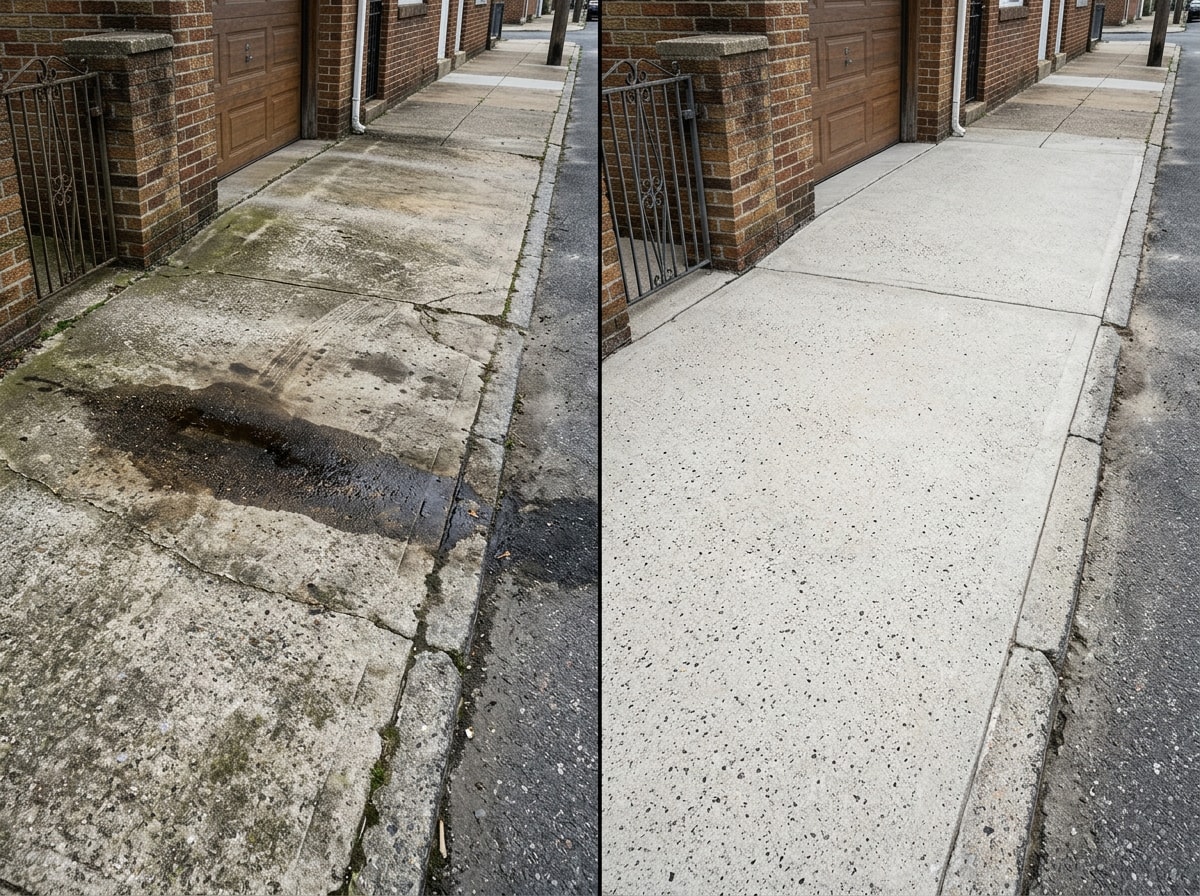
Row-house driveways and shared alley pads around Baltimore City often have older, more porous concrete, which lets oil set in deeper than it would on newer suburban pavement. Our crews at SEJ Paving see this pattern on almost every block we work in South Baltimore and Pigtown: a quick cat litter treatment lifts a weekend spill, but a stain that's been sitting since last winter usually needs a degreaser and a hot-water rinse before it finally lets go.
Professional hot-water pressure washing and commercial-grade degreasing reach that depth without damaging the surface the way amateur scrubbing or overly strong chemicals might. As a rough guide, a stain under a month old and smaller than a dinner plate is usually fine to DIY. Anything older, larger, or recurring is worth a call to a crew that handles concrete repair regularly, especially if the oil has started pitting or darkening the surface itself rather than just sitting on top of it.
If the slab is too far gone to clean back to an even color, a full concrete driveway installation is sometimes the more cost-effective long-term fix. We serve homeowners throughout Baltimore City and the surrounding region, and we're happy to tell you honestly whether your driveway is a cleaning job or a replacement job. Get a free estimate before you spend another weekend scrubbing.
FAQ
What Is the Fastest Way to Remove an Oil Stain from Concrete?
For a fresh spill, the fastest fix is absorbing excess oil with cat litter, scrubbing with dish soap and hot water, then rinsing thoroughly, often done within an hour. Older, set-in stains need a commercial degreaser or pressure washing instead, since quick fixes won't reach oil that's already soaked in.
Does Vinegar Remove Oil Stains from Concrete?
Vinegar's mild acetic acid can help as a light finishing step, especially paired with baking soda for the fizzing reaction that loosens surface residue. It's not a primary stain remover on its own, and prolonged contact with any acidic cleaner can dull or etch concrete over time, so test an inconspicuous spot first on sealed or decorative surfaces.
Does Bleach Remove Oil Stains from Concrete?
Bleach can lighten the appearance of an oil stain, but it doesn't actually break the oil down, so the mark often reappears once the surface dries. Use bleach for sanitizing or killing mildew, not as your primary oil remover, and never mix it with ammonia-based cleaners or vinegar.
How Long Does It Take to Remove an Oil Stain from Concrete?
Fresh spills often clear up within an hour to a day with basic absorb-and-scrub methods. Set-in stains are a different story. They may need several treatments spread over multiple days, and deeply soaked stains sometimes require professional equipment to fully disappear.
Can I Rinse Oily Wash Water into a Baltimore City Storm Drain?
No. Baltimore City code prohibits allowing oil or similar substances to escape into the harbor from adjacent land or premises , and storm drains carry runoff straight to local waterways without treatment. Direct oily rinse water onto grass or gravel instead of the gutter, and use absorbent materials to soak up the bulk of the oil before you ever reach for a hose.