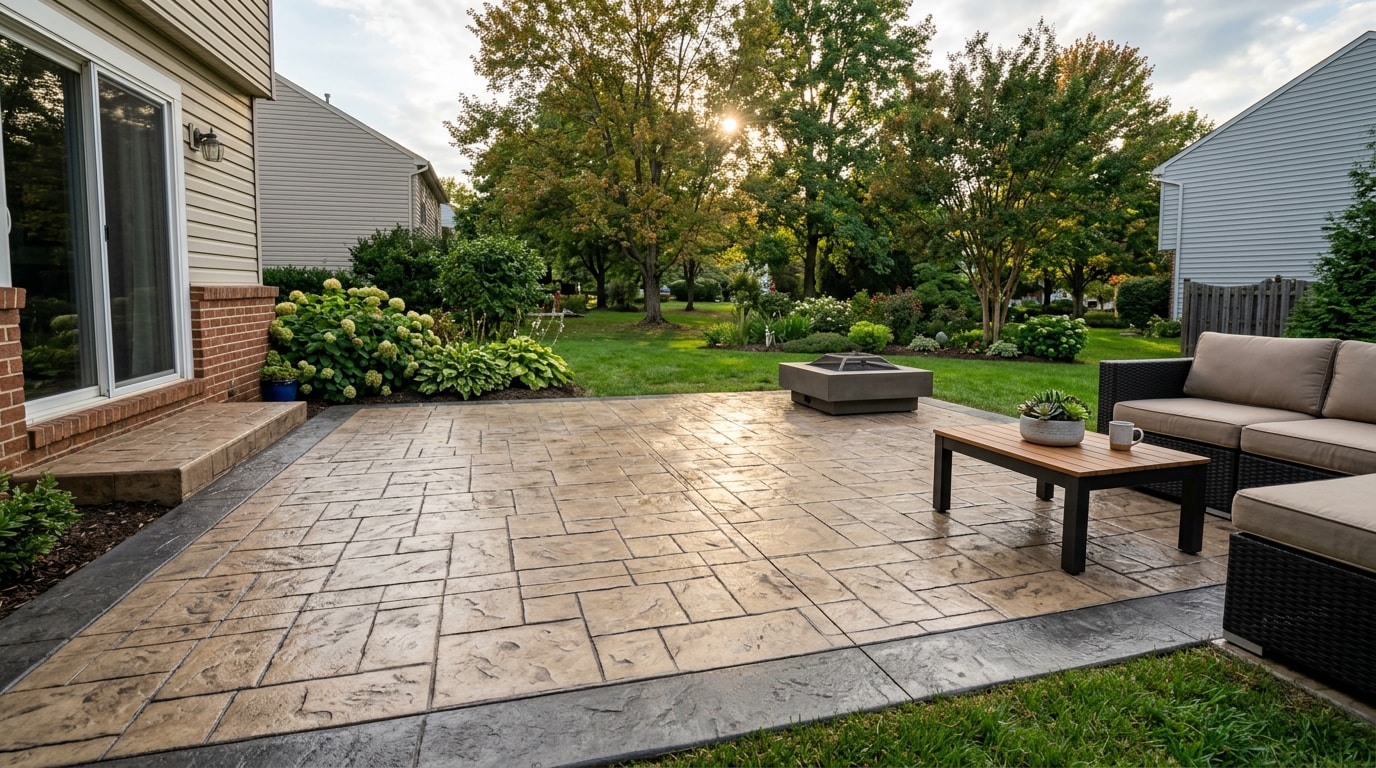
Modern stamped concrete patterns in Middle River, MD now do a convincing job of mimicking slate, wood, and natural stone without the cost or upkeep of the real material. The pattern and color combination you choose is what separates a patio that looks custom from one that looks like every other slab on the block. This guide covers the patterns homeowners here actually request, how color changes the final look, and what to expect as the patio ages.
What Is Stamped Concrete? Understanding the Stamping Process
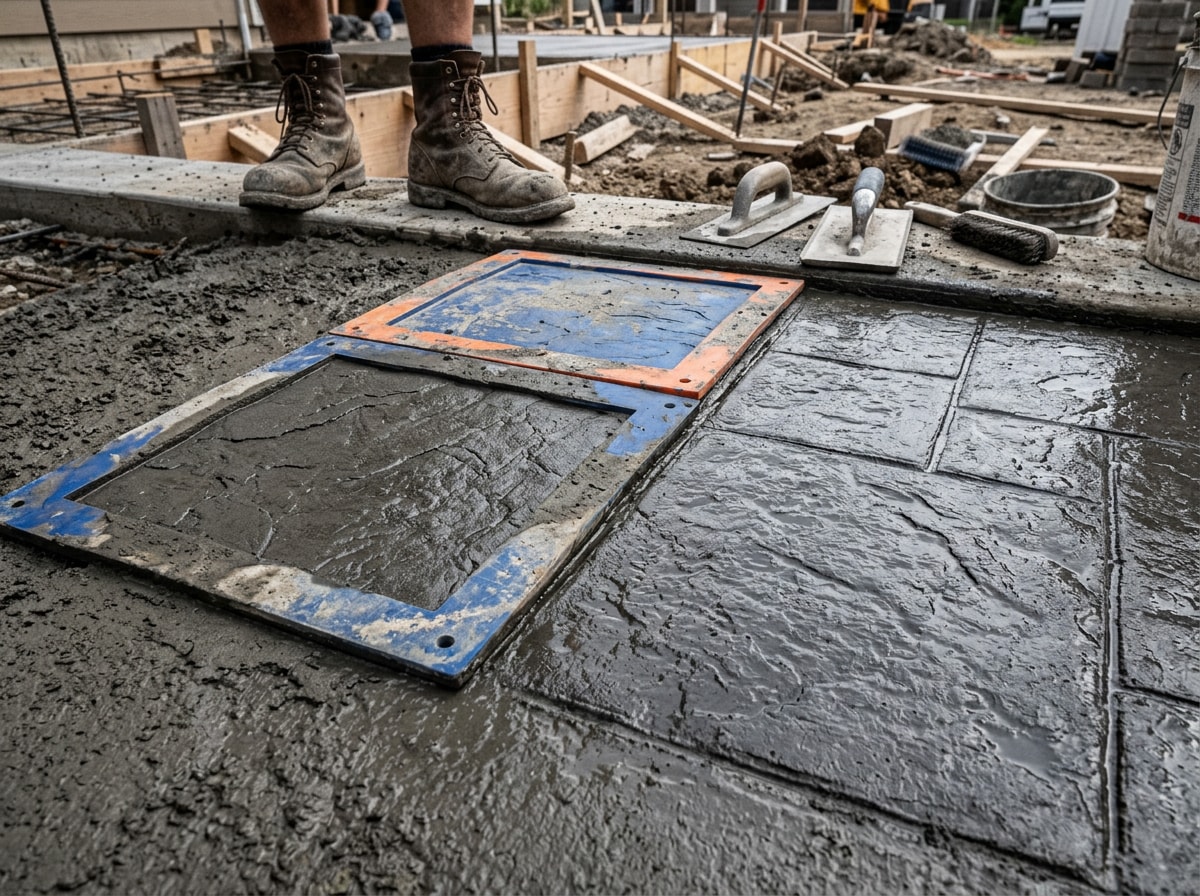
Stamped concrete is real poured, ready-mix concrete that's colored and textured while the slab is still wet, using heavy-duty polyurethane stamp mats to imprint a pattern before the surface cures. It isn't a sticker, decal, or paint-on overlay. The texture is pressed directly into the structural slab itself, so the pattern and the concrete are one and the same material.
For a typical backyard patio project, the stamping sequence is tight. The crew pours and screeds the slab, broadcasts color across the surface, and presses in the stamp mats while the concrete is still workable, usually within an hour or two of the pour. Industry guidance on decorative concrete points to a layered process combining integral concrete colors, color hardeners, surface texturing, jointing, and sealants to achieve the finished look , which is why timing and crew experience matter as much as the pattern itself. Humid Maryland summers can shorten that workable window even further.
Modern Stamped Concrete Patterns for Patios, Walkways, and Steps
Patterns aren't one-size-fits-all. A patio, a walkway, and a flight of steps each put different demands on a pattern, and the "most popular" pattern changes depending on where it's going.
For patios:
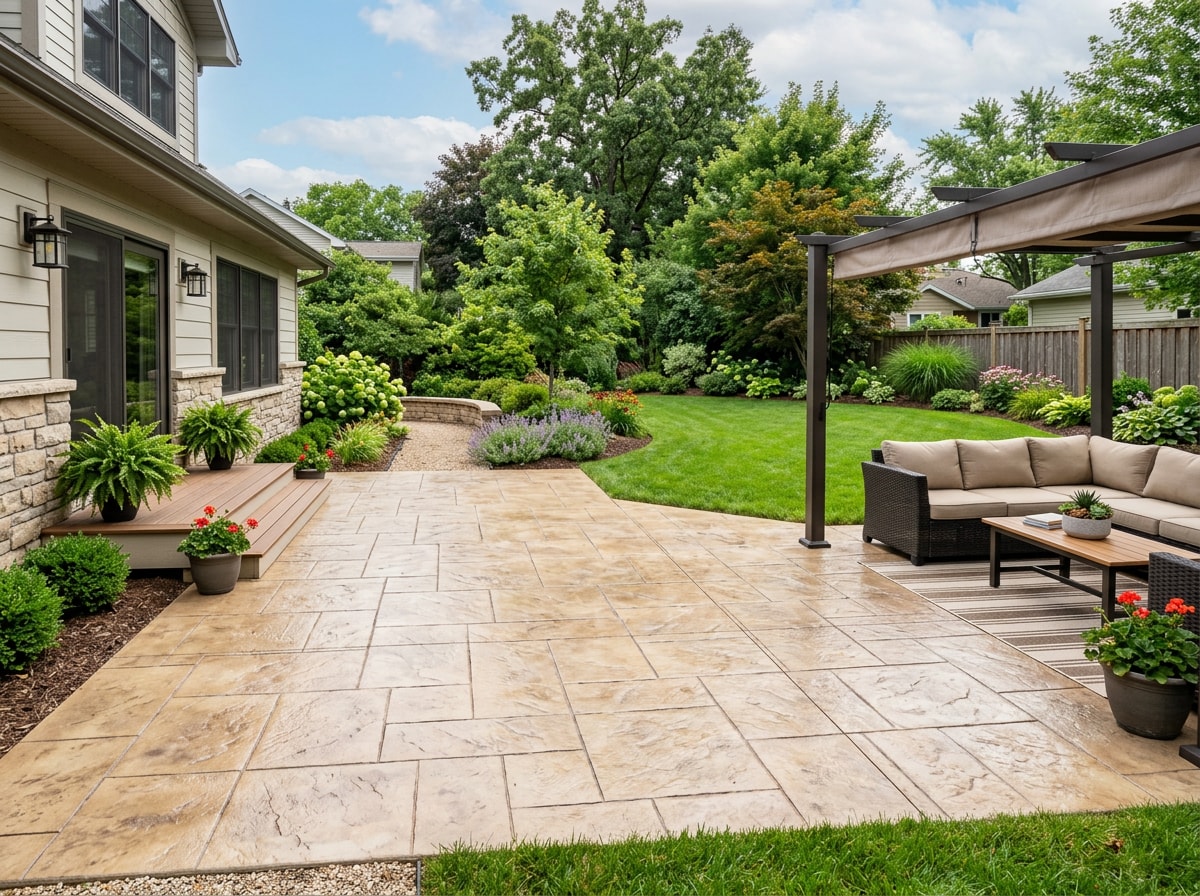
- Ashlar slate is the safest, most versatile choice. It's large-format, geometric, and pairs with almost any home style.
- Random flagstone makes more of a statement, with irregular joint lines that mimic quarried stone for a less uniform look.
- Wood plank has become one of the most requested modern options. Homeowners get the warmth of decking without the maintenance of real wood.
For steps: Most installers match the step tread (the flat walkable surface) to the main patio pattern so the two flow together. The riser, or vertical face of each step, is where a contrast pattern adds interest, such as a cobblestone-textured riser paired with an ashlar slate tread. Stamped steps also benefit from a bullnose edge, a rounded lip on the tread's front edge that softens the profile and reduces chipping and tripping risk compared to a sharp, square edge.
Large-format ashlar slate and wood plank are the two patterns most associated with contemporary outdoor living design right now. See our concrete patio installation services for project examples near you.
Pattern Comparison: Pros and Cons
| Pattern | Best For | Pros | Cons | Relative Cost Level |
|---|---|---|---|---|
| Ashlar Slate | Patios, pool decks | Versatile, geometric, hides minor cracking well | Can look common in dense neighborhoods | $$ |
| Random Flagstone | Statement patios | Natural, irregular look; strong curb appeal | Harder to match if repairs are needed later | $$$ |
| Wood Plank | Modern decks and patios | Distinct contemporary look, no wood rot | More detailed stamping, longer install time | $$$ |
| Cobblestone | Borders, walkways, steps | Classic texture, great for risers and accents | Tighter joint lines can collect debris | $$ |
This table is a starting point, not a final quote. Slab size, base prep, and color complexity all affect the final number, and a cracked slab further down the road may need a concrete repair patch that's easier to blend into a geometric pattern than an irregular one. For an accurate estimate on your property, request a free quote.
Custom Designs: Borders, Medallions & Multi-Pattern Layouts
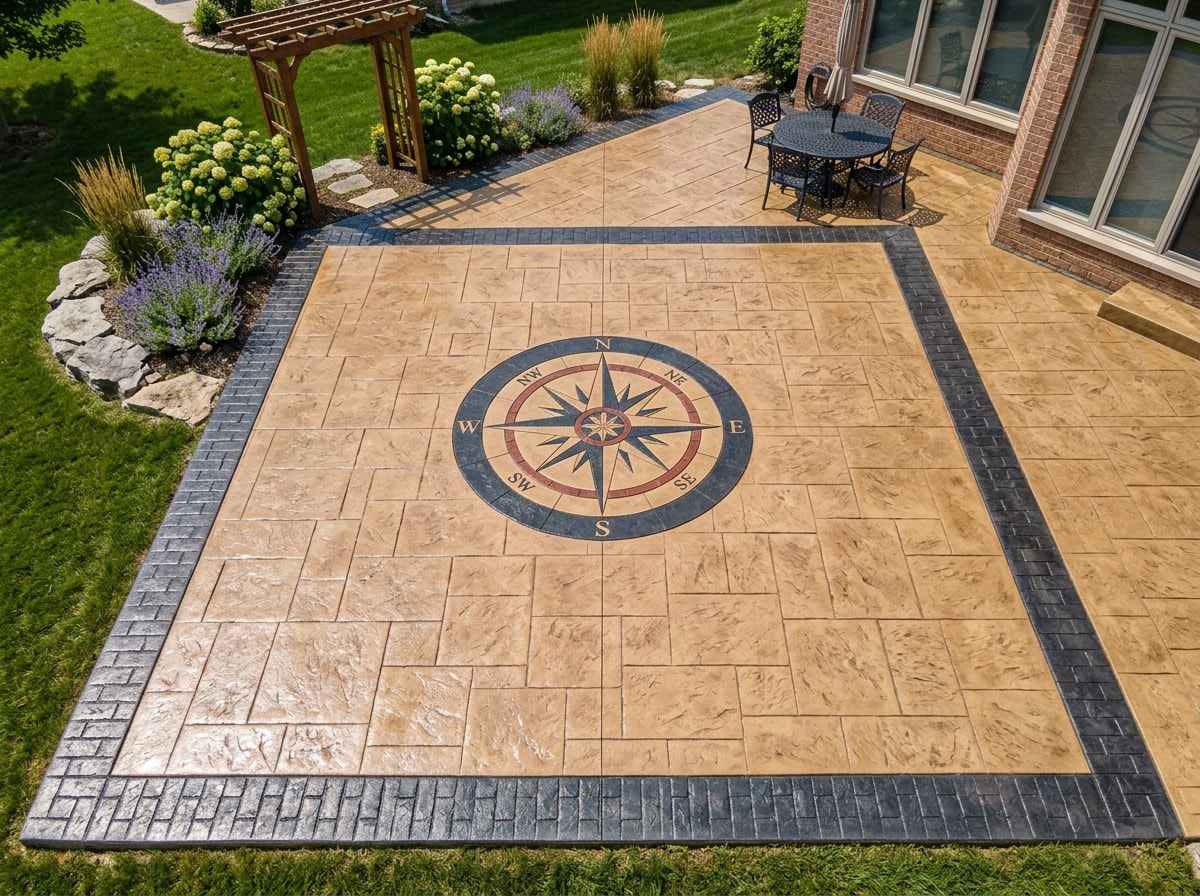
A single stamp pattern poured edge-to-edge can look flat. Most custom stamped concrete work layers in decorative borders, contrasting color bands, or a medallion as a focal point near a seating area or entry. Compass medallions, in particular, add a sense of intention that a plain slab can't match.
Multi-pattern layouts take this further, pairing one pattern for a dining patio with a different texture for the connecting walkway, often separated by a scored or contrasting border. It's a straightforward way to make a patio feel custom-designed rather than ordered off a catalog page.
Choosing the Right Colors: The Multi-Layered Coloring System
Pattern gets the attention, but color is what sells the illusion. Two patios stamped with the identical ashlar slate mat can look completely different depending on how the color layers are applied. One convinces as real stone; the other looks like tinted concrete.
Stamped concrete color comes from three layers working together:
- Integral concrete color mixed into the entire batch before the pour.
- Color hardener broadcast across the surface for richness and added strength.
- Release agent dusted on right before stamping to create antiquing in the texture lines.
The integral layer matters most over the long run. If the surface ever chips or wears, the concrete underneath still matches, instead of exposing plain gray beneath a painted-on color. That's the detail that separates a patio that still looks good after a decade from one that shows its age in year three.
A Color Tip Worth Asking Your Contractor About
A rule we rely on after years of pouring patios across Baltimore County: pair a lighter integral or hardener base color with a darker release agent. The contrast between the two is what reads as a natural stone look instead of tinted concrete.
Picture the same buff-colored ashlar slate patio poured two ways. Skip the release color, and the surface looks flat. Every groove is the same shade as the surrounding field, which reads as stamped paint rather than stone. Add a charcoal or walnut release agent before stamping, and the same buff base shows real depth. Recessed grout lines pick up the darker tone while the raised "stone" faces stay lighter, mimicking how real quarried slate weathers unevenly. That depth is subtle in photographs but obvious underfoot, and it's one of the easiest ways to tell an experienced installation from a rushed one.
Matching Patterns to Your Home's Style
Pattern choice isn't purely aesthetic, it's an architectural decision. A pattern and color that flatter a brick colonial can look out of place next to vinyl siding or a low ranch roofline.
Ranch, split-level, and cape cod homes are common throughout Middle River and greater Baltimore County, and these styles tend to pair best with mid-tone colors. Buff and sandstone tones sit comfortably against brick, siding, and stone veneer without competing for attention. A very light color can wash out against pale siding, and a very dark color can make a modest-sized yard feel smaller.
For this kind of home-style match, a medium-toned ashlar slate or flagstone in warm buff and sandstone tones usually reads as an extension of the house rather than a feature bolted onto the yard. Our team covering Middle River, MD sees this pairing work on the majority of ranch and colonial projects in the area.
How Patterns Age Over Time
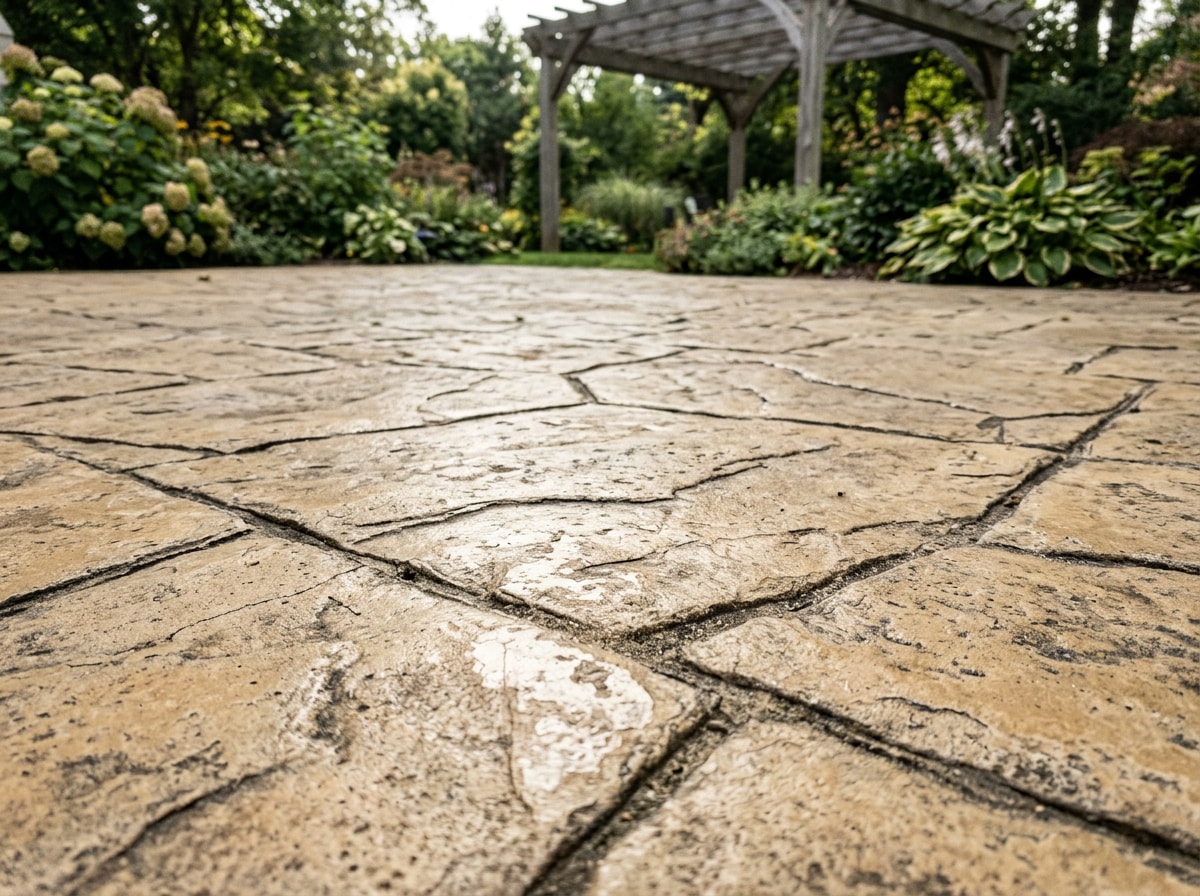
Geometric patterns like ashlar slate tend to stay crisp for decades because straight lines and consistent joint spacing don't highlight minor wear the way organic patterns do. Random flagstone and cobblestone can show their age a bit sooner, since uneven joint lines make surface erosion more visible.
Color matters just as much as pattern. Warm earth tones (buffs, tans, terracottas) tend to mellow gracefully as sealer wears thin, while cool grays can look washed out or patchy if resealing is delayed. Sealing isn't optional maintenance, either: contractors seal stamped concrete to protect it from water intrusion, deicing chemicals, and staining, as well as to enhance its appearance . Many Mid-Atlantic installers recommend reapplying sealer every two to three years given Maryland's freeze-thaw winters, though traffic and sun exposure shift that timeline. For a deeper look at keeping a slab's finish intact, our guide on removing oil stains from concrete covers the cleaning side of the same maintenance picture. For a side-by-side look at how stamped concrete compares to a paver surface over time, see our concrete pavers guide.
Permits for Backyard Patios in Middle River, MD
Permit rules for concrete projects vary by jurisdiction and by whether the structure is attached to the house, covers a septic field, or sits near a property line. Backyard patios are generally treated differently than driveways or additions, but "generally" isn't the same as "always," so it's worth confirming before a crew breaks ground.
The Baltimore County Department of Permits, Approvals and Inspections oversees the development and use of land across the county , and its site is the current source of truth on patio and accessory-structure requirements. If your project connects to a deck, a driveway, or a new grading plan, our excavation and site preparation team can flag permit triggers before work starts. Our crews serving Middle River, MD can also confirm what applies to your specific lot.
FAQ
Is Stamped Concrete Real Concrete?
Yes. Stamped concrete is genuine poured, ready-mix concrete that's textured and colored during installation, not a coating, sticker, or overlay applied afterward. The stamping happens while the slab is still wet, so the pattern becomes part of the structural material itself.
What Is the Most Popular Stamped Concrete Pattern?
Ashlar slate and random flagstone are the most commonly requested patterns because both replicate natural stone convincingly while working with almost any home style. Ashlar slate's geometric layout tends to edge out flagstone for patios specifically, since it stays versatile and ages predictably.
How Long Does Stamped Concrete Last?
Lifespan depends on more than the concrete itself. Conditions that can impact the service life of concrete structures should be identified during design and addressed in project specifications , which in practice means base prep, drainage, and resealing schedule drive how long a stamped patio holds up. With solid installation and routine resealing, a well-built patio can comfortably serve a household for decades.
Is Stamped Concrete Slippery When Wet?
It can be, especially with a high-gloss topical sealer. Most installers add a slip-resistant additive to the final sealer coat, and a satin or matte finish is generally safer around pools and entries than a wet-look gloss.
How Much Does Stamped Concrete Cost Per Square Foot?
Cost depends on pattern complexity, color layering, and base prep, not just square footage. Simpler patterns like ashlar slate typically run less than multi-color flagstone or wood plank work. For an exact number on your project, request a free quote rather than relying on a national average.
Is Stamped Concrete Worth It?
For most homeowners, yes. Stamped concrete costs less upfront than cut natural stone while delivering a similar look, though it does require periodic resealing to keep colors and texture looking sharp. Compare your options on our homepage or contact SEJ Paving to talk through your specific patio, walkway, or steps project.