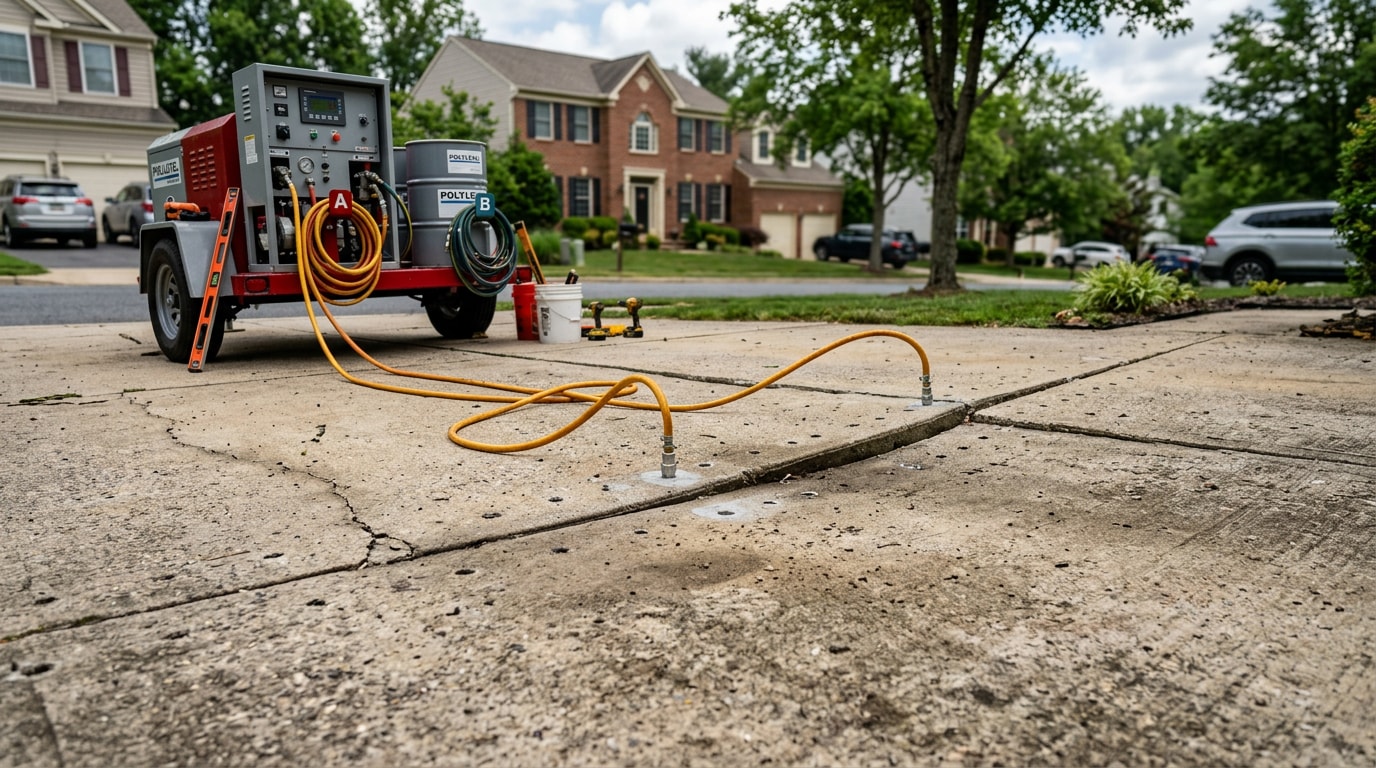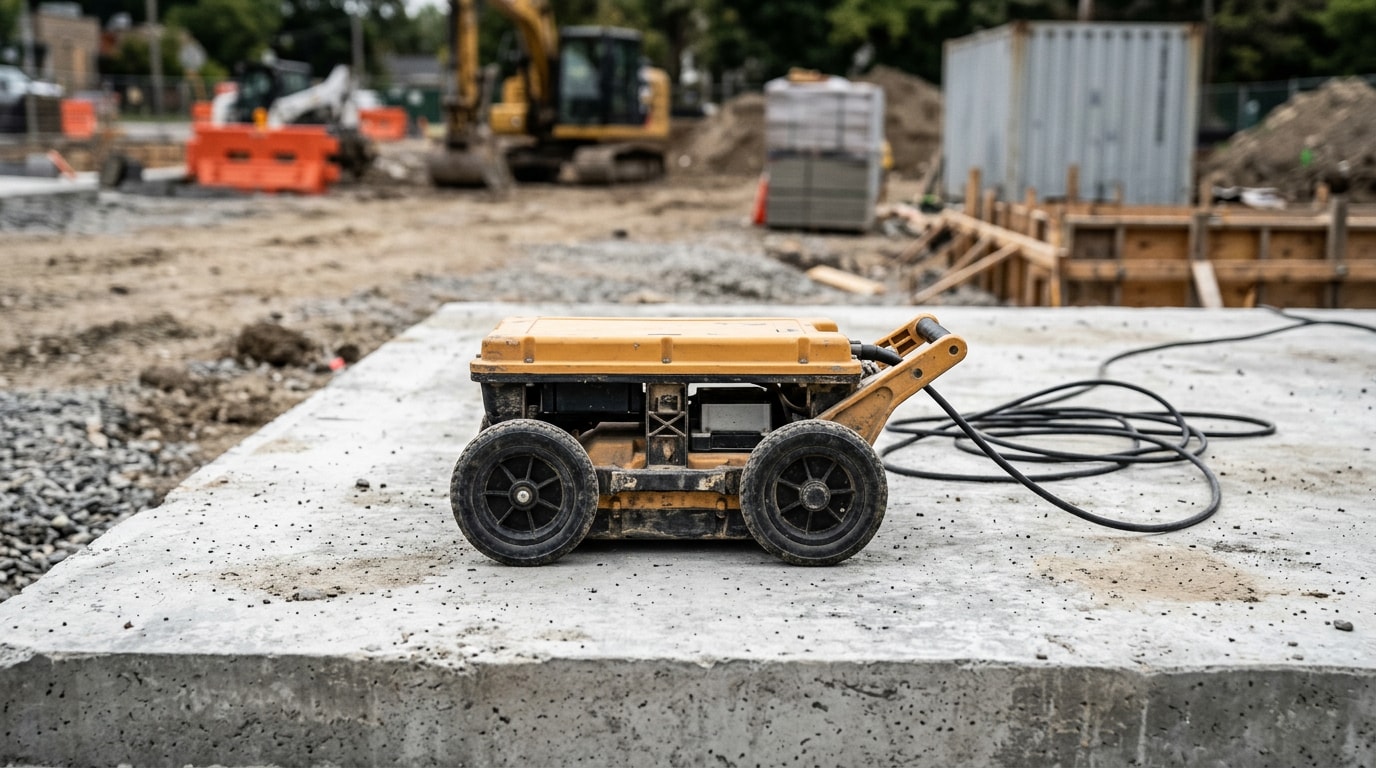
Concrete scanning in Severn, MD stops a core drill or saw blade before it ever reaches rebar, a post-tension cable, or a live conduit. Our crews run ground-penetrating radar (GPR) scans ahead of cutting and coring jobs across Anne Arundel County, because a short scan costs far less than a severed cable or a cracked slab. This guide covers what GPR finds, how it compares to concrete x-ray, and when a scan belongs on your project.
What Can Concrete Scanning Detect in Severn, MD?
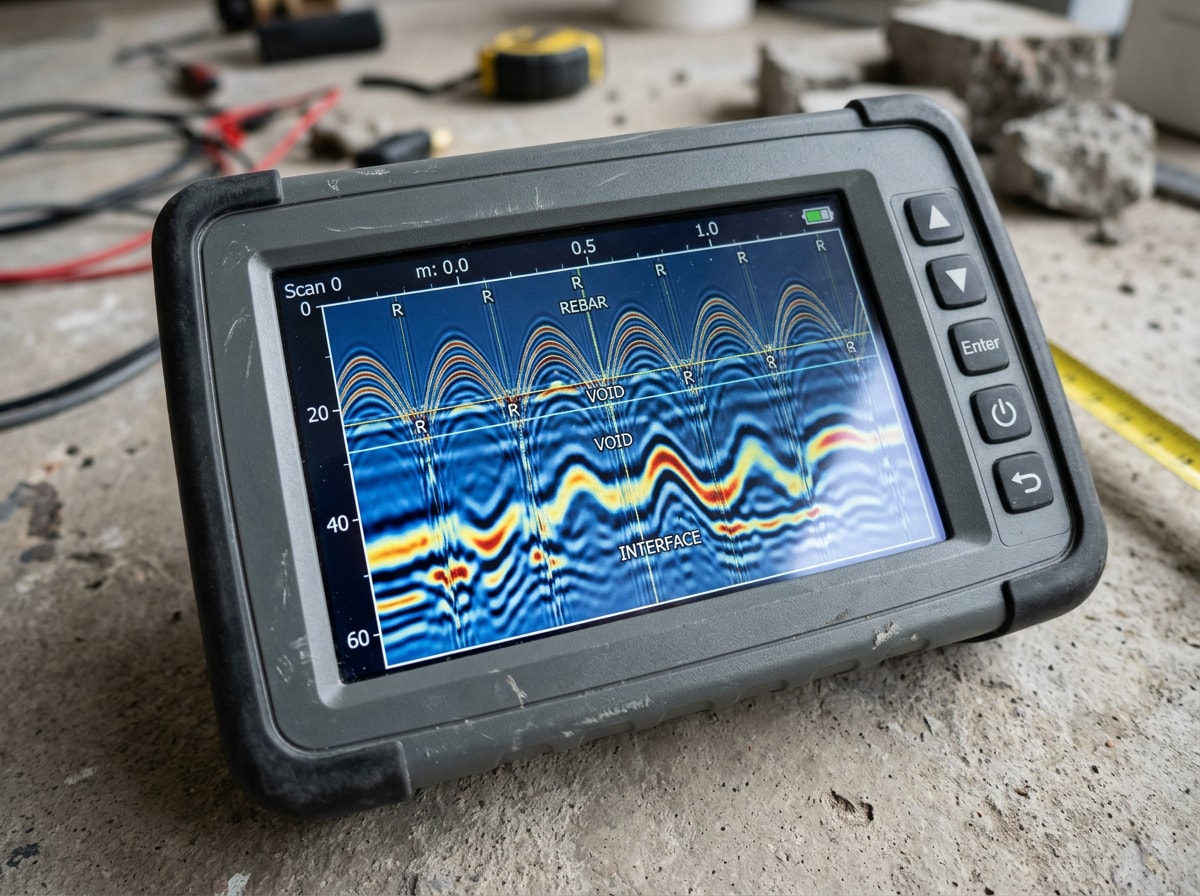
GPR concrete scanning uses radar pulses to image what's hidden inside a slab before anyone drills, cores, or cuts. A technician reads the reflected signal to flag rebar, post-tension cable, electrical conduit, and voids, all without damaging the surface.
A single scan typically covers:
- Rebar and wire mesh
- Post-tension cables
- Metal and plastic conduit
- Dowel rods and tie-bars
- Voids, cracks, and honeycombing
- Slab thickness and cover depth
Steel Reinforcement Detection (Rebar & Post-Tension Cable)
Steel reinforcement detection locates embedded post-tension cables and rebar inside an existing slab before core drilling, and it maps reinforcement patterns before breaking ground on a new build. Hitting a tensioned cable mid-drill can cause sudden, forceful failure, so confirming cable and rebar positions first protects both crews and the structure.
Concrete Depth, Thickness & Condition
GPR can also measure concrete depth and assess slab condition, which matters most on bridge decks where deterioration hides beneath the surface. Among the nondestructive methods evaluated for concrete bridge decks, ground-penetrating radar ranked among the top technologies for detecting and characterizing deterioration, alongside impact echo and ultrasonic surface waves. Depth readings on a typical slab scan run accurate to a fraction of an inch, though actual precision varies with concrete density, rebar spacing, and moisture. The guide covering surface GPR equipment, field procedures, and interpretation methods for subsurface investigation is a useful benchmark for how these depth and material readings are generated in the field.
Locating Embedded Electrical Services
GPR paired with electromagnetic (EM) locators maps electrical conduits, wires, and cables buried in concrete slabs and the soil beneath them. Combining both technologies improves confidence when a single method gives an unclear read, especially around embedded utilities in older structures.
Void Detection
GPR antennas locate voids beneath asphalt, subsurface soil, and concrete slabs, flagging hazards before they become sinkholes or structural failures. Catching a void early during a slab-on-grade inspection avoids costly surprises after construction is already underway.
GPR vs. Concrete X-Ray: Which Is Safer for Cutting?
Concrete x-ray was once the default scanning method, but GPR has largely replaced it on job sites. X-ray emits ionizing radiation, which creates a health hazard and forces strict safety controls. Construction work involving x-ray equipment falls under OSHA's ionizing radiation standard, which applies Nuclear Regulatory Commission protections against occupational radiation exposure and requires the work be performed by specially trained, competent personnel. That usually means clearing the work area and restricting the hours a crew can operate.
GPR poses no such risk and needs access from only one side of the slab, a real advantage on slab-on-grade work where the underside isn't reachable. Occupied buildings can stay open, and crews can scan during normal working hours without a radiation safety plan.
Benefits of GPR Concrete Scanning
- Real-time results. Findings are available on site, not days later in a report.
- One-side access. No need to reach the underside of a slab or wall.
- No radiation exposure. Crews and occupants face no health risk during a scan.
- Fewer struck utilities. Fewer severed cables and less unplanned downtime from core drilling or trench cutting.
- Depth to roughly 24 inches. Readings typically cover the top 12 to 18 inches reliably, with greater depths possible depending on slab density and rebar spacing.
Ready to schedule a scan before your next cut? Request a free estimate and we'll line up a technician around your crew's timeline.
When Do You Need a Concrete Scan?
Any job requiring a look inside or beneath concrete calls for a scan. That includes:
- New construction layout, before footers or slabs are poured
- Site preparation and grading work on a build-ready lot
- Renovation or retrofit projects that cut into existing slabs
- Concrete repair work involving patching, resurfacing, or joint cuts
- Anchor, railing, or bollard installation
- HVAC, plumbing, or electrical penetrations through a slab
Scanning before any of these starts is simply cheaper than fixing what a blind cut damages.
Concrete Scanning and Maryland's Miss Utility Law
Maryland law requires a Miss Utility (811) locate ticket before excavation or demolition, so utilities outside the slab get marked. The Miss Utility Law requires that a person or company intending to perform an excavation or demolition in Maryland contact Miss Utility to create an underground clearance locate ticket. That ticket covers lines buried in soil, not what's cast directly inside a concrete slab, wall, or deck.
That gap is exactly what concrete scanning fills. A Miss Utility ticket tells a crew what's in the ground around a job site. A GPR scan tells them what's inside the concrete itself, which matters just as much before a core bit or saw blade goes to work.
Industries That Rely on Concrete Scanning
Engineering firms, government facilities, environmental consultants, and industrial operators across Severn and Anne Arundel County all depend on concrete scanning before cutting into existing structures. Transportation agencies scan bridge decks for deterioration before repair work begins, and government buildings scan ahead of renovation to avoid disturbing aging infrastructure. Property owners planning a demolition contractor project face the same exposure, since a pre-cut scan is far cheaper than an unplanned utility or structural repair.
Concrete Scanning Equipment & Accuracy
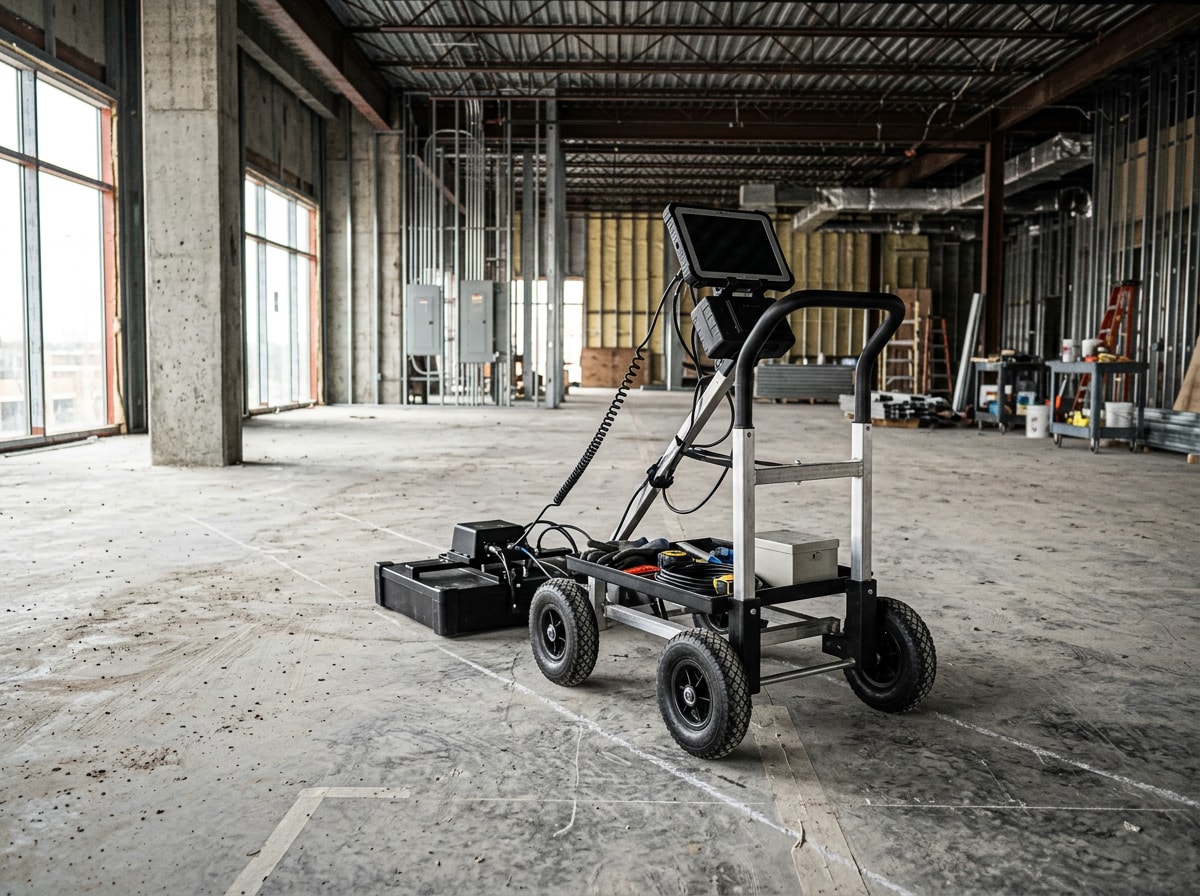
GPR equipment pairs antenna-based radar units with electromagnetic locators to generate subsurface images in real time. Reliable reads generally cover the top 12 to 18 inches of concrete, and any depth limits get noted on the field sketch rather than guessed at. Findings can be marked directly on the surface for a field crew, or documented with measurements and diagrams for an engineer who needs it on record.
Concrete Scanning Service Area
We scan concrete throughout Severn and surrounding Anne Arundel County communities, along with other parts of Maryland. Typical projects include slabs, walls, footers, and decks scanned for rebar, post-tension cable, conduit, and voids before coring or saw cutting begins. If you're also planning an aggregate concrete driveway or patio in the area, our aggregate concrete guide for Severn covers cost and installation details worth reviewing alongside a pre-cut scan.
Browse the full SEJ Paving site for our complete lineup of concrete, paving, and site-work services, or start with our concrete contractor services page for related scope.
FAQ
Is GPR a Safe Alternative to Concrete X-Ray?
Yes. GPR uses no radiation, so occupied buildings stay open during scanning. It relies on low-power radio waves instead, meaning nobody has to clear the area and work can proceed during normal business hours.
Can You Map Rebar for an Engineer, Not Just Mark It?
Yes. Technicians can mark findings directly on the surface for field crews, or produce documentation with measurements and diagrams for engineers and project managers who need it on record.
How Does Concrete Scanning Work?
A technician moves a GPR antenna across the surface in a grid pattern. The unit sends radio pulses into the slab and reads what bounces back. Denser materials like rebar and conduit reflect a stronger signal, which shows up on the display in real time and gets marked on the surface.
What Does Concrete Scanning Cost in Severn, MD?
Cost depends on the size of the area, how many targets need to be located, and whether you need a marked surface only or a formal report for an engineer. Most projects are priced by scope rather than a flat rate, so the most accurate number comes from describing the job directly.
How Soon Can You Get to a Severn, MD Site?
Response time depends on crew availability and project scope, but many requests can be scheduled quickly once site details are confirmed. Contact us directly to check current scheduling.
Article prepared by the SEJ Paving concrete scanning crew, who run GPR scans on commercial and residential sites throughout Anne Arundel County before any coring or saw cutting begins.