A concrete culvert pipe in Pasadena, MD has to do two jobs at once: move stormwater off your driveway or property and hold up a vehicle load without cracking. Get the sizing, bedding, or permit wrong and you end up with a washed-out driveway apron or a county stop-work notice. This guide walks through the permit rules, installation steps, and material choices Anne Arundel County properties actually deal with.
Do You Need a Permit for a Culvert Pipe in Pasadena, MD?
Pasadena sits in unincorporated Anne Arundel County, and any driveway work that ties into a county road falls under the county's right-of-way rules, not a simple homeowner judgment call.
The Residential Driveway Access Permit is required for any modification or new installation of a residential entrance flowing onto a County road, with or without the need to remove and replace concrete curb and gutter. That covers most culvert work, since the culvert sits under the driveway apron where it meets the road.
Anne Arundel County must approve the location, design geometrics, any drainage requirements, and the pavement cross section for a residential entrance onto a county road. In practice, that means the county reviews your proposed pipe size and placement before you dig, not after.
For the full application process and current fee schedule, check the Anne Arundel County Right-of-Way Permitting office before scheduling any excavation. Skipping this step is the single most common reason DIY culvert projects stall halfway through.
Concrete Culvert Installation Methods
Most Pasadena properties end up choosing between three approaches, depending on the waterway width and how much room the site gives a crew to work.
- Open-bottom box culverts span wider ditches or drainage swales without a closed base, letting the natural streambed stay intact.
- Corrugated steel pipe offers a lighter, flexible alternative for smaller, lower-load drainage runs.
- Rib-and-block slab systems use precast segments for faster assembly on tight residential lots.
Each method suits a different drainage profile, which is why sizing and material selection come before any digging starts.
How Contractors Install Concrete Culvert Pipe: Step-by-Step
Installing a concrete culvert pipe correctly means combining a technical sequence with a practical field checklist: excavate, bed the trench, place the pipe, then backfill and compact. Crews handling concrete contractor work across Pasadena follow this same sequence on most driveways and drainage runs.
Excavation and Trenching Safety
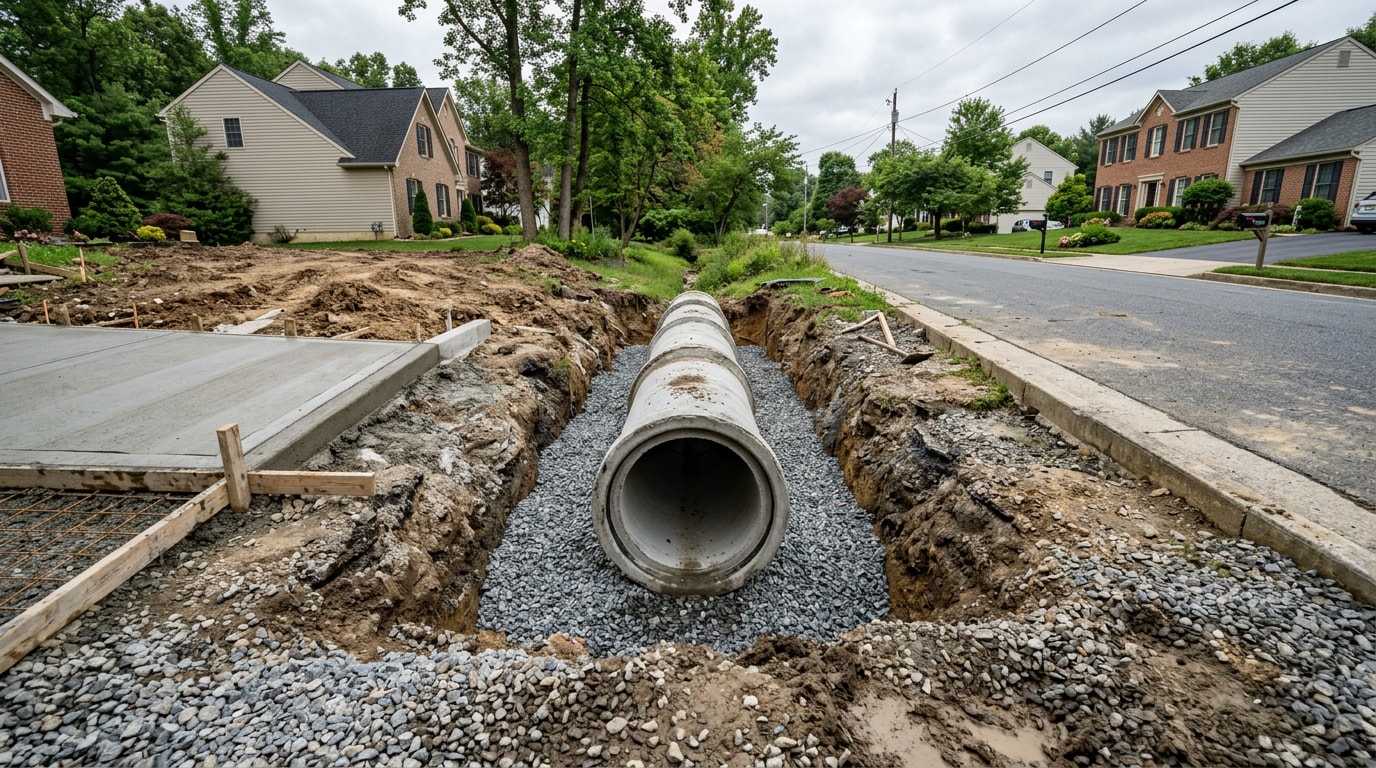
Trench excavation must be wide and deep enough to accommodate the pipe diameter plus working room on each side. Crews slope the trench bed and lay crushed stone or sand/gravel for stable pipe bedding, keeping it level and free of debris.
Large runs or questionable soil stability call for an engineer's input before digging. OSHA's excavation standard, 29 CFR 1926 Subpart P, requires that all excavations 5 feet deep or greater use one of several protective system options, including sloping, benching, shoring, or shielding with a trench box. Any crew working a deeper trench on your property should already be following those OSHA trenching and excavation standards as a baseline, not an afterthought.
Preparing the Pipe Joining Surfaces
Before each section goes in, workers clean the bell end and lubricate the gasket and spigot. A clean, well-lubricated pipe joint seats evenly and resists gasket roll, one of the more common causes of leaks in bell-and-spigot connections over time.
Setting the Reinforced Concrete Pipe Sections
A crane or backhoe lowers each reinforced concrete pipe (RCP) section into the trench while two workers guide it into alignment. The tongue end is inserted into the previously placed section, then seated fully using a crowbar or pipe puller. Careful alignment at this stage keeps the joint line straight and watertight for the life of the pipe.
Backfill and Compaction
Backfill goes in evenly on all sides of the pipe, not just on top. Uneven backfill invites shifting, compaction problems, and long-term settling that can crack the pipe or sink the surface above it. This is also where grading and compaction work matters most, since a poorly compacted trench undoes a correctly installed pipe within a season or two.
Concrete vs. Corrugated Metal vs. HDPE: Which Culvert Material Wins in Pasadena?
Material choice comes down to durability, load requirements, and how much maintenance an owner wants to take on. Concrete resists crushing and corrosion better than most alternatives, while corrugated metal and HDPE trade some strength for lower upfront cost and lighter handling.
| Material | Upfront Cost | Typical Service Life | Load Capacity | Best Use Case |
|---|---|---|---|---|
| Reinforced concrete (RCP) | Higher | 70–100+ years | High | Driveways, heavy traffic, poor soils |
| Corrugated metal (CMP) | Moderate | 25–50 years | Moderate | Lighter-duty drainage runs |
| HDPE/plastic | Lower | 50–100 years, resin-dependent | Lower–moderate | Budget projects, smaller ditches |
Galvanized corrugated steel typically lands in the 25–50 year range depending on the coating and soil chemistry, while corrosion resistance is where it falls behind concrete. Reinforced concrete pipe doesn't carry that corrosion risk, which is why the U.S. Army Corps of Engineers recommends a design life of 70 to 100 years for precast concrete pipe , a figure backed by decades of ACPA field performance data.
For Anne Arundel County's clay-heavy, poorly draining soils, concrete's load capacity often justifies the added cost on a driveway culvert that will see decades of vehicle traffic. Maryland also sets hard minimums regardless of which material you pick: acceptable minimum sizes include 18 inches diameter for most culverts, 24 inches if the pipe length exceeds 60 feet or runs under an expressway, and 15 inches for driveways and side drains.
The minimum cover for rigid concrete pipe is 0.75 feet from the top of the pipe to the top of the sub-base, or 1.0 feet in non-traffic areas.
Those numbers come straight from the MDOT SHA Highway Drainage Manual culvert design guidelines, which county engineers reference when reviewing driveway permits. Homeowners weighing concrete against plastic for a long-used driveway culvert should also read our guide to concrete pavers in Pasadena, MD for a broader look at hardscape material tradeoffs in the same soil conditions.
Why Hire a Professional Culvert Contractor Instead of DIY
DIY culvert work skips the permit check entirely and risks erosion, flooding, or driveway damage if the pipe is undersized or poorly bedded. A licensed concrete contractor handles both the compliance paperwork and the drainage math correctly the first time.
Maintaining Safe Access
Proper installation prevents potholes and muddy washouts, keeping the driveway passable through heavy rainfall and spring runoff without constant patching.
Site-Specific Solutions
Every property has different grading, soil, and drainage patterns. A contractor who handles site preparation sizes and places the culvert to match the site instead of defaulting to a one-size-fits-all pipe.
Concrete Culvert Pipe Types and Applications
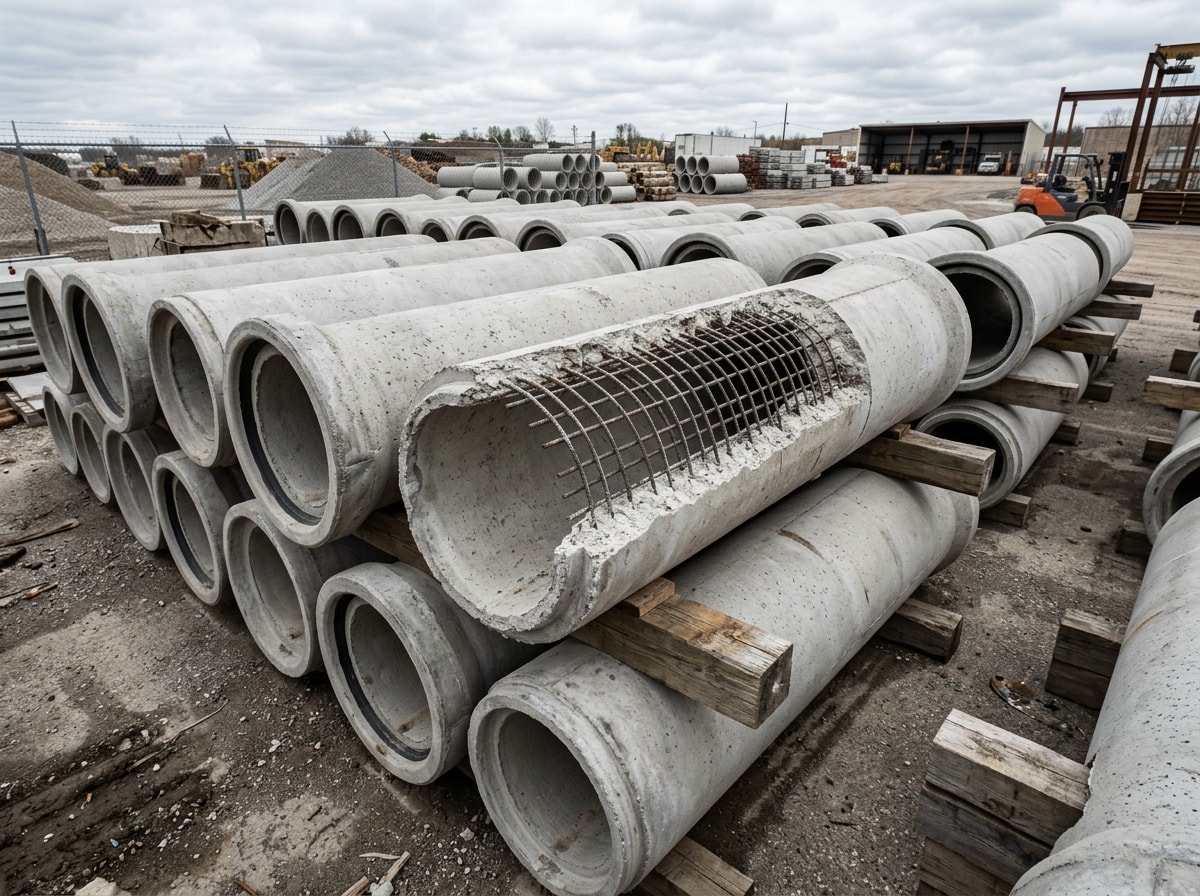
Concrete pipe is widely used in a variety of infrastructure and construction projects due to its strength and durability, with common applications including stormwater drainage systems, sanitary sewer systems, culverts, and irrigation systems.
Reinforced concrete pipe (RCP) is the most common type, known for its structural strength and load-bearing capacity; non-reinforced concrete pipe is used in low-load situations; and other variations include elliptical pipe for limited-height installations and jacking pipe for trenchless applications. For a typical Pasadena driveway, RCP covers nearly every residential scenario. Elliptical pipe only comes into play when the trench depth is restricted by a utility line or shallow bedrock.
I've walked plenty of Pasadena homeowners through this exact decision on-site, and the pattern holds: the driveways that fail early almost always skimped on bedding depth, not pipe material. Get the trench prep right and either concrete or a quality HDPE pipe will outlast the driveway surface above it.
Ready to get the sizing and permit paperwork handled correctly? Request a free estimate and we'll walk the site with you before anything gets dug.
FAQ
Do I need a permit to install a culvert pipe in Pasadena, MD?
Yes, if the work touches a county road. A Residential Driveway Access Permit is required for any modification or new installation of a residential entrance flowing onto a County road. Check with Anne Arundel County Public Works before digging.
How much does it cost to install a concrete culvert pipe?
Installed costs generally run higher per linear foot than HDPE or corrugated metal, though concrete's longer lifespan offsets that over time. Permit fees and any required engineering review add a variable cost on top.
What size culvert pipe do I need for my driveway?
Sizing depends on drainage area and ditch flow, not just visual width. Maryland's minimum is 15 inches for driveways and side drains , though your specific site or local code may require a larger pipe.
How long do concrete culvert pipes last?
The U.S. Army Corps of Engineers recommends a design life of 70 to 100 years for precast concrete pipe when it's installed correctly. Freeze-thaw cycles, abrasion, and acidic soils can shorten that range.
What is the difference between concrete and plastic culvert pipe?
Concrete offers greater strength and longevity but costs more and weighs more to install. HDPE plastic is lighter and corrosion-resistant, with a service life that can range from 50 to over 100 years depending on the resin and installation quality, as covered in the comparison above.
Can I install a culvert pipe myself?
You can, but skipping the county permit and drainage review risks a failed inspection or a washed-out driveway later. Most Pasadena properties are better served by a concrete contractor who handles both the permit and the physical install.
Need a straightforward quote on a culvert job in Pasadena or anywhere else in Anne Arundel County? Contact SEJ Paving for a free, no-pressure estimate, backed by a licensed crew that's handled this exact permit process before.