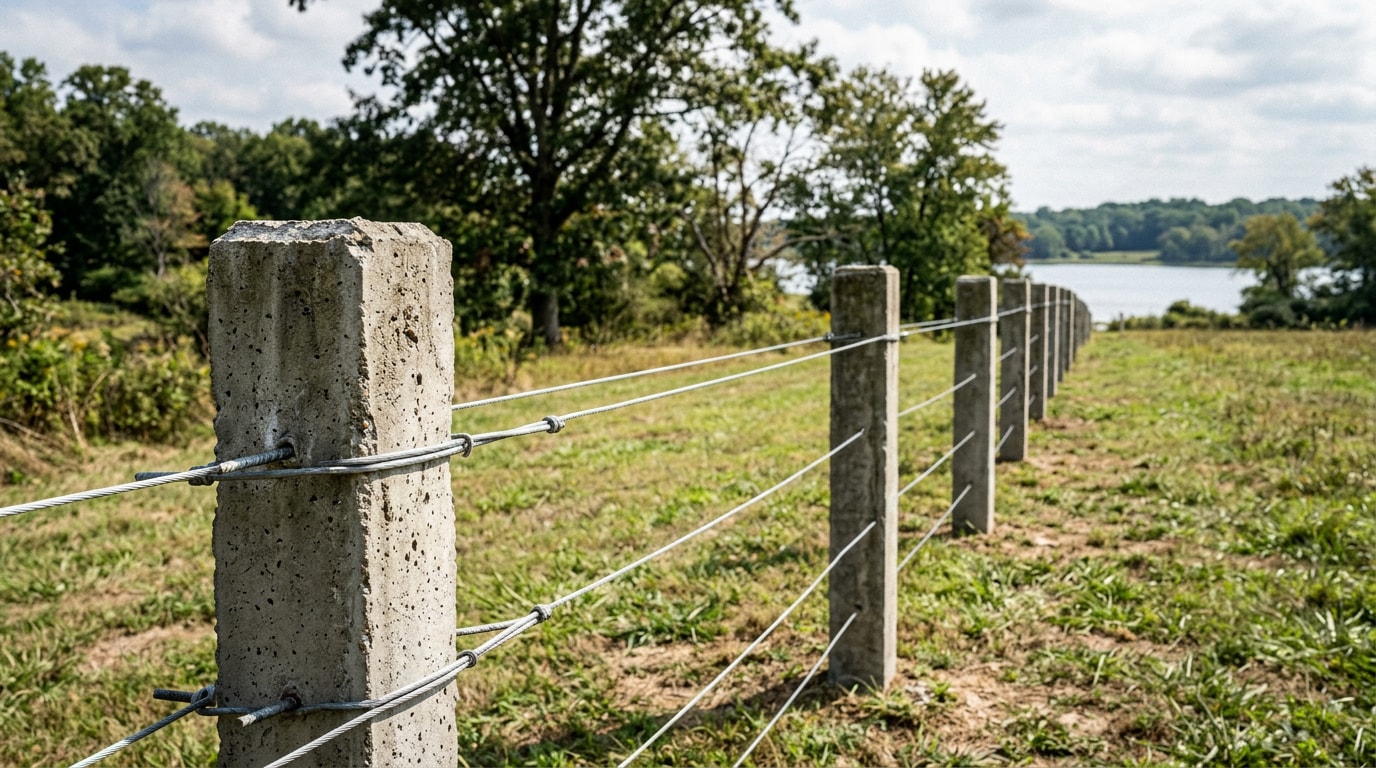
Concrete fence posts in Middle River, MD hold up to Chesapeake Bay humidity and freeze-thaw cycles far better than wood, without the rot, warping, or termite damage that shows up on waterfront lots within a decade. This guide breaks down post types, real cost ranges, Baltimore County's actual depth and permit rules, and the installation steps that keep a fence line straight for decades. Our crews set footings and posts across Baltimore County year-round, and the questions below are the ones homeowners ask most before signing a contract.
Why Use Concrete Fence Posts?
For homeowners replacing an aging wood fence or planning new construction near the water, concrete trades a bit of upfront cost for decades of worry-free performance. The tradeoffs are straightforward once you lay them side by side.
Pros:
- Rot-resistant and far less vulnerable to insects and moisture than wood, which matters in a tidal, flood-prone community like Middle River
- Low-maintenance once set, with no staining or sealing required
- Among the most durable fence post options available for waterfront properties
- Handles wind load better than wood over the long term
Cons:
- Heavy and awkward to handle without equipment, which adds real difficulty for DIYers
- Costs more upfront than wood per unit
- Shape can't be adjusted on site once cast, which limits design flexibility
- Needs a crew or machinery for anything beyond a short run
If you're planning a larger concrete project alongside your fence line, such as a new patio or footing pad, our concrete contractor team handles both in a single mobilization.
Different Types of Concrete Fence Posts
Not every concrete post in a Middle River fence line does the same job. Corner, slotted, and end posts each play a distinct structural role, and mixing them up during planning can leave a fence sagging or leaning at the connection points.

Corner Posts
Corner posts anchor a fence line wherever it changes direction, absorbing more lateral pressure than a standard run post. Because a corner post is a load-bearing point, it typically needs a wider, deeper footing to stay plumb over the years.
Slotted Posts
A slotted concrete post features a vertical groove cast into the concrete, letting gravel boards or concrete fence panels slide directly into place without brackets or extra fasteners. This design speeds up installation and keeps the fence line visually clean.
End Posts
End posts mark where a fence run terminates, such as at a gate or property line. An end post only bears pressure from one side, so its reinforcement needs differ from line or corner posts.
Cost of Concrete vs. Wood Fence Posts
Concrete posts generally run higher per unit than wood. Material pricing for concrete fence posts typically falls in the $25–$60 range per post, roughly two to four times the cost of a standard treated 4x4, before labor and concrete footing material are added. Comparing sticker price alone misses the bigger picture, though.
A wood post typically needs replacing every 10–20 years in a humid, waterfront climate, while a well-installed precast concrete post commonly reaches 50 years or more, according to the National Precast Concrete Association, which notes precast is "designed for a long service life" and that "its durability and resistance to environmental stresses make precast a common choice for infrastructure expected to perform for decades." That said, be skeptical of marketing claims you'll see elsewhere promising 1,000+ year lifespans for a residential fence post. That figure doesn't come from the industry's own standards body and isn't realistic for a yard application exposed to soil moisture and freeze-thaw cycling.
| Factor | Wood Posts | Concrete Posts |
|---|---|---|
| Typical material cost per post | $8–$15 | $25–$60 |
| Expected lifespan (Middle River climate) | 10–20 years | 50+ years with proper installation |
| Replacements over 50 years | 2–4 | 0 |
| Ongoing maintenance | Staining, sealing, rot repair | Minimal |
| Handling difficulty | Low | High (heavy, needs equipment) |
For a fence expected to stand for decades, the long-term cost often favors concrete even though the first invoice looks larger.
Durability of Concrete vs. Wood Fence Posts
Wood posts, even pressure-treated ones, typically soften and decay within 10 to 20 years, often faster in humid, waterfront settings like Middle River where ground moisture speeds up rot. Concrete fence posts don't absorb water the same way, giving them far greater rot resistance and longevity than wood over time.
That durability gap matters most in coastal Baltimore County neighborhoods, where soil stays damp for much of the year. Choosing between concrete and wood here often comes down to how much long-term rot resistance a homeowner is willing to pay for upfront. If you're weighing concrete against another material for a bigger slab or patio project near the water, our guide to stamped concrete patterns in Middle River covers similar durability tradeoffs for flatwork.
How to Install Concrete Fence Posts
Setting a concrete post correctly the first time prevents leaning, cracking, and costly do-overs. The steps below cover the core process, whether you're planning a DIY project or evaluating a local installer's workmanship.

Tools you'll need:
- Posthole digger or auger
- Level, to keep the post plumb
- String line, to keep multiple posts aligned
- Tape measure, for consistent spacing and depth
Step 1: Call 811 before you dig. Before breaking ground anywhere in Maryland, state law requires a call to "any person who intends to perform an excavation, demolition or any disturbance of the earth in Maryland, must first call Miss Utility (811)." Request a locate through Miss Utility of Maryland at least a few business days ahead of your dig date.
Step 2: Dig the hole. Aim for a hole width about three times the width of the post itself, with a depth around one-third of the post's total length, plus a few inches of gravel base for drainage. Maryland's frost line typically runs close to 30 inches below grade in much of the state, so local jurisdictions can require footings to extend deeper than the one-third rule alone would suggest, and specific requirements vary by county. Confirm the exact depth and whether a permit applies with your local building department before digging.
Step 3: Check permit requirements. In Baltimore County, a building permit is required for fences 42 inches or above, measured vertical to ground, even if the fence is placed on top of a wall . Fences located in the floodplain or Chesapeake Bay Critical Area need a permit regardless of height, which applies to many Middle River waterfront lots. Check current requirements on the Baltimore County fence permit page before you order materials.
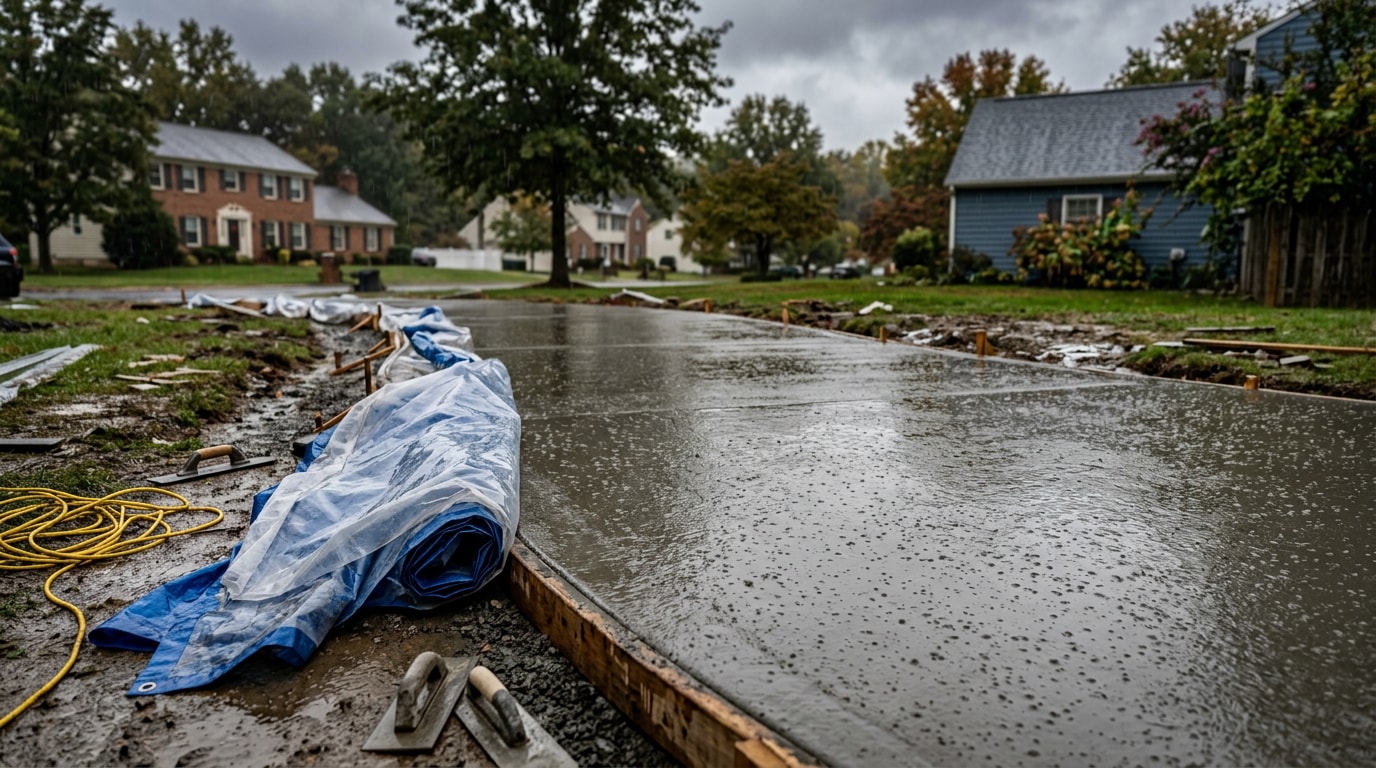
Step 4: Place the post and pour. Lower the post into the hole and check it with a level on two sides, adjusting until it's fully plumb. Pour concrete mix around the base and allow it to reach full curing time, often 24–48 hours, before adding any pressure or attaching fence panels.
Tips for Waterfront Installations
In wetter regions, mound the concrete slightly above ground level around the post base rather than finishing flush with soil. This directs heavy rainfall away from the post instead of letting water pool against it.
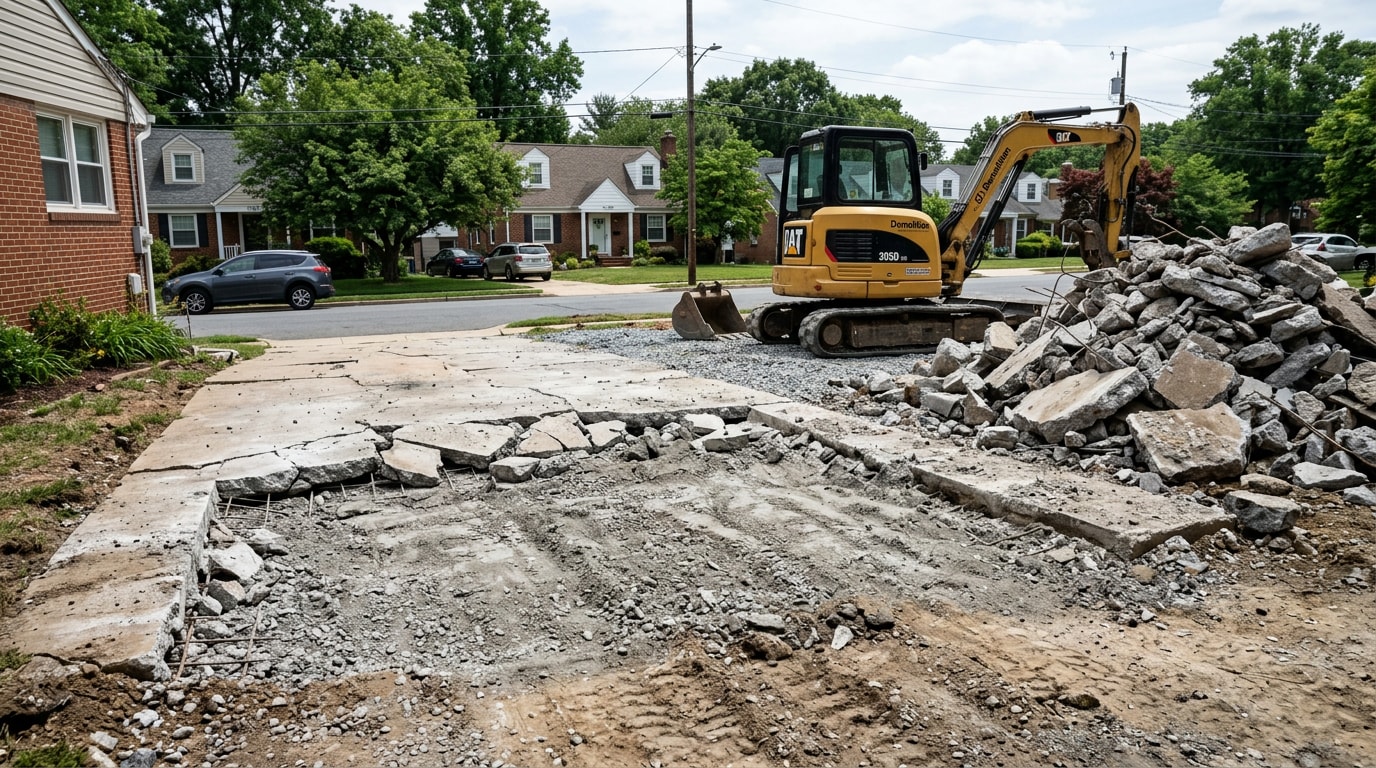
Thinking through drainage in advance matters even more in Middle River's flood-prone, waterfront setting, where standing water around a post base can accelerate erosion and undermine the footing over time. If your project also involves clearing an old fence line, grading a sloped yard, or removing construction debris before new posts go in, our site preparation, grading and compaction, and debris removal crews handle that groundwork before setting day.
Ready to get a number on your project? Get a free estimate and we'll walk the property with you before anything is quoted. You can also learn more about our full range of work on the SEJ Paving homepage.
FAQ
How deep should a concrete fence post be?
A depth of roughly one-third of the post's total length below ground is the general rule, following the guidance above. Baltimore County's floodplain and Critical Area rules, plus local frost depth, may require adjustments, so confirm exact depth with your county building department before digging.
How long do concrete fence posts last?
With proper installation, a precast concrete fence post commonly lasts 50 years or more, far outpacing the 10-to-20-year lifespan of most wood posts in a humid climate. Actual lifespan still varies with soil conditions, moisture exposure, and installation quality.
Do I need a permit for a concrete fence post in Middle River, MD?
In most cases, yes, if the fence reaches 42 inches or taller, since Baltimore County requires a building permit for fences 42 inches or above . Waterfront and Critical Area lots, which cover much of Middle River, may need a permit regardless of height.
How do I maintain a concrete fence post?
Maintenance is minimal. Seal any surface cracks as soon as they appear to stop water from getting in, and keep grass, vines, and soil buildup clear of the post base so moisture doesn't collect against the concrete.
Should concrete fence posts be set in concrete?
Yes. Setting posts in concrete is exactly how concrete fence posts get installed, using a wet concrete mix poured into the hole around the base. This step, not just the post material, is what locks the post in place and keeps it stable for decades.
Do I need to call before I dig a post hole in Maryland?
Yes. Maryland law requires a call to 811 before any excavation, including a single fence post hole. Contacting Miss Utility is free, and skipping it can result in fines if you strike a line.