Yes, asphalt is cheaper than concrete in Towson, MD, both to install and usually over the first 10 to 15 years of ownership. But concrete can close that gap once you factor in how each surface handles Baltimore County's freeze-thaw winters and how long it actually lasts. Here's the real 2026 cost breakdown, including one factor most driveway guides skip: your driveway's size.
Our crews at SEJ Paving install and repair both asphalt and concrete driveways throughout Towson and Baltimore County, so the numbers below reflect what we actually see on local jobs, not just national averages.
Quick Answer
Asphalt wins on upfront price almost every time. Concrete wins on lifespan and resale appeal. The "cheaper" material depends on how long you plan to own the home and how big your driveway is.
- Lower install cost: Asphalt
- Longer lifespan: Concrete
- Better in Towson's freeze-thaw winters: Asphalt, generally
- Lower cost per year of ownership: Often concrete, surprisingly
Asphalt vs. Concrete Cost Per Square Foot in Towson, MD
Asphalt costs $3 to $7 per square foot and concrete costs $6 to $12 per square foot as a national baseline, and Towson-area quotes typically land in the middle-to-upper end of those ranges once labor, base prep, and drainage work are included.
| Driveway Size | Asphalt Cost | Concrete Cost |
|---|---|---|
| 400 sq ft | $1,200–$2,800 | $2,400–$4,800 |
| 600 sq ft | $1,800–$4,200 | $3,600–$7,200 |
A standard two-car driveway runs about 400-600 square feet, and at the midpoint prices you're looking at roughly $2,000 for asphalt vs. $3,600 for concrete on a 400 sq ft driveway .
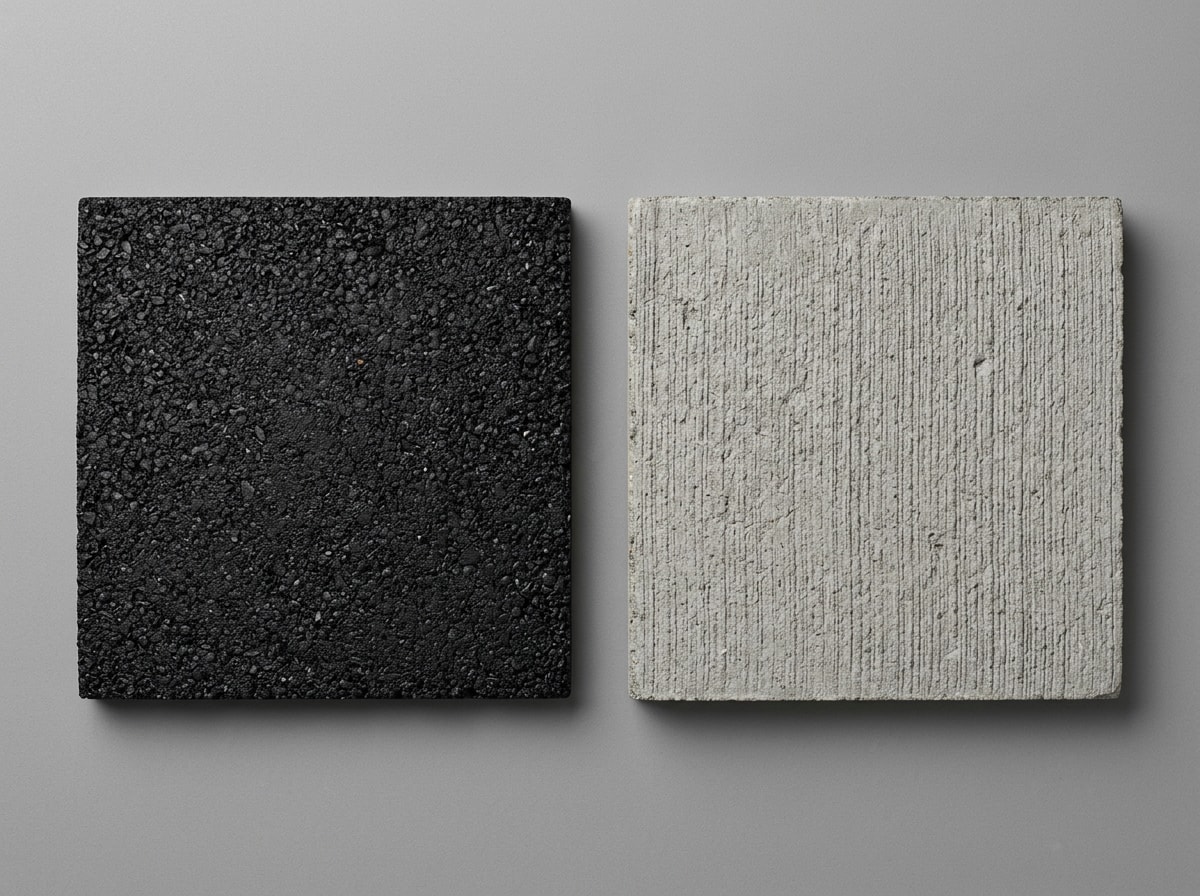
Part of that price gap comes down to raw materials. Cement manufacturing is genuinely energy-intensive: cement plants run continuously, 24 hours a day, seven days a week, using temperatures as high as 2,700 degrees Fahrenheit to convert limestone and other minerals into clinker . That production cost gets passed down to every concrete driveway quote.
Want exact numbers for your lot? Request a free estimate and we'll measure, grade, and price both options side by side.
Does Driveway Size Change Which Material Is Cheaper?
This is the part most comparison guides leave out. Asphalt crews have mobilization costs, equipment, and plant minimums that get spread thinner on larger jobs. Concrete crews face similar fixed costs, but their per-square-foot material cost doesn't drop as sharply as asphalt's does on bigger pours.
The practical result: on very small driveways, pads, or short aprons, the upfront price gap between asphalt and concrete can shrink to almost nothing once mobilization and minimum-project fees are factored in. On a full-size two-car driveway or larger, asphalt's price advantage is more reliable. If you're only replacing a small section or an apron, it's worth getting quotes on both materials rather than assuming asphalt automatically wins.
Towson's Freeze-Thaw Climate: Why It Changes the Math
Towson sits in a true freeze-thaw zone, and that matters more here than in most of the country. Baltimore County's clay-heavy soil absorbs winter moisture, swells, and contracts as it dries, a cycle that stresses rigid surfaces more than flexible ones.
Asphalt pavements offer the flexibility needed to handle all levels of traffic, and they can be maintained or repaired quickly, up to three times faster, with minimal disruption , which is part of why asphalt holds up well through Maryland winters without the sudden slab cracking concrete can experience.
Concrete isn't automatically a bad choice in this climate, but it needs the right mix design. Resistance to damage from cycles of freezing and thawing is provided by entrained air, where multiple well-distributed small air voids relieve pressure generated as water expands and freezes . A concrete driveway poured without proper air entrainment and a deep enough base is the one most likely to crack after its first hard Maryland winter.
See our Concrete Wall Forms in Towson, MD guide for more on how local contractors build foundations and forms that account for this exact soil and freeze-thaw behavior.
Durability and Lifespan: Asphalt vs. Concrete
A lower install price only tells half the story. Durability determines how often you'll pay to replace or resurface the driveway, which is what actually drives lifetime cost.
| Factor | Asphalt | Concrete |
|---|---|---|
| Typical lifespan | 15–20 years | 25–30+ years |
| Common failure mode | Cracking, potholes | Frost heave, slab cracking |
| Resurfacing possible | Yes | No, usually full removal |
| Repair style | Patch sections | Cut and repour |
Asphalt Durability in Maryland
Asphalt's flexibility is its biggest advantage. It bends slightly with ground movement instead of cracking outright, which suits Towson's soil. That said:
- Poor drainage can lead to soft spots or sinkholes
- Extreme summer heat can soften the surface temporarily
- Most driveways need a slurry seal or resurfacing every several years to stay structurally sound
Concrete Durability and Freeze-Thaw Risk
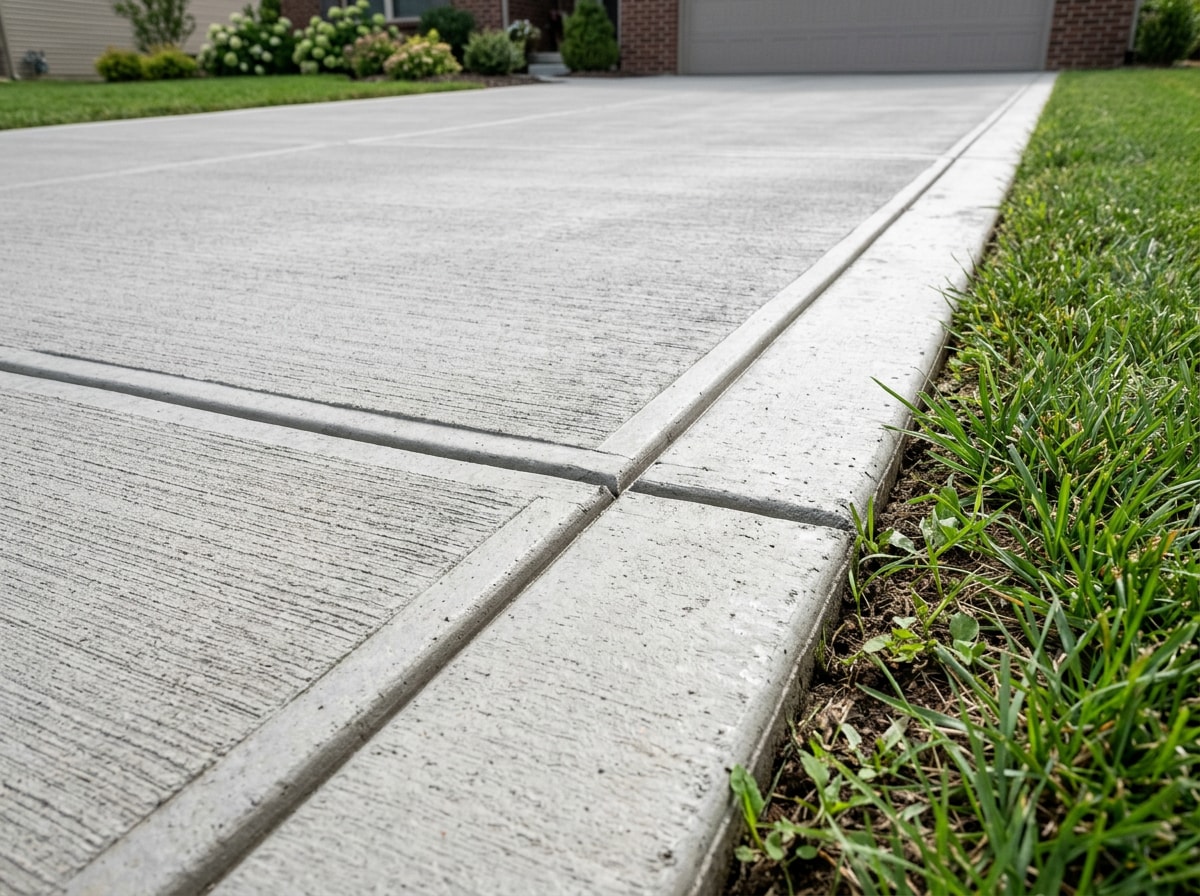
Concrete trades flexibility for rigidity, which generally means fewer routine repairs but a harder failure mode when problems do occur. Proper sub-base preparation, control joints, and air-entrained mix design prevent most frost-related cracking. Skip any of those steps and a Baltimore County winter will find the weak spot.
Long-Term Maintenance Costs: The Real Surprise
Asphalt's cheaper sticker price gets offset over time by more frequent upkeep. Concrete's higher install cost sometimes pays off with age. The numbers below are closer than you'd expect.
- Asphalt maintenance: Seal coating roughly every 2–3 years, typically $150–$300 per application, plus occasional crack filling
- Concrete maintenance: Minimal routine upkeep, but a cracked section often needs full cutting and repouring rather than a cheap patch
Here's the part that surprises most homeowners: on a cost-per-year basis, concrete is actually about 16% cheaper than asphalt in some long-term comparisons, because concrete's longer lifespan spreads its higher upfront cost over more years of use. That doesn't make concrete the right call for every budget or every homeowner, but it's a real reason to think past the install-day price tag.
Not sure which upkeep schedule fits your property? Talk to our team about a maintenance plan for either surface.
Which Material Is Best for Your Towson Driveway?
There's no single right answer. It depends on your timeline and priorities.
- Choose asphalt if: You're budget-limited, want the job done in a day or two, or plan to sell or move within 10–15 years
- Choose concrete if: You're staying long-term, want minimal routine maintenance, and can absorb the higher upfront cost
Either way, a qualified local contractor matters more than the material itself. A poorly installed asphalt driveway will fail faster than a well-built concrete one, and vice versa. Visit SEJ Paving to see our full range of asphalt paving and concrete driveway installation work, and compare our parking lot paving and concrete paving services if you're pricing a commercial lot instead of a home driveway. We also serve nearby Glen Burnie, MD and the rest of the greater Baltimore area.
Get a free estimate and we'll walk your property, measure the job, and give you honest pricing on both materials, not just the one we'd rather sell you.
FAQ
Is asphalt or concrete cheaper for a driveway?
Asphalt is cheaper upfront in almost every case. Asphalt costs $3 to $7 per square foot and concrete costs $6 to $12 per square foot installed, so a standard driveway in asphalt typically costs 30–50% less than the same job in concrete.
Does driveway size change which material is cheaper?
Yes. On small driveways, pads, or aprons, mobilization fees and project minimums can shrink or even erase asphalt's price advantage. On a full-size two-car driveway or larger, asphalt almost always costs less upfront.
Which lasts longer, asphalt or concrete?
Concrete generally lasts longer, often 25 to 30+ years versus 15 to 20 years for asphalt. Both numbers assume proper installation, adequate base prep, and reasonable maintenance.
Is asphalt cheaper to repair than concrete?
Yes. Crews can patch small asphalt sections without cutting the whole slab. Concrete repairs usually require cutting out and repouring the damaged section, which costs more per repair even though concrete needs repairs less often. Our asphalt repair and concrete repair teams handle both.
Which material handles Towson's freeze-thaw winters better?
Asphalt's flexibility generally helps it absorb seasonal soil movement without cracking. Concrete can perform just as well, but only with proper air entrainment, a deep sub-base, and correctly spaced control joints, since freeze-thaw damage occurs once concrete's saturation level exceeds a critical threshold .
Does concrete or asphalt add more resale value?
Neither typically swings a sale price dramatically, but concrete's longer lifespan and cleaner appearance can give it a slight edge with buyers and appraisers who associate it with lower near-term replacement costs.
Is asphalt cheaper than concrete over 20 years?
Not always. Asphalt needs seal coating every 2–3 years and possible resurfacing within 15–20 years. Concrete needs far less routine maintenance. On a cost-per-year basis, some analyses show concrete coming out slightly ahead despite the higher install price, simply because it lasts longer.