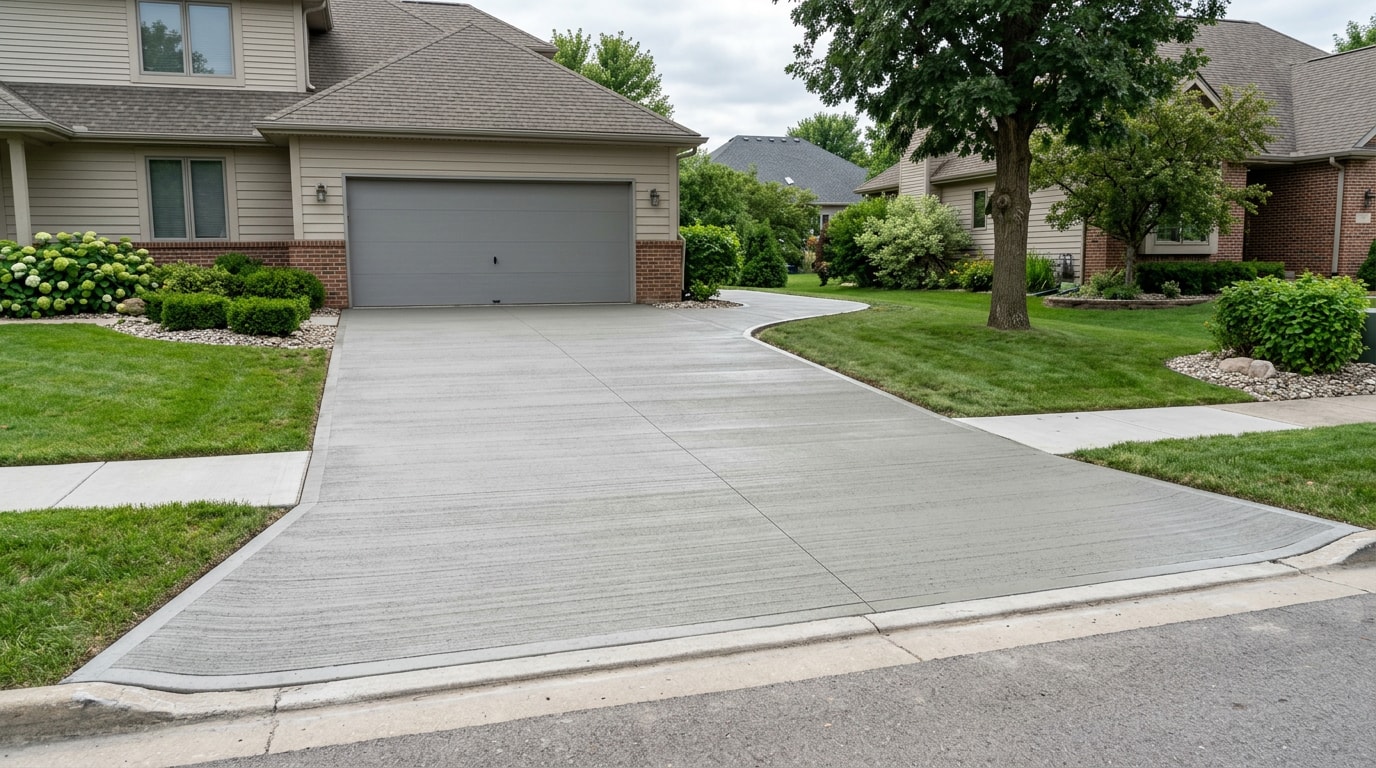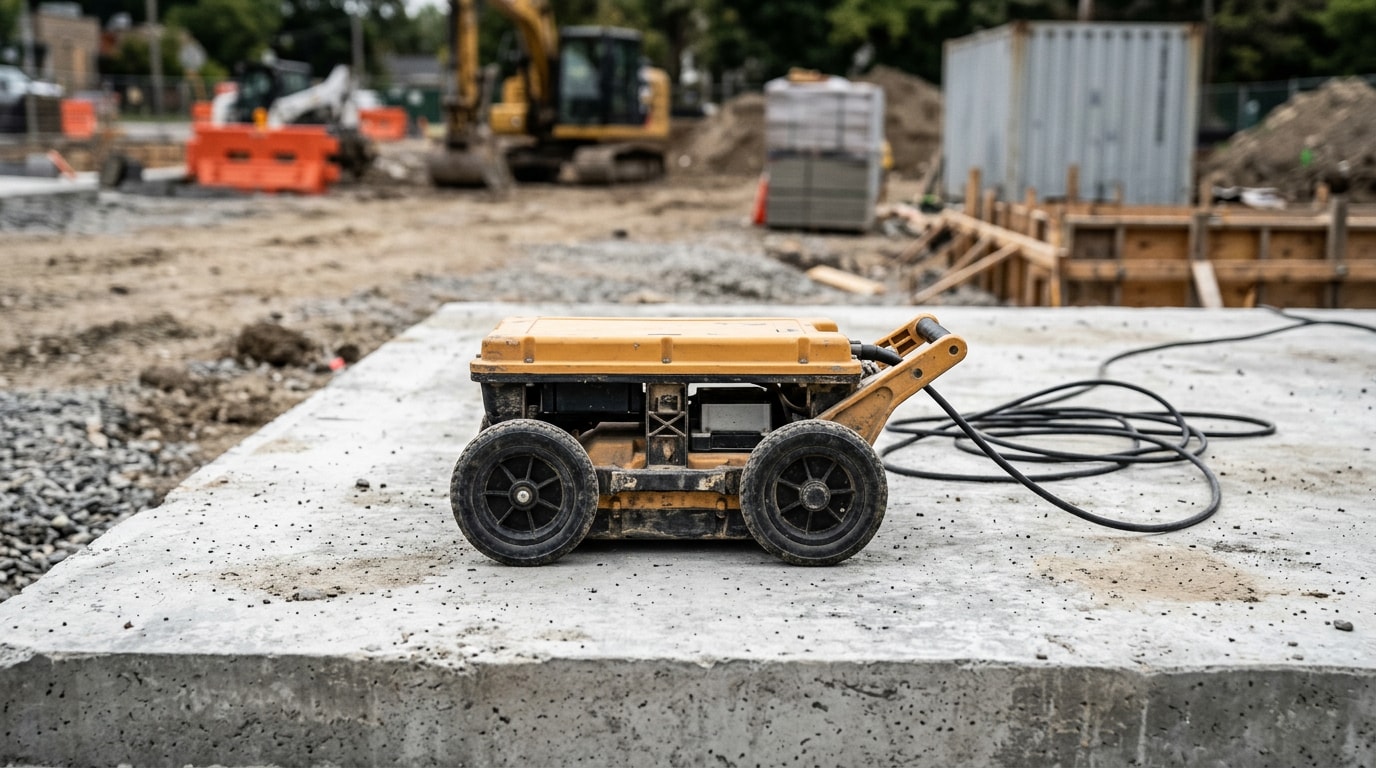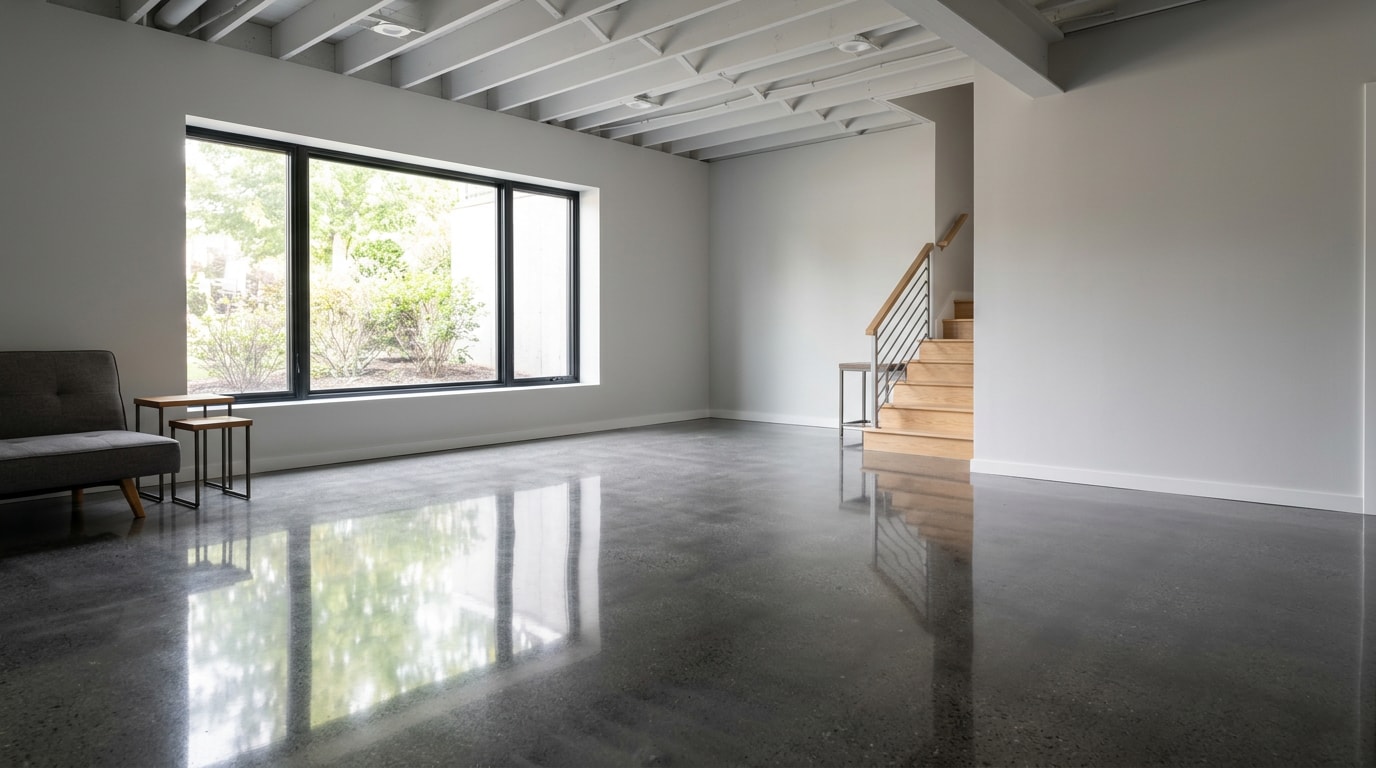
Residential polished concrete floors in Baltimore City, MD turn a dull basement or kitchen slab into a smooth, light-reflecting surface without tearing it out. Homeowners usually land on this page with the same two questions: what does it cost, and is it actually worth it over hardwood or tile? Here's a straight answer to both, plus the local factors that change the math for Baltimore rowhomes.
What Is Polished Concrete Flooring?
Polished concrete flooring is created by mechanically grinding, honing, and polishing an existing concrete slab with a floor grinder until it reaches a smooth, reflective surface. It isn't a new material poured on top. It's a transformation of the concrete that's already there.
The process uses progressively finer diamond-impregnated pads, working through multiple grit stages much like sanding wood. Depending on how far the grinding goes and how the final pass is buffed, the result can range from a soft satin sheen to a true high-gloss finish.
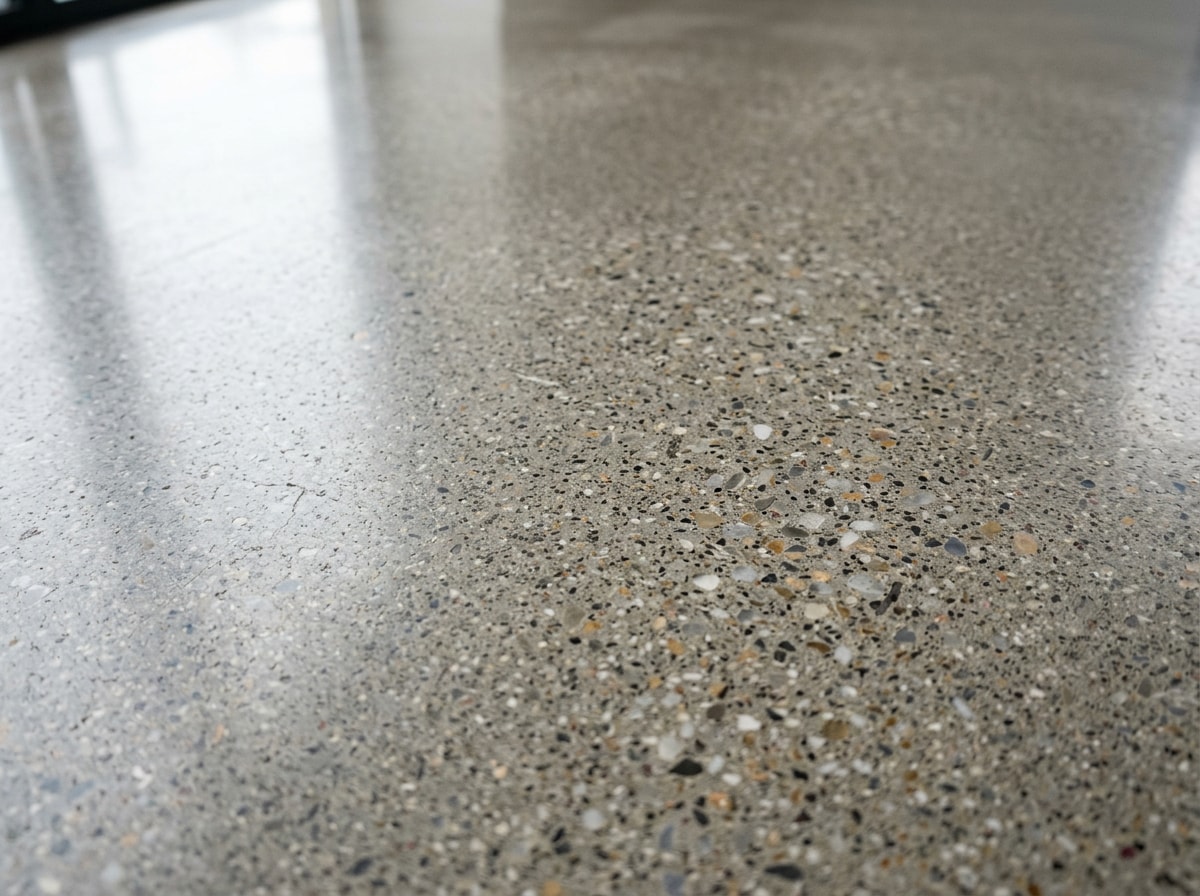
Homeowners can also customize the look. Grinding deeper exposes more of the aggregate inside the slab, and dyes or stains can be added for color. The American Concrete Institute maintains a technical guide to decorative and polished concrete finishes, which is part of why a properly polished slab performs differently than a surface coating.
Cost of Polished Concrete Floors in Baltimore City
Cost is usually the first question homeowners ask, so here's how the pricing actually breaks down: first by square footage and finish, then by the project-specific factors that push the number up or down.
Cost by Square Footage and Finish Type
Price per square foot typically runs lower for larger, open areas and higher for small or tight spaces, since setup and equipment mobilization costs get spread across fewer square feet. Jobs under roughly 1,000 square feet often carry a per-foot premium compared to larger basements or open-concept floors.
Finish level also drives price:
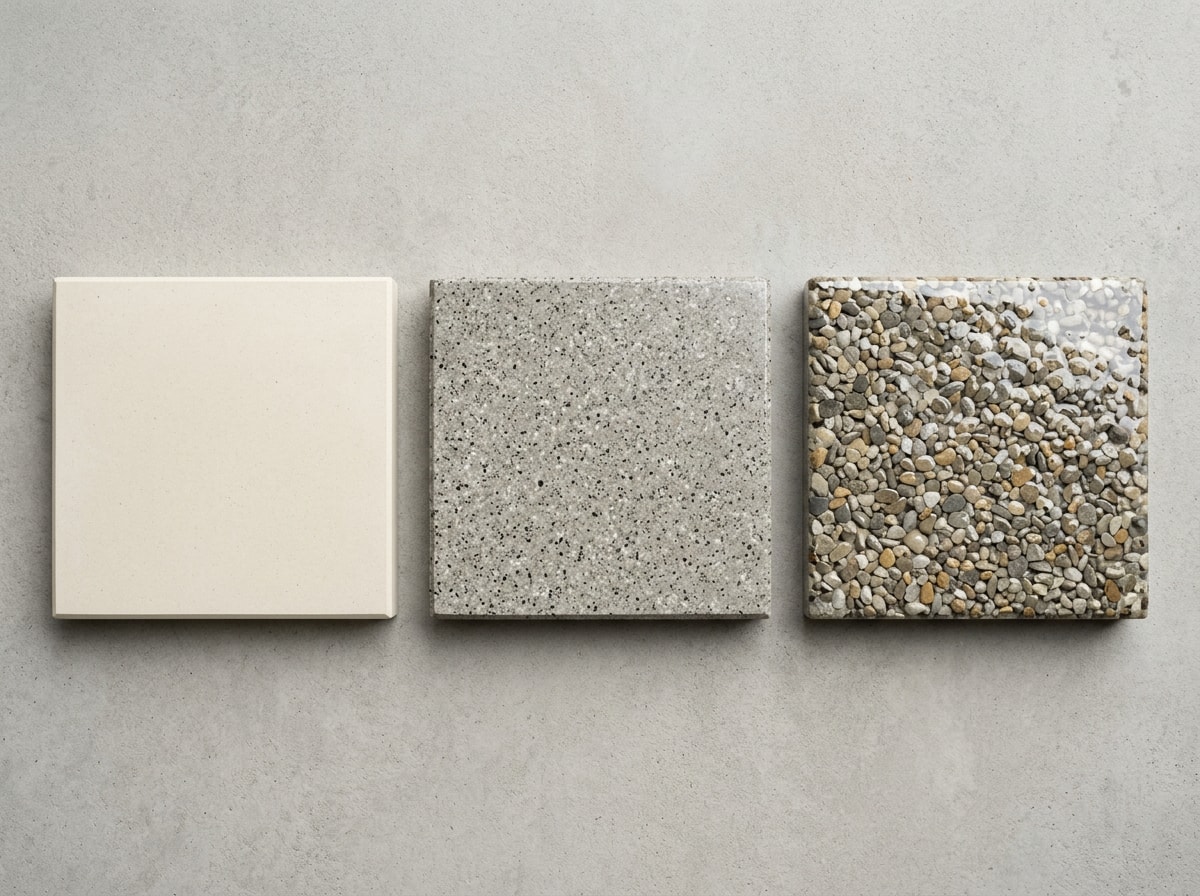
| Finish Level | Typical Look | Relative Cost |
|---|---|---|
| Cream finish | Lighter grind, matte-to-satin look, minimal aggregate exposed | Lower end of the range |
| Salt and pepper finish | Moderate aggregate exposure, speckled appearance | Mid-range |
| High-gloss / exposed aggregate | Deep grind, mirror-like sheen or decorative aggregate | Higher end of the range |
Deeper grinds require more passes and finer polishing steps, which adds labor time and cost.
Cost Factors Specific to Baltimore City Homes
Beyond square footage and finish, the condition of the existing slab is usually the single biggest cost swing for Baltimore City homes. Many rowhome basements were poured decades ago, and cracking, settling, or old adhesive residue from prior flooring is common. That repair and leveling work gets priced before polishing can even begin, so slab condition should be assessed early rather than assumed. Our concrete repair services cover exactly this kind of pre-polish patching.
Labor is also a large share of the total price, often more than materials and equipment combined, since the multi-step grinding process is labor-intensive regardless of square footage. In rowhome basements specifically, narrow stairwells and tight access points can slow equipment movement and add time to the job. A generic national price range won't reflect that, but it's something crews working Baltimore rowhomes run into on nearly every basement job.
One factor that's easy to overlook: basement slabs below grade can carry more moisture than an above-grade slab. The Maple Flooring Manufacturers Association recommends relative humidity testing before any floor finish goes down, and that same logic applies before polishing, since a damp slab can affect how densifiers and sealers bond. If you're still at the planning stage, SEJ Paving's cost of concrete slab guide for Baltimore City breaks down base slab pricing homeowners often start from before adding polishing.
Not sure what your basement or kitchen slab is working with? Get a Free Estimate before you commit to a finish level.
Benefits of Residential Polished Concrete Floors
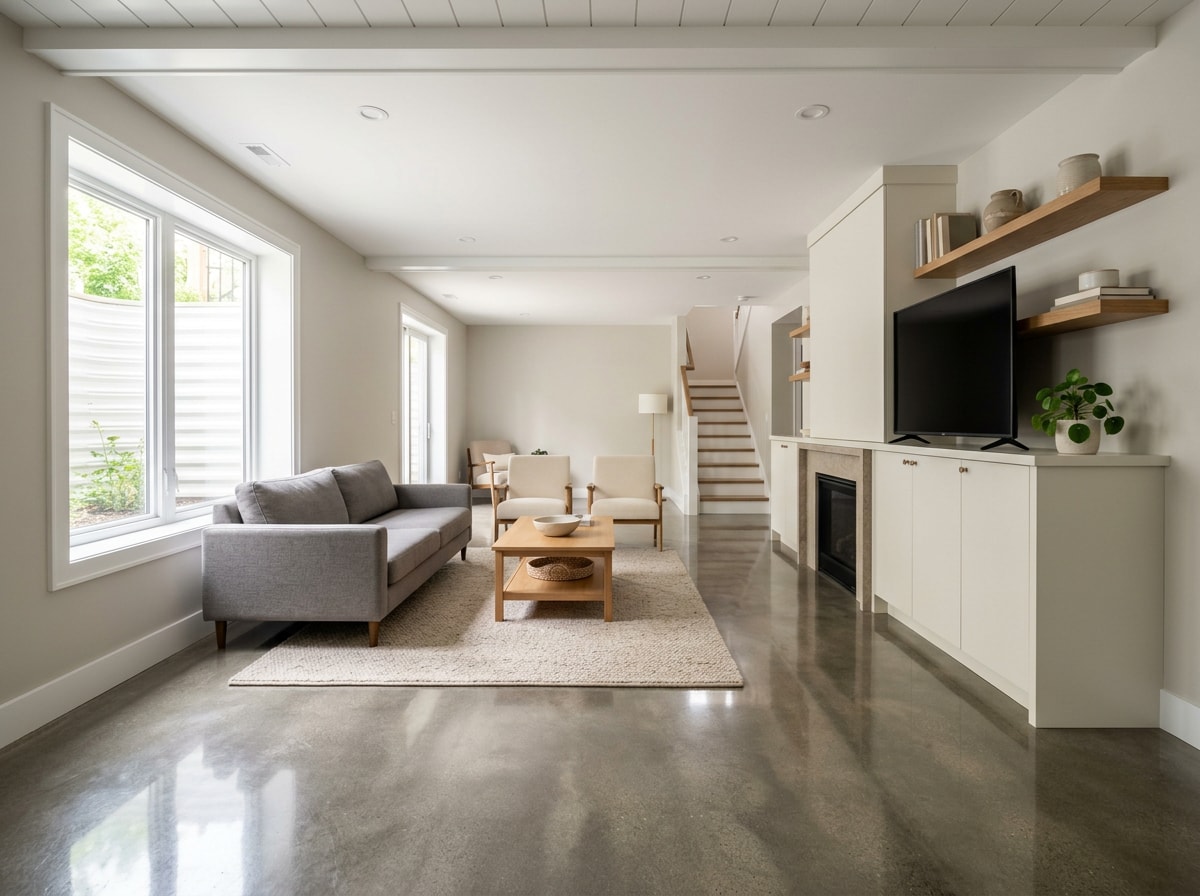
For Baltimore City rowhomes, where basements and first-floor slabs often double as living space, polished concrete offers a few distinct advantages over carpet, laminate, or unfinished concrete.
- Appearance — grinding and polishing turns a dull, dusty slab into a sleek, light-reflecting surface that reads as intentional rather than unfinished.
- Durability — polished floors resist stains, scuffs, and everyday wear far better than vinyl or carpet, which matters in high-traffic spots like entryways and garages.
- Low maintenance — regular sweeping and occasional damp mopping is typically enough, with no waxing or refinishing cycle.
- Cost efficiency — you're reusing the existing slab instead of installing new material, which keeps the overall project budget lower than a full tear-out.
Projects like this are a natural fit for professional [concrete finishing services]({{SITE_URL}}/services/concrete-contractor/concrete-finishing} that handle both the grinding and the surface prep.
Pros and Cons of Polished Concrete Flooring
Here are the honest trade-offs, not just the sales pitch.
Pros:
- Generally more cost-effective than hardwood over the life of the floor.
- Often cheaper to install per square foot than natural stone tile.
- Design flexibility — sheen level, color, and aggregate exposure can all be adjusted.
- Strong resistance to heavy foot traffic, dropped tools in a garage, or daily kitchen use.
Cons:
- It's a hard surface — standing on it for long periods can feel less forgiving than carpet or cork.
- Can feel cool underfoot in winter months without supplemental heating.
- Depends heavily on the quality of the existing slab; a cracked or poorly cured floor needs repair before polishing starts.
None of these rule polished concrete out for most homes, but they're worth weighing before you commit to a finish.
Comparing Polished Concrete to Hardwood and Tile
| Factor | Polished Concrete | Hardwood | Tile |
|---|---|---|---|
| Ongoing maintenance | Sweep and damp mop; no refinishing | Needs periodic refinishing/sanding | Grout needs regular cleaning/resealing |
| Moisture tolerance | Good, especially below grade in basements | Poor, prone to warping | Good |
| Feel underfoot | Hard, cool | Warmer, more forgiving | Hard, often cold |
| Typical cost position | Often lower than hardwood or stone tile per square foot | Mid-to-high | Mid-to-high, varies by material |
It's worth noting that epoxy coatings are a related but distinct product. Epoxy applies a plastic-like topcoat over concrete, while true polished concrete mechanically alters the surface of the slab itself. The durability and feel differ, and the choice between polished concrete, hardwood, tile, or an epoxy coating usually comes down to budget, room use, and desired look.
If your slab needs more than polishing, like leveling or crack repair first, start with concrete repair or browse SEJ Paving's full concrete contractor services to see what's involved. You can also see completed work on the projects page or head to the homepage for an overview of everything SEJ Paving handles across the Baltimore area.
FAQ
Does Polished Concrete Need to Be Sealed?
Most polished concrete floors include a densifying and sealing step as part of the finishing process, which helps resist moisture and staining. Some high-gloss finishes rely more on the polishing itself for protection, but sealing is still commonly recommended for residential floors exposed to spills or heavy use.
Is Polished Concrete Slippery?
Polished concrete can feel slick when wet, similar to polished tile or stone, though dry traction is generally reasonable. Finish level matters: a matte or satin sheen typically offers more slip resistance than a very high-gloss polish. OSHA's walking-working surfaces standard discusses slip resistance in terms of surface friction, which is the same general principle that applies to choosing a residential finish level.
Can You Polish an Existing Concrete Floor or Slab?
Yes. Most residential polished concrete projects use an existing slab rather than pouring new concrete. The caveat is that the slab's condition determines feasibility; cracked, heavily damaged, or improperly cured concrete may need repair or leveling before it can be polished successfully.
Is Polished Concrete Cheaper Than Tile?
In most cases, yes. Polished concrete tends to cost less per square foot than ceramic or natural stone tile, largely because it skips new material and installation labor tied to setting individual tiles. Exact savings depend on the finish level chosen and the condition of the existing slab.
How Long Do Polished Concrete Floors Last?
A well-maintained polished concrete floor can outlast carpet, vinyl, and even some tile installations, since there's no separate wear layer to peel or wear through. Lifespan depends heavily on slab quality, traffic levels, and whether it's resealed periodically, so treat any specific year figure as a rough estimate rather than a guarantee.
Is Polished Concrete a Good Choice for Basements in Baltimore City Rowhomes?
Often, yes, since concrete handles below-grade moisture better than hardwood or carpet. The caveat is that older rowhome basement slabs should be checked for moisture and cracking before polishing, since both can affect how well the finish bonds and holds up over time.
What Are the Disadvantages of Polished Concrete Floors?
The main disadvantages are its hardness underfoot, a cooler feel in unheated spaces, and its reliance on a sound existing slab. If the base concrete has significant cracking or moisture issues, those problems need to be addressed first, which can add time and cost to the project.