Textured concrete in Glen Burnie, MD gives driveways, patios, and walkways grip that a smooth trowel finish can't match, which matters through every icy Maryland winter and humid summer storm. Homeowners here usually land on one of four finishes: broom, swirl, salt, or exposed aggregate, each with its own cost and traction profile. This guide breaks down what each finish does, what it costs installed, and how it holds up over a Glen Burnie freeze-thaw cycle.
What Is Textured Concrete? Finish Types Explained
Textured concrete is concrete finished with a technique that roughens the surface after floating, instead of steel-troweling it smooth. The goal is traction, not just looks.
It's different from stamped concrete, which presses patterns resembling stone, brick, or wood into the slab before it cures. Texturing works the surface itself; stamping reshapes it.
Here's how the main residential finishes compare:
| Finish | How It's Made | Slip Resistance | Best For | Relative Cost |
|---|---|---|---|---|
| Broom finish | Push-broom dragged across the slab after floating | High, directional grip | Driveways, walkways, aprons | $ |
| Swirl finish | Trowel or float worked in a circular pattern | Moderate, decorative | Patios, pool decks | $$ |
| Salt finish | Rock salt pressed in, then washed out after set | High, pitted texture | Patios, walkways | $$ |
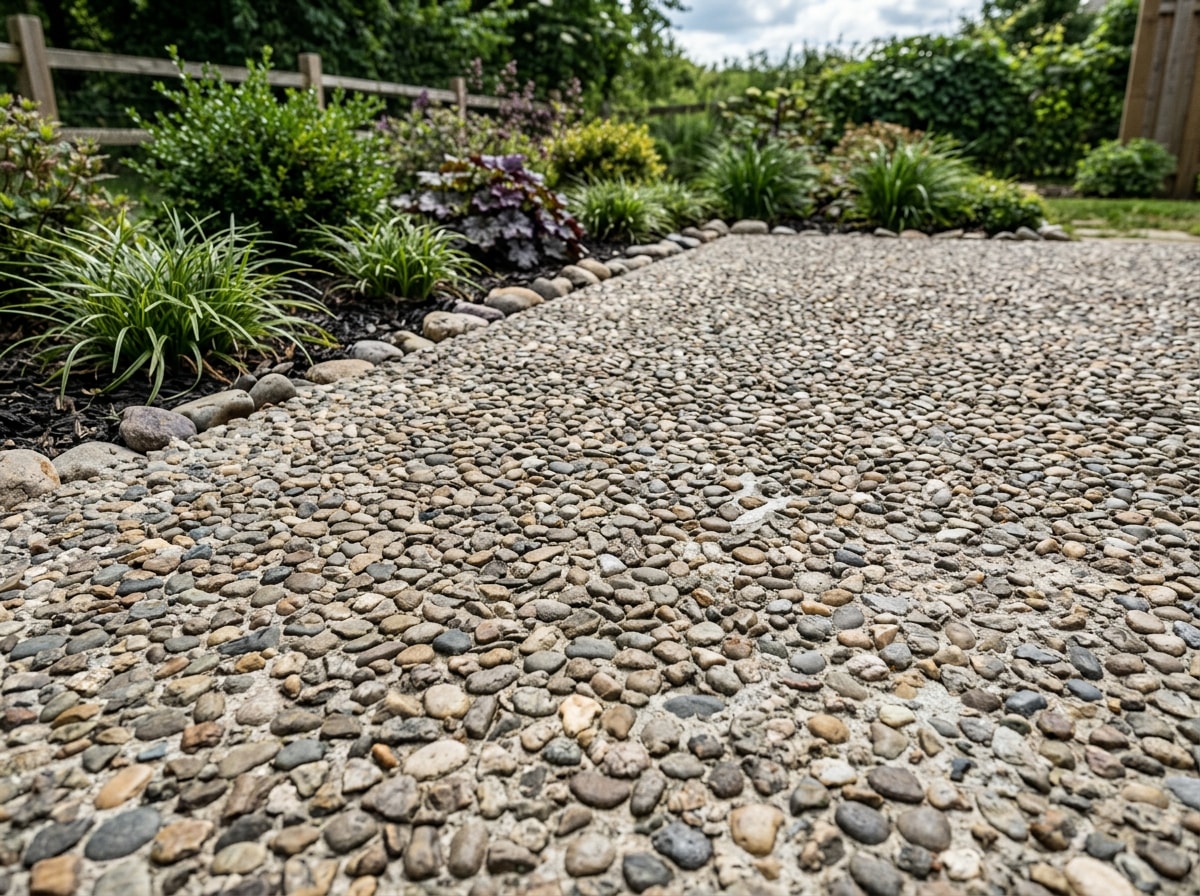
| Exposed aggregate | Surface paste washed away to reveal stone | High, roughest texture | Driveways, high-wear areas | $$$ |
For exterior concrete flatwork such as sidewalks, patios, or driveways, texture the concrete surface after floating with a coarse or fine push-broom to give a non-slip surface, and a swirl finish is used on some slabs. That's the same guidance a trained finisher follows on every pour, residential or commercial.
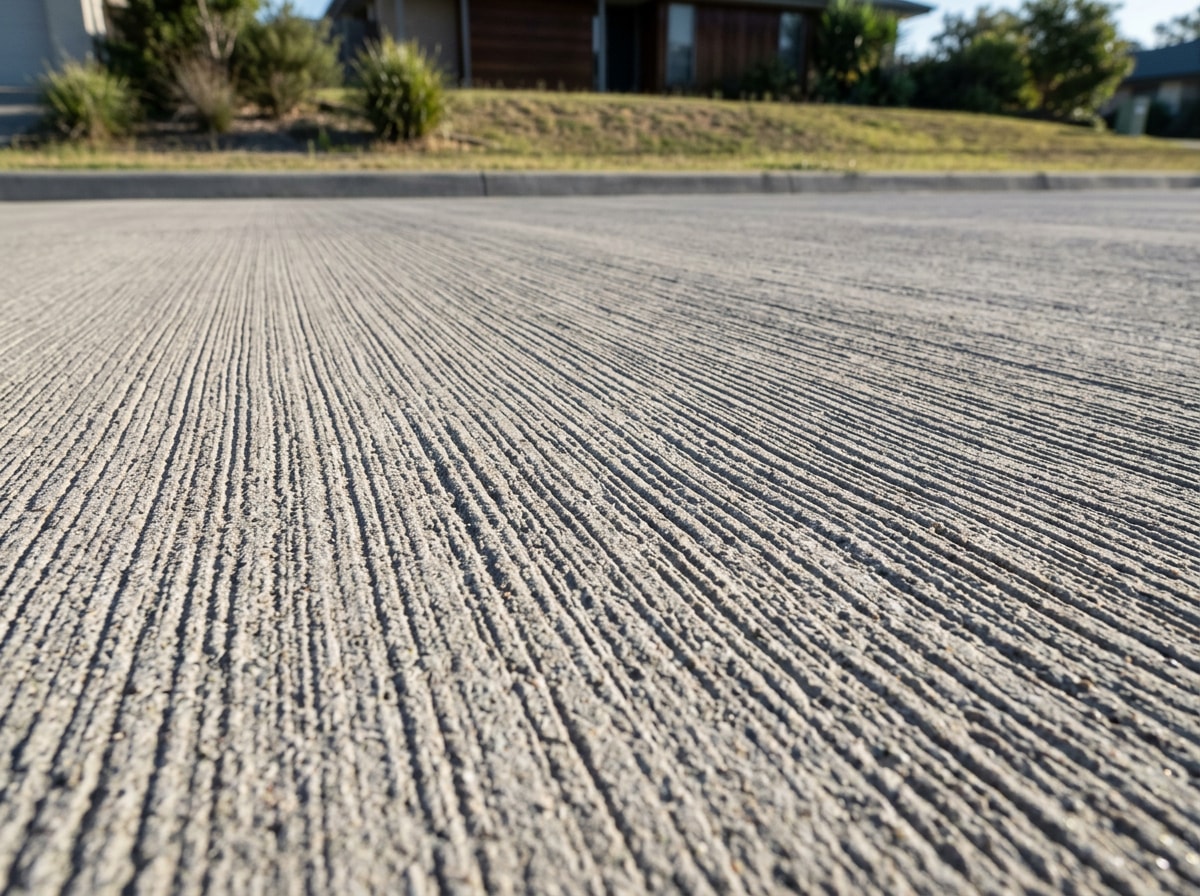
Broom finish costs the least because it adds no material, just a texturing pass. Exposed aggregate costs more because it needs a seeded or exposed-aggregate mix and a wash-and-seal step. Swirl and salt finishes sit in between.
Textured Concrete Driveways in Glen Burnie, MD
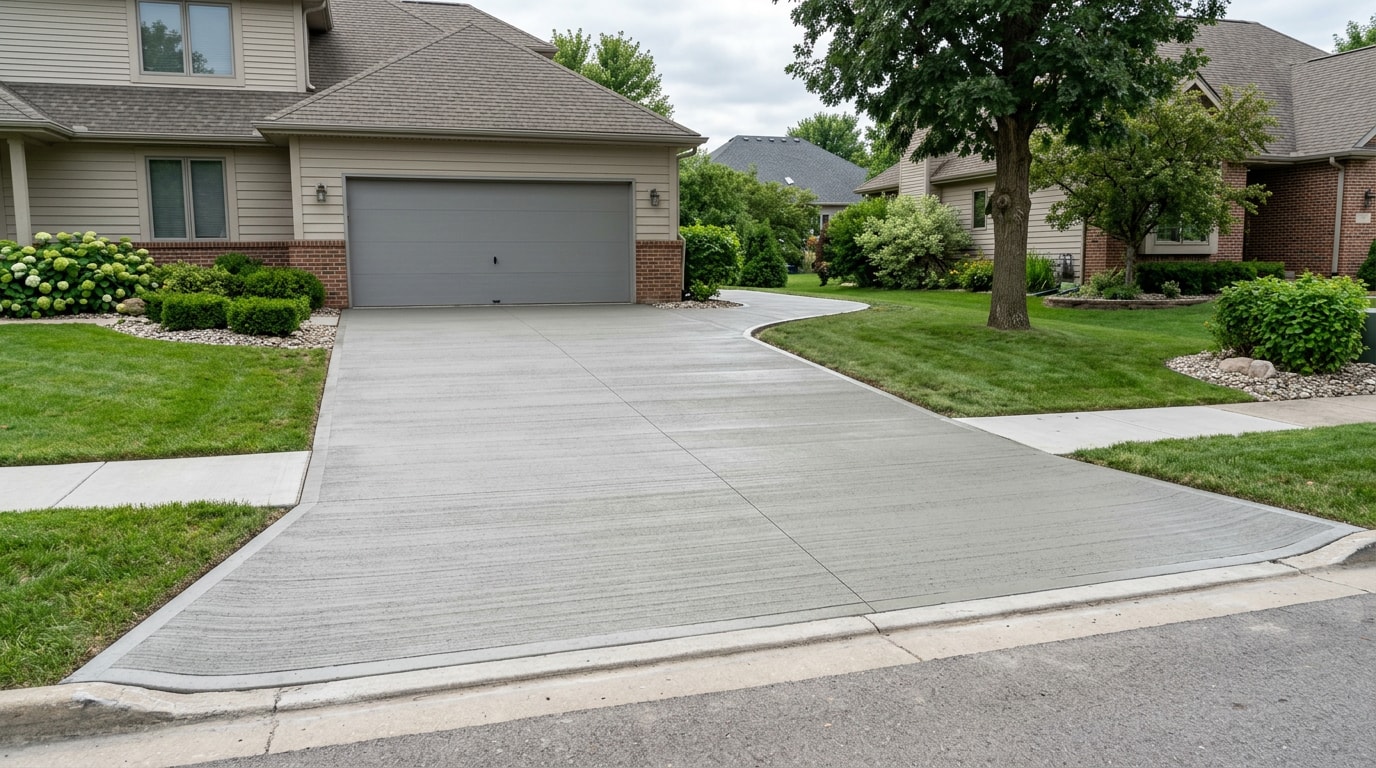
Driveways are where textured concrete gets requested most, because a smooth driveway turns into a skating rink the first time frost settles on it overnight. A broom finish solves that for the lowest cost per square foot.
Some homeowners want more visual interest without losing grip, which is where a heavier broom pass, a swirl accent border, or an exposed-aggregate band along the garage apron comes in. Each option trades a little labor time for a different look.
See our concrete driveway installation page for how we scope a Glen Burnie driveway pour, and browse recent driveway and patio projects to see finishes side by side.
Textured Concrete Patios & Walkways
Patios see bare feet, pool water, and grill grease, so texture needs to balance comfort with grip. A fine broom or swirl finish is common because it's gentler underfoot than a heavy broom pass meant for a sloped driveway.
Walkways and sidewalks get daily foot traffic in every season, so slip resistance matters more than decoration here. OSHA notes that slip-resistant flooring material such as textured, serrated, or punched surfaces can offer additional slip resistance , which is why a light broom or salt finish is the default for exterior walking surfaces, not an afterthought.
Our concrete patio installation and concrete finishing services cover texture selection as part of the standard scope, not an upsell.
Slip Resistance: What the Standards Actually Say
Most contractors will tell you texture "helps with grip." Here's the actual number behind that claim.
OSHA recommends that walking surfaces have a static coefficient of friction of 0.5, with 0.6 recommended for steps and floors and 0.8 for ramps. A steel-troweled smooth slab typically falls short of that baseline when wet, which is exactly why exterior flatwork isn't finished smooth in the first place.
That standard is also why a broom or exposed-aggregate finish on a Glen Burnie driveway apron isn't just cosmetic. It's the difference between a slab that meets a recognized safety benchmark and one that doesn't, especially on a sloped approach where ice forms first.
Textured Concrete Cost in Glen Burnie, MD
Textured concrete pricing depends on the finish, slab size, site access, and how much excavation or base prep the project needs. As a rule of thumb:
- Broom finish: lowest cost, no added material
- Swirl finish: slightly more labor time, similar material cost
- Salt finish: moderate increase for the rock-salt step and wash-out
- Exposed aggregate: highest of the four, due to seeded mix and finishing labor
Site conditions move the number more than the finish does. A driveway with poor drainage or a patio that needs grading and compaction first will cost more before a single yard of concrete gets poured. Our site preparation and grading and compaction services cover that groundwork.
An accurate quote requires a site visit. Square footage alone doesn't account for slope, soil, or access for equipment. Request a free estimate and we'll walk the site before giving you a number.
Caring for Textured Concrete Through Maryland Winters
Texture holds dirt and road salt more than a smooth finish does, so periodic resealing matters more here than on a troweled slab. A penetrating sealer protects the grooves without filling them in and killing the traction you paid for.
Cracked or spalled texture usually means concrete repair rather than full replacement, provided the slab is still structurally sound underneath. Joints and edges are the first places that fail, so check those after every freeze-thaw season.
For a deeper look at how winter weather affects newly poured slabs around the county, see our guide on concrete work in Glen Burnie, MD.
A Glen Burnie Concrete Contractor's Take on Texture Selection
I'm Joshua Joseph, owner of SEJ Paving, a third-generation paving and concrete contractor based in the Glen Burnie area. In practice, most Glen Burnie homeowners default to broom finish on driveways and either swirl or salt finish on patios, not because it's the cheapest option on paper, but because it holds up to road salt and freeze-thaw without needing constant resealing.
We stop pours when overnight temperatures drop below 40°F, since a textured surface poured too close to a freeze is more prone to scaling the following spring. That's a detail that affects durability more than the finish choice itself.
If you're comparing finishes for a Glen Burnie project, our concrete contractor services page covers the full scope, from site prep to the final texture pass. You can also check our Glen Burnie service area page for local project examples.
FAQ
What Is Textured Concrete?
Textured concrete is concrete finished with broom, swirl, salt, or exposed-aggregate techniques to create a slip-resistant surface, as opposed to the smooth finish of troweled concrete or the raised patterns pressed into stamped concrete.
Is Textured Concrete Slippery?
No, the opposite is true. Textured concrete is generally less slippery than smooth concrete because its grooves and surface roughness give shoes and tires more grip, especially when wet or icy.
How Long Does Textured Concrete Last?
With proper installation, adequate base prep, and periodic resealing, textured concrete typically lasts 25 to 30 years, similar to standard concrete. Heavy vehicle traffic or skipped sealing can shorten that lifespan.
Can Textured Concrete Be Applied Over an Existing Driveway?
Often, yes, if the existing slab is structurally sound with no major cracking or heaving. A thin overlay can be textured on top. Cracked or shifted slabs usually need full removal and replacement instead.
What's the Cheapest Textured Finish for a Driveway?
A standard broom finish is the least expensive option because it adds no material cost, just a texturing pass after floating. Swirl, salt, and exposed-aggregate finishes cost more due to added labor or material.
Does Textured Concrete Need Sealing?
Yes. Texture traps dirt, oil, and road salt more than a smooth surface, so a penetrating sealer every few years protects the grooves without reducing traction.