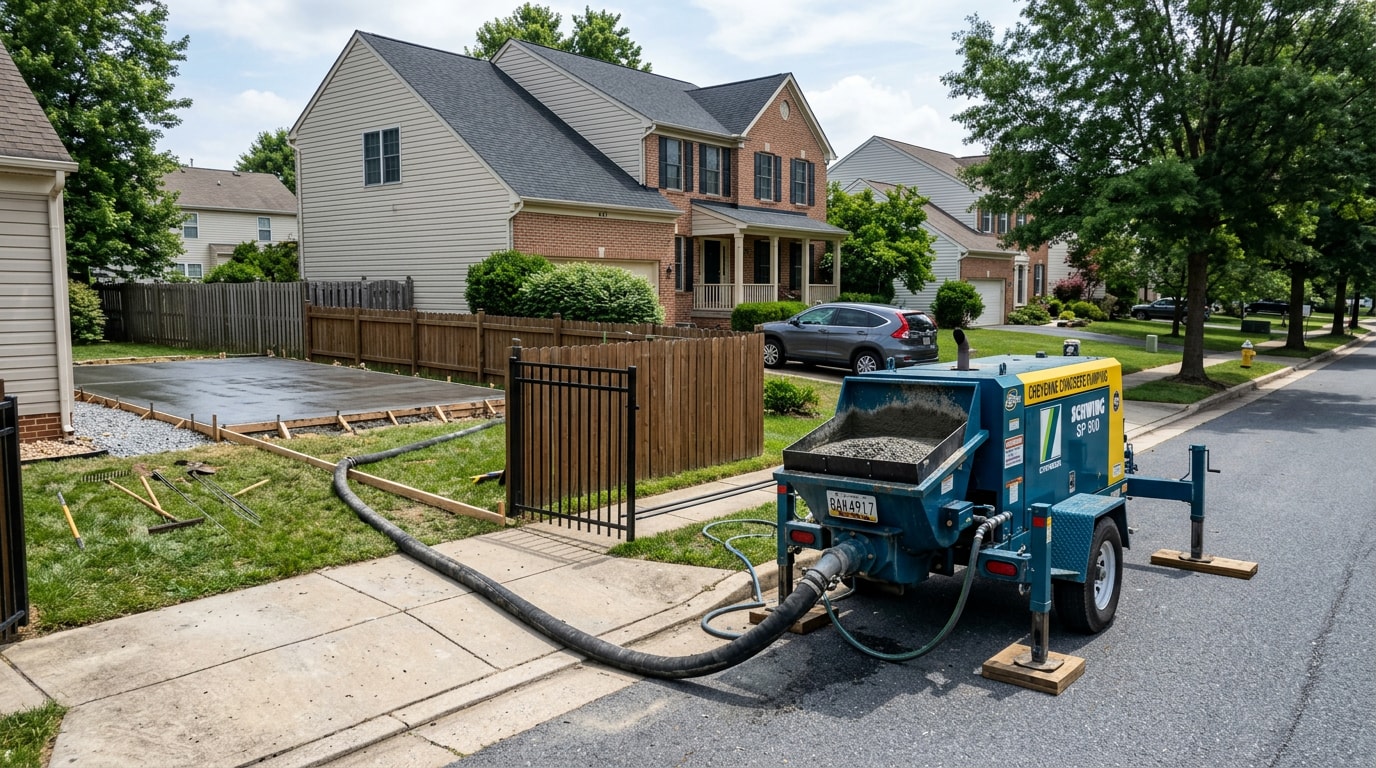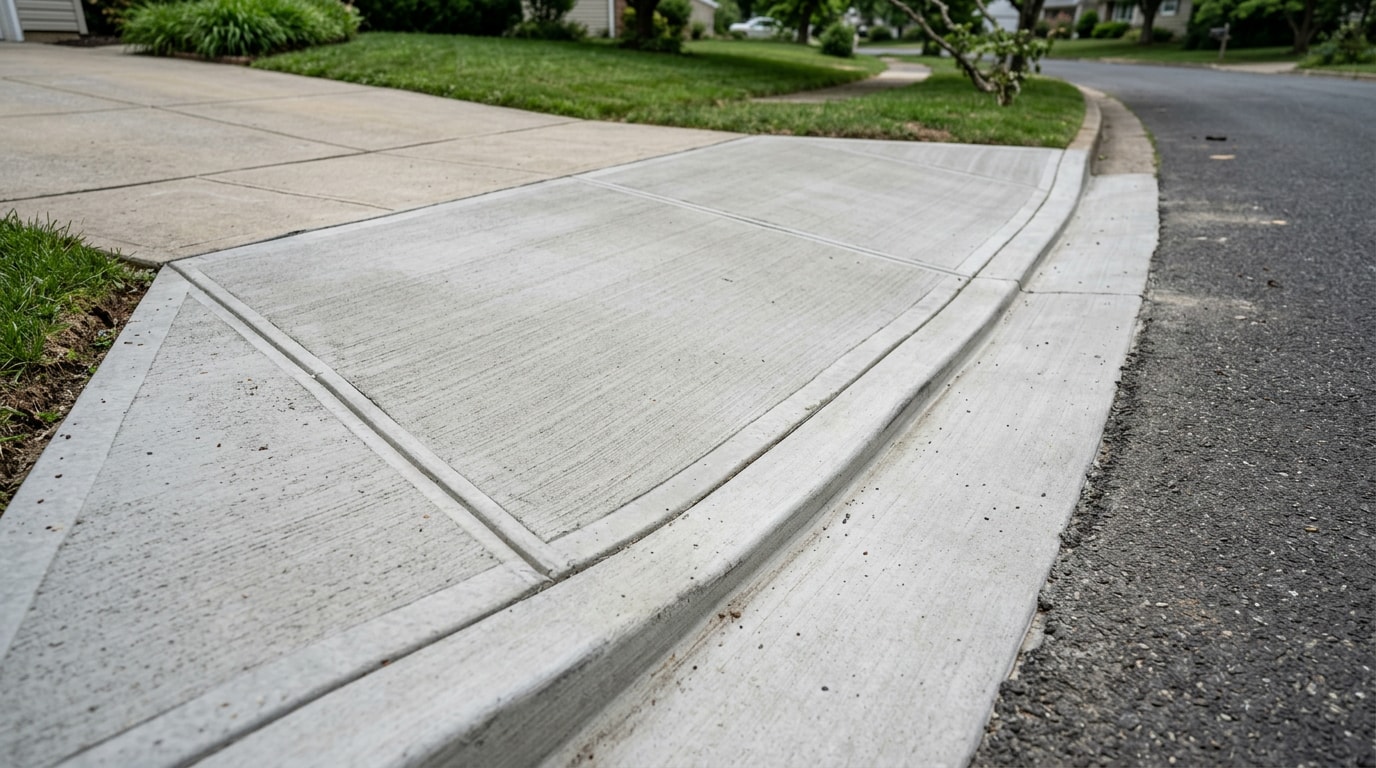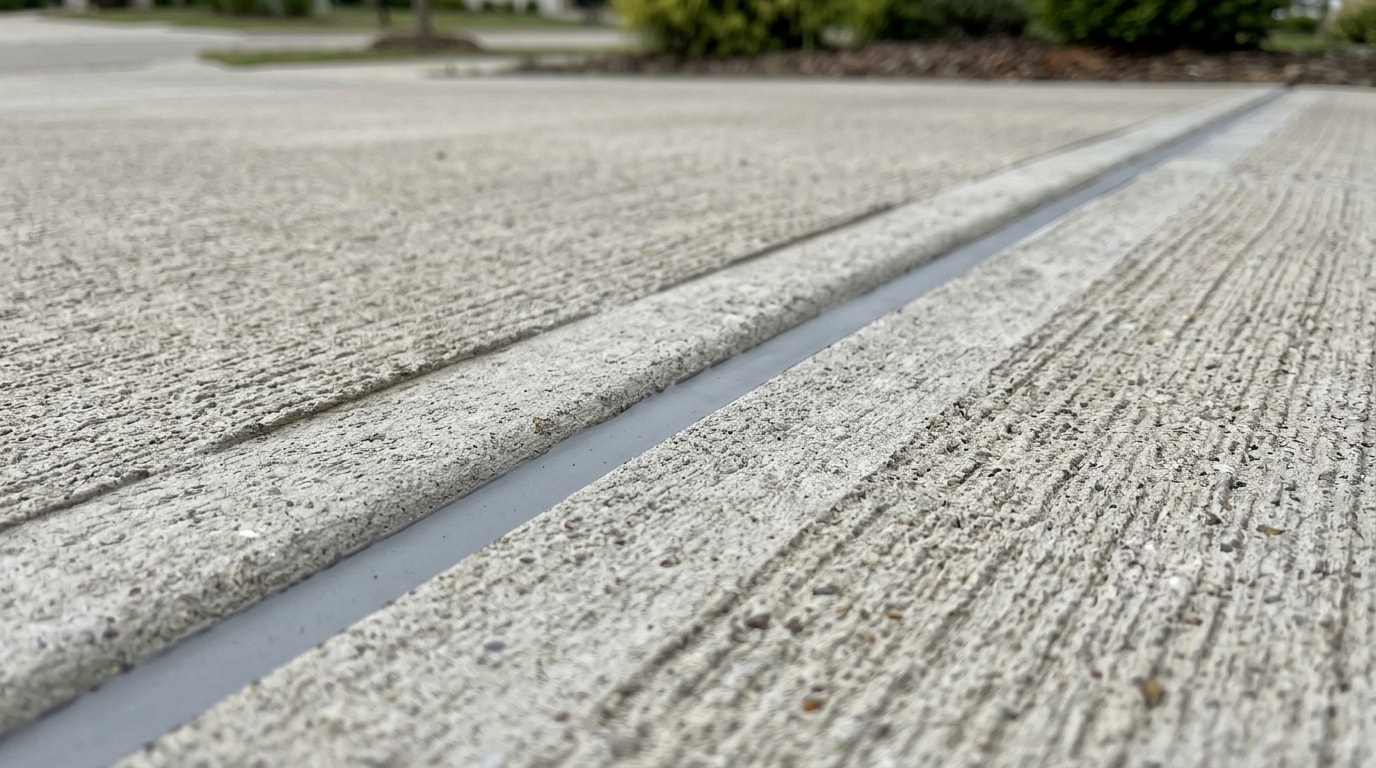
Concrete caulking in Towson, MD is the difference between a hairline gap you never think about again and a cracked, sunken driveway two winters from now. The Baltimore-Washington area averages roughly 61 freeze-thaw cycles a year at ground level, and every single one of those cycles works on whatever water managed to get into an open joint. This guide covers what caulking actually fixes, the warning signs worth acting on, and what a properly sealed joint looks like when the job is done right.
What Is Concrete Caulking?
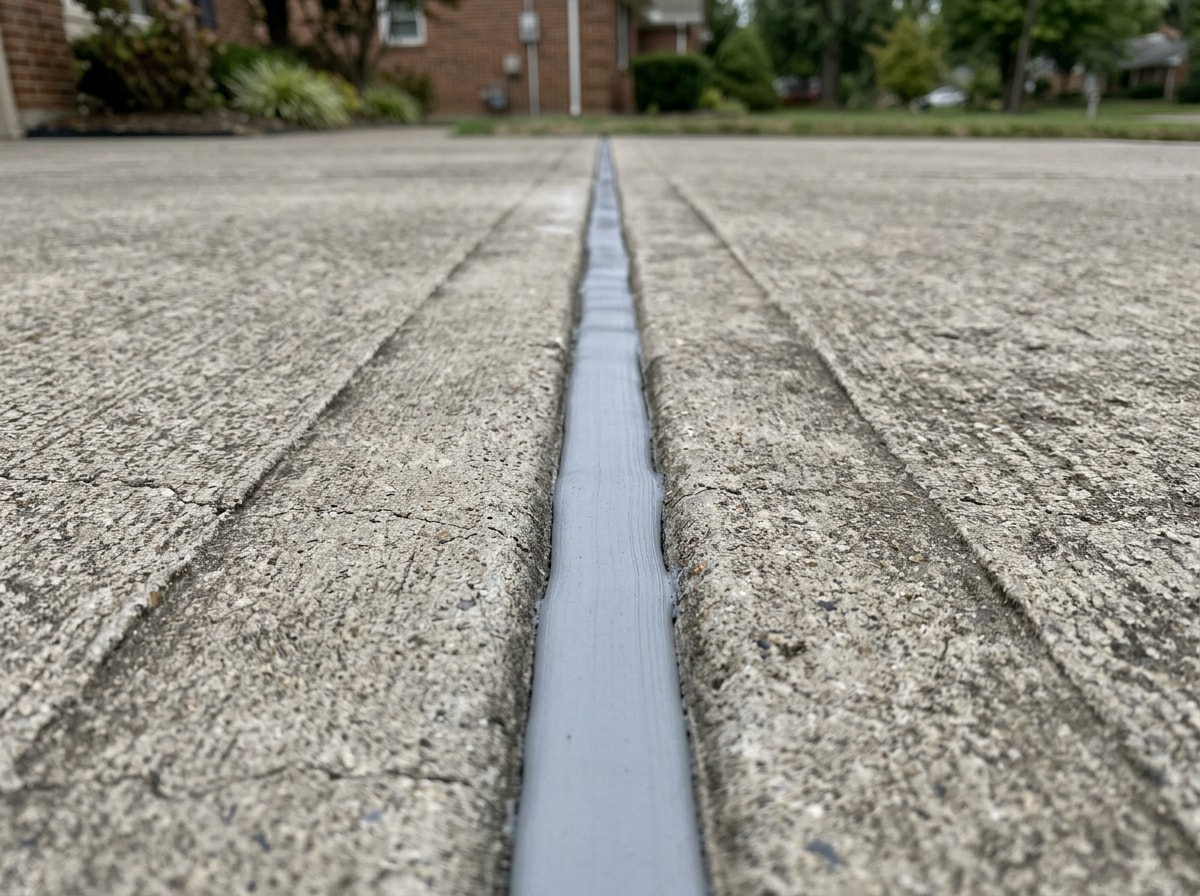
Concrete caulking seals the gaps, joints, and cracks between concrete slabs with a flexible joint sealant to keep out water and debris. It's different from full concrete sealing, which coats an entire surface rather than targeting individual seams. Caulking specifically addresses control joints and expansion joints, the intentional gaps poured into concrete so slabs can shift without cracking.
Around Towson, this applies most often to driveways, sidewalks, patios, garage floors, and exterior steps. Any of these surfaces can develop gapped or dried-out joints over time, and sealing at the joint level is usually far cheaper than replacing a slab.
Why Towson's Freeze-Thaw Winters Make Caulking Non-Negotiable
Unsealed joints let water travel straight down through the slab and into the soil underneath. That water intrusion leads to soil erosion beneath the concrete, which causes settling, shifting, and cracking that wasn't there before.
Local winter weather is the real driver here. Engineering climate data for Baltimore-Washington International Airport, the reference station for the Towson area, puts the average annual number of freeze-thaw cycles at 61 . Water seeps into an open joint, freezes, expands, and widens the gap a little more with every one of those cycles. A properly caulked joint simply flexes and sheds water instead.
On driveways we've re-caulked across Towson and Baltimore County, the joints that failed first were almost always the ones where sealant had pulled away from just one edge, not both. That's a detail that's easy to miss on a quick walk-by inspection, but it's exactly where water starts working its way under the slab.
Signs Your Concrete Needs Caulking
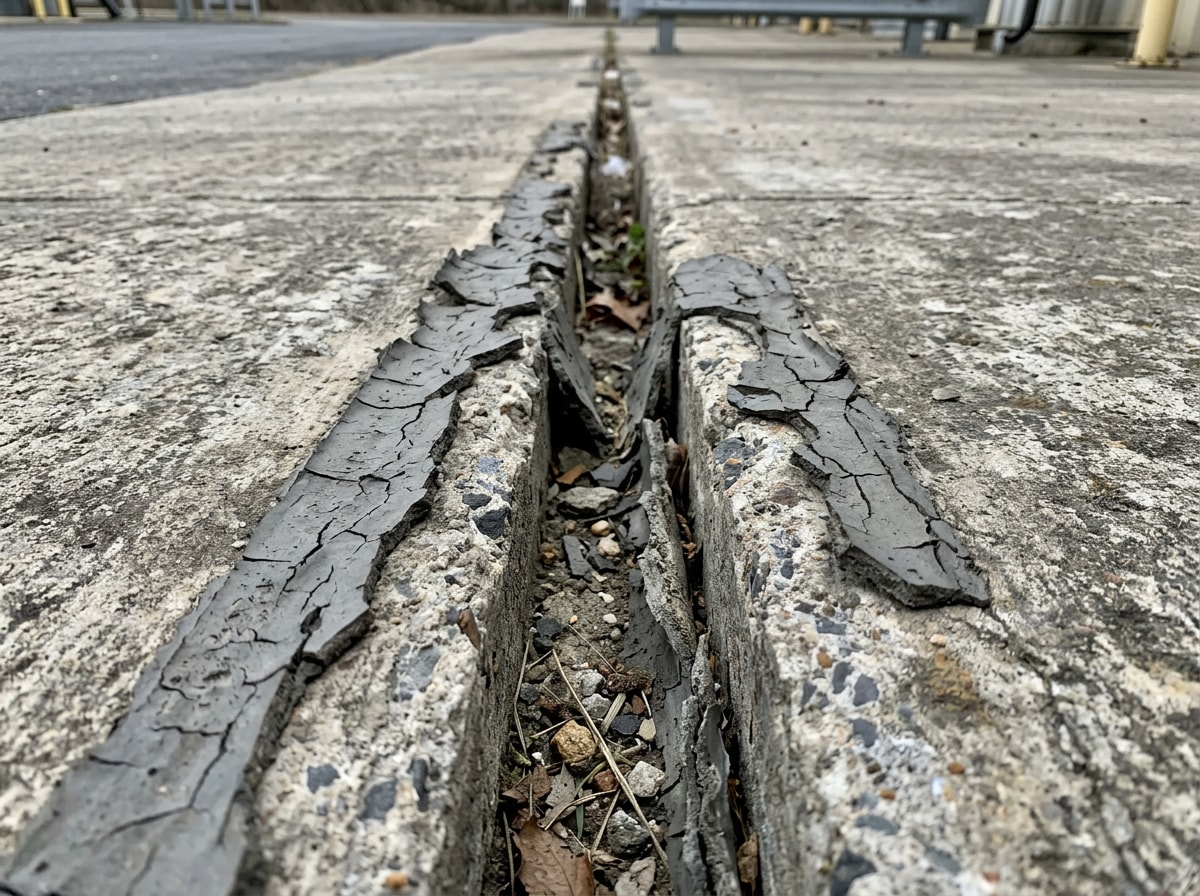
Concrete joints that need attention usually show the same handful of warning signs:
- Dried, brittle, or cracked sealant inside the joint
- Sealant visibly pulling away from one or both joint edges
- Open gaps where sealant has disappeared entirely
- Water pooling along a joint line after rain
- A noticeable dip or unevenness on one side of a joint
Each of these points back to the same chain of events: failing caulk lets water in, water erodes the soil below, and erosion leads to settlement. Water pooling near a joint is often the clearest sign that a seal has already failed. If you're seeing any of this on a Towson property, request a free estimate before the next freeze-thaw cycle does more damage.
How Professional Concrete Caulking Works
A properly caulked joint starts with removing the old, failed sealant and clearing out debris. That joint prep step is what separates a seal that lasts years from one that fails within months. The joint is dried, and a backer rod is installed where the gap is too deep for sealant alone.
From there, the sealant goes in, followed by tooling the joint to create a smooth, even finish that sheds water properly. The general sequence, clean, prime if needed, backer rod, sealant, tool, matches the process outlined in Quikrete's own guide to sealing expansion joints. This same joint-level attention is part of the broader work covered on our concrete repair services page.
Materials We Use
Exterior concrete joints move with every temperature swing, so standard acrylic or latex caulk isn't built for the job.
| Material | Best For | Typical Lifespan |
|---|---|---|
| Polyurethane sealant | Driveways, high-movement joints | 7-10 years |
| Hybrid polymer sealant | Patios, walkways, mixed sun exposure | 8-12 years |
| Self-leveling polyurethane | Horizontal joints, flat surfaces | 6-9 years |
Both polyurethane and hybrid polymer options are flexible, UV-resistant sealant choices built to resist cracking in direct sun. Performance for these joint sealants is generally measured against ASTM C920, the standard specification for elastomeric joint sealants, which covers how a sealant is classified for movement capability, adhesion, and durability.
Best Time of Year to Caulk Concrete in Towson
Caulking goes down best in moderate, dry weather, generally spring or early fall in the Baltimore area. Joints need to be fully dry before sealant is applied, and most polyurethane and hybrid products need temperatures roughly between 40°F and 85°F to cure properly. Caulking right before winter gives the sealant the least time to cure before it faces its first real freeze-thaw cycle, so getting ahead of the season matters more than squeezing in a last-minute repair in late November.
Concrete Caulking Costs in Towson, MD
Pricing depends on three things: linear footage of joint needing sealing, how much existing damage has to be removed first, and which sealant material goes in. As a rough guide based on jobs we've quoted around Baltimore County and Anne Arundel County:
| Job Type | Typical Price Range |
|---|---|
| Single driveway joint re-caulk (per linear foot) | $4-$8 |
| Full driveway joint system (average home) | $300-$900 |
| Patio or walkway joints | $200-$600 |
| Joints requiring full removal of old caulk first | Add 20-30% |
A proper quote still requires seeing the joints in person. Driveways near concrete driveway installation projects we've completed in Towson often need joint caulking within the first year as the new concrete finishes its initial shrinkage.
Benefits of Concrete Caulking
Properly sealed joints reduce soil erosion under the slab, protect expansion joints from repeated freeze-thaw stress, and keep driveways and patios looking cleaner and better maintained. The biggest payoff is cost. Sealing a joint now is far less expensive than leveling or replacing a slab later. Caulking is a small, recurring investment that extends concrete lifespan and heads off bigger repairs down the road.
Even quality sealant eventually dries out, cracks, or pulls away from the joint edges. Routine re-caulking is simple joint maintenance, and it's a lot less invasive, and less costly, than waiting until a failed joint causes visible settlement. For homeowners anywhere in Towson, this is one of the few maintenance tasks that's cheap, fast, and directly interrupts the erosion cycle before it starts.
If you're weighing concrete against other surface options for a new driveway or patio, our breakdown on whether asphalt is cheaper than concrete in Towson covers the longer-term cost picture, including maintenance items like joint caulking.
FAQ
How Long Does Concrete Caulking Last?
Professional-grade sealant typically lasts 5 to 10 years, depending on material choice, sun and weather exposure, and how well the joint is maintained. Polyurethane and hybrid sealants tend to hold up longer than basic acrylic caulks.
Can I Caulk Concrete Cracks Myself?
Small hairline cracks may be reasonable for a confident DIYer to handle. Proper joint prep, material selection, and deciding whether a joint needs a backer rod are where professional work and DIY caulking really diverge.
How Much Does Professional Concrete Caulking Cost?
Cost depends on linear footage of joint needing sealing, how much existing damage needs removal, and the sealant material used. See the pricing table above for typical ranges, but a full quote requires seeing the joints in person.
Can Damaged Joints Cause Concrete to Sink?
Yes. Water entering through failed joints can gradually erode the soil supporting the slab. In some cases, soil erosion under the slab leads to settlement that requires concrete leveling in addition to re-caulking.
Is Concrete Caulking the Same as Concrete Sealing?
No. Caulking fills and seals the joints and cracks between slabs. Sealing applies a protective coating across the entire surface. Many driveways and patios benefit from both, done at different times.
What's the Best Time of Year to Caulk Concrete in Towson?
Spring and early fall are ideal. Joints need to be dry, and most sealants cure best between roughly 40°F and 85°F, so getting the work done before winter arrives gives the sealant time to fully cure.
How Do I Maintain Caulked Concrete?
Inspect sealed joints periodically for cracking or peeling, keep the area free of dirt and debris, and reseal promptly once wear appears.
Ready to get your joints inspected before the next freeze-thaw season? Request a free estimate and see our completed work on the projects page.
About SEJ Paving
SEJ Paving is a family-owned paving and concrete contractor serving Towson and the greater Baltimore area. Founder Joshua Joseph built the company on his family's background in the paving industry, and the crew applies that same hands-on approach to joint caulking, concrete repair, and driveway work across Baltimore County. Visit our homepage to see the full range of concrete and paving services we offer, or contact us to schedule an inspection.