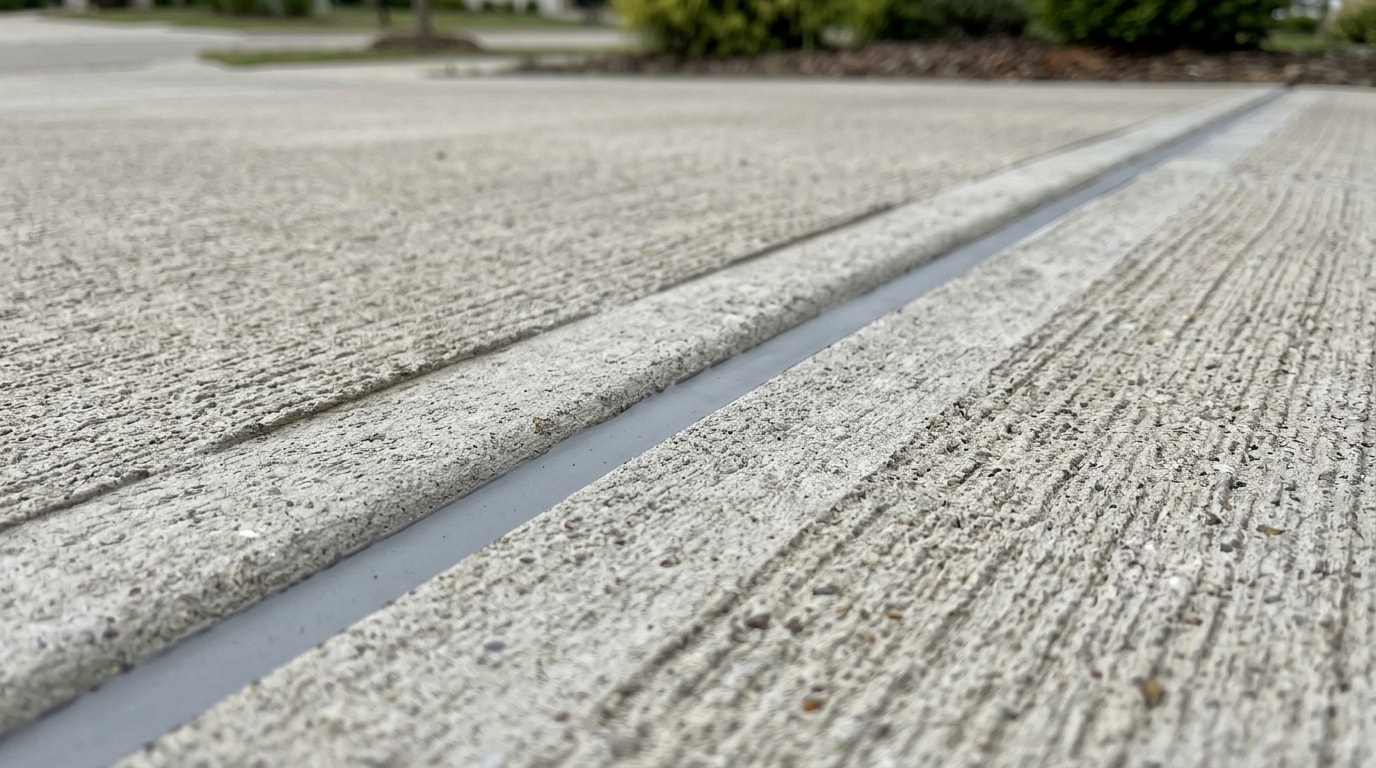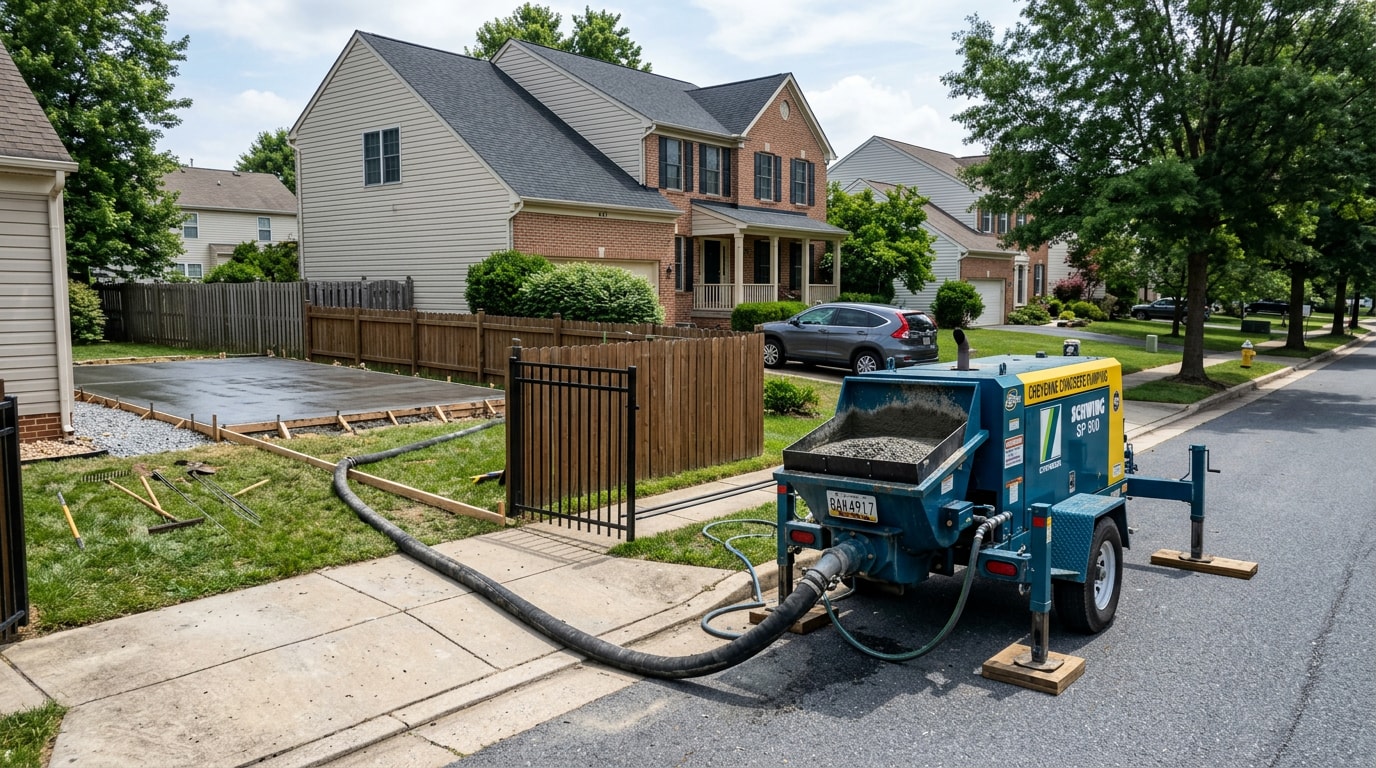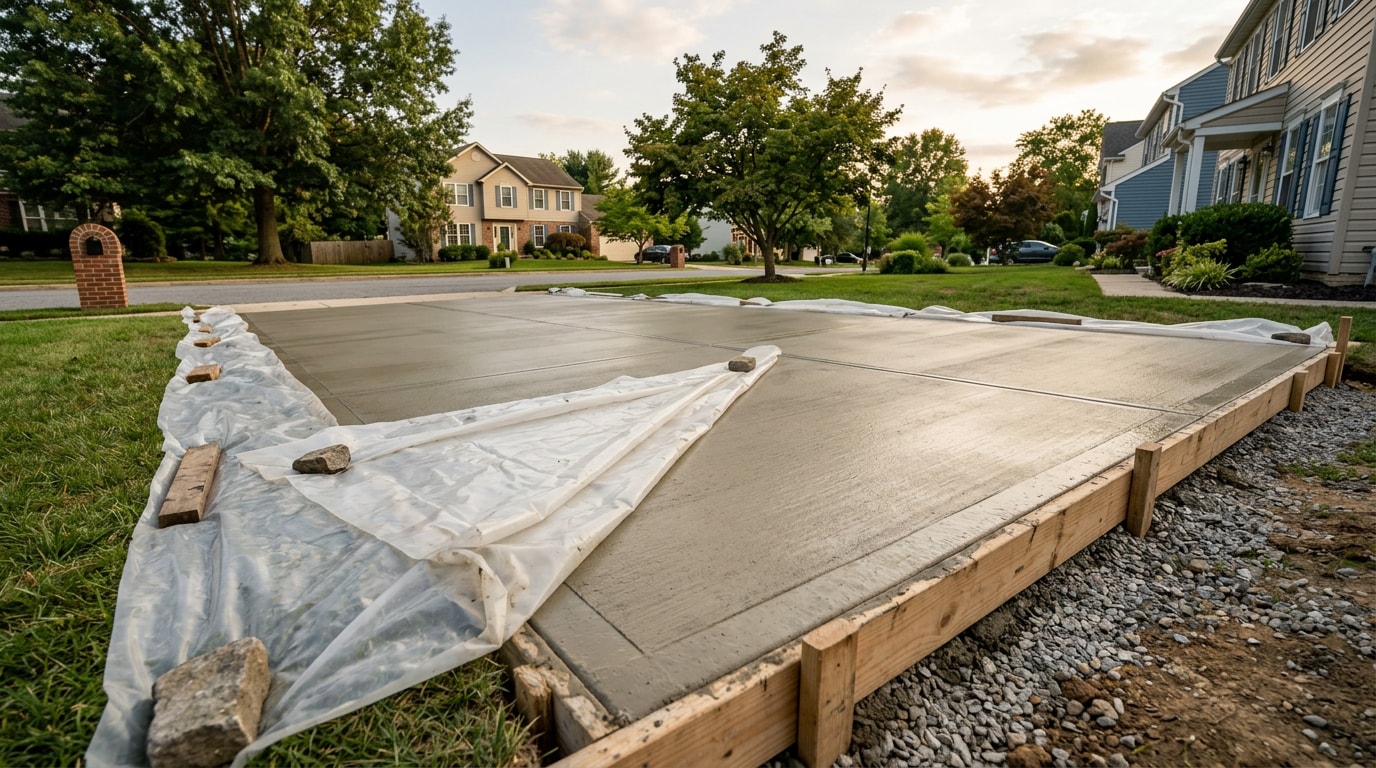
Concrete cure time in Pasadena, MD runs on the same hydration chemistry as anywhere else, but Chesapeake Bay humidity and seasonal temperature swings can stretch the practical timeline by a day or two. Most slabs are walkable in 24 to 48 hours, driveable in about a week, and at full design strength by 28 days. Below is the exact milestone-by-milestone breakdown, plus what changes it for local weather, slab thickness, and project type.
How Long Does Concrete Take to Cure?
Curing is not the same as drying. It is a chemical reaction called hydration, where water and cement bind to form the crystal structure that gives concrete its strength. That reaction runs for weeks, not days.
In general, specified strength for concrete applies at an age of 28 days. That is why 28 days is the number contractors, inspectors, and engineers use as the industry benchmark.
But that benchmark is not a finish line. 28 days is the age at which concrete's specified strength is tested, not the end of curing. Concrete keeps gaining strength for months as long as moisture is available, and mixes with fly ash or slag gain more after 28 days than plain portland cement mixes. Most contractors still treat 28 days as "full cure" for practical scheduling purposes, since later gains are small.
Concrete Curing Timeline at a Glance
| Stage | Timeframe | What's Happening |
|---|---|---|
| Initial set | A few hours after pour | Surface firms up enough to hold shape |
| Walkable | 24-48 hours | Safe for light foot traffic |
| Driveable (passenger cars) | About 7 days |
Reaches near 70-75% of its design strength
| Heavy trucks / full structural load | 28 days | Reaches specified design strength |
Edges, joints, and corners dry faster and cure a bit slower on the inside than the body of the slab, so give those spots extra patience before loading them.
How Long Before You Can Walk on New Concrete?
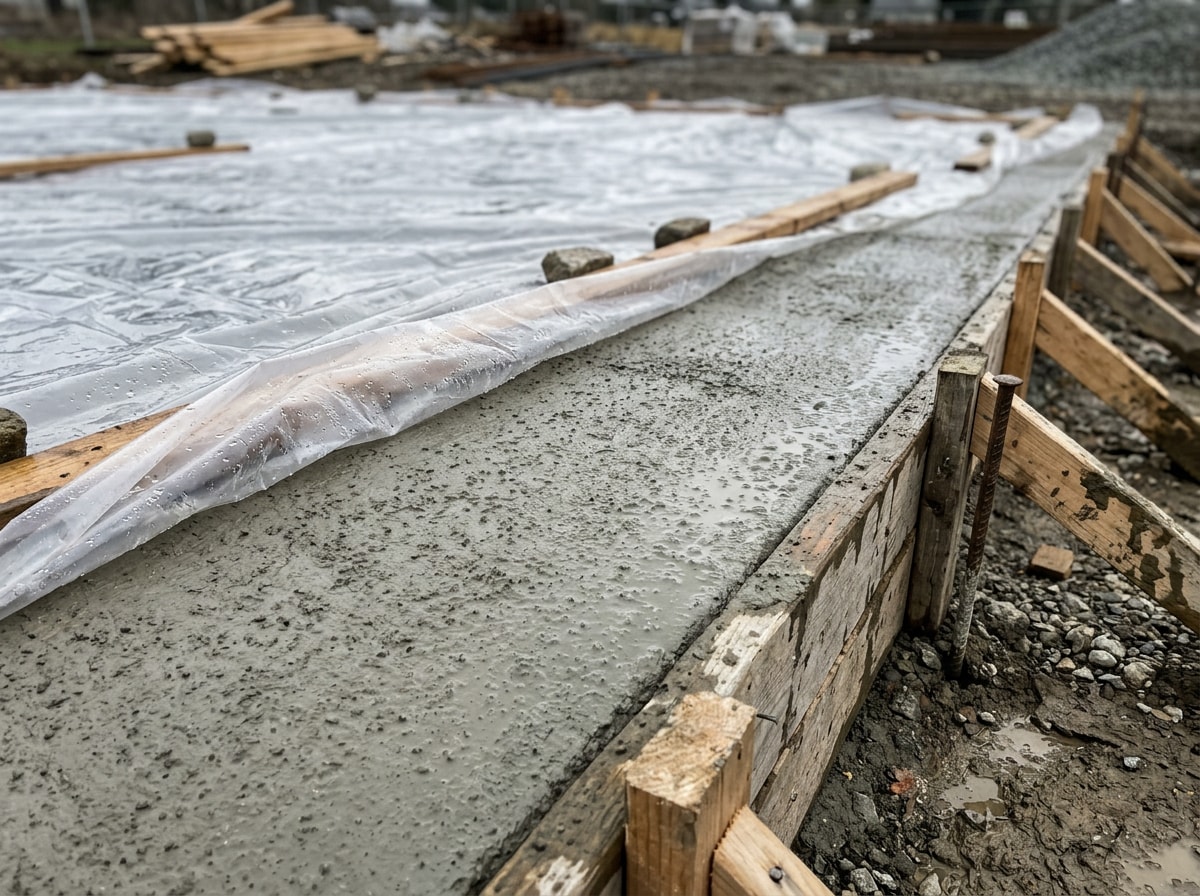
Most fresh concrete is safe for light foot traffic after 24 to 48 hours, once the top layer has hardened enough to resist footprints. Stamped details and decorative edges may need a little longer since they are thinner and more exposed to the air.
Walking too early risks scuffs or footprints that cannot be buffed out later. Waiting the extra day is always cheaper than patching a section of slab. If you want the surface built right from the start, our concrete finishing crews...
Here's the thing: that service link needs the token, not the live origin.
How Long Before You Can Drive on New Concrete?
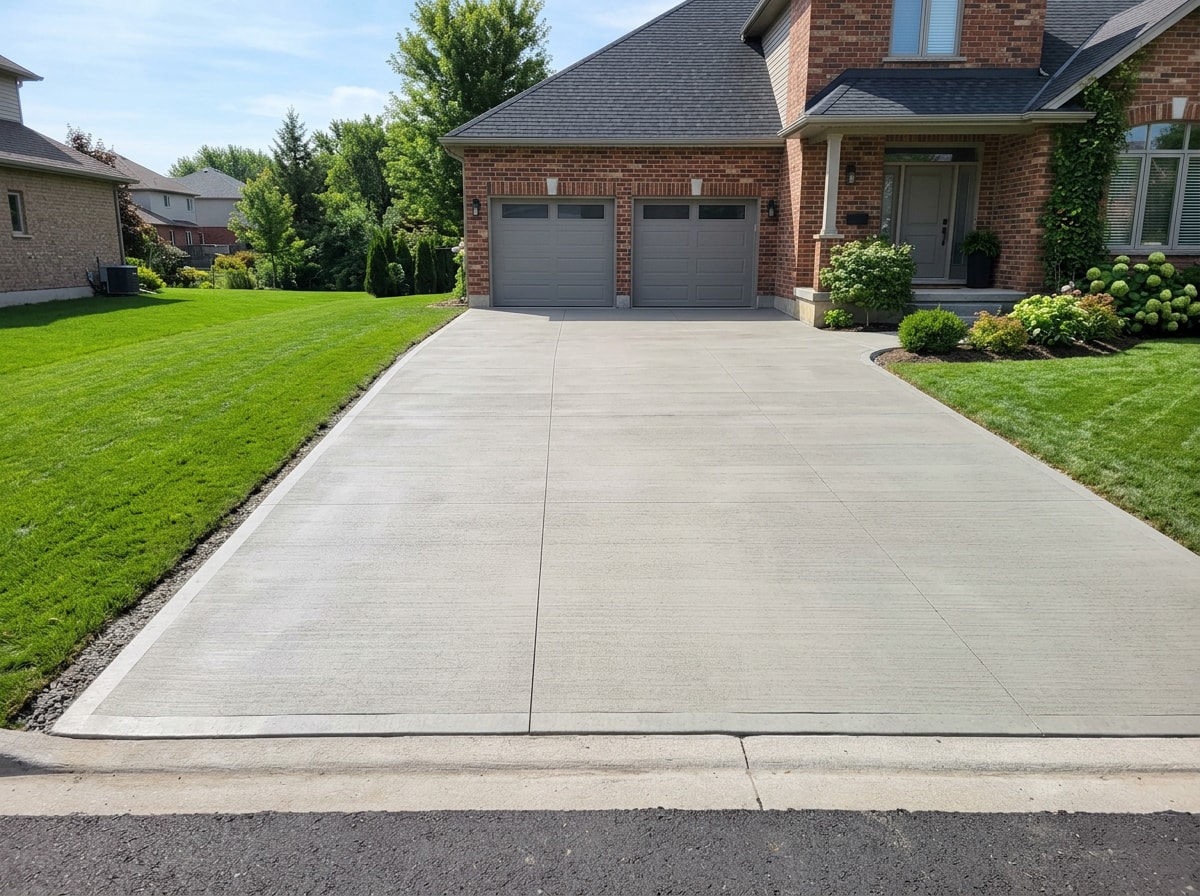
Passenger cars can typically drive on new concrete after about 7 days, once the slab has gained enough strength to handle rolling weight without cracking. Heavy trucks should wait the full 28 days, when the slab reaches its specified strength.
Keep vehicles centered on the slab rather than along the edges for the first few weeks, since edges and expansion joints lose moisture fastest and cure a little slower underneath. If you're planning a new driveway, our concrete driveway installation team can walk you through the mix design and timeline for your specific layout.
Factors That Affect Concrete Curing Time in Pasadena, MD
Temperature, humidity, slab thickness, and mix design all push the timeline above earlier or later. Thicker slabs hold moisture longer at the core and cure more slowly, while hot, dry air pulls moisture out too fast and weakens the surface.
Pasadena's Chesapeake Bay location adds its own wrinkle. On our own pours along the shoreline, we've watched humid August mornings keep a driveway surface tacky well past the 24-hour mark, even though the slab underneath was curing exactly on schedule. High humidity slows surface drying but doesn't slow hydration itself, so the concrete is often stronger than it feels.
Cold weather is the opposite problem. Cold weather conditions exist when the air temperature has fallen to, or is expected to fall below, 40°F during the protection period , and hydration nearly stalls below that threshold. Winter pours in Pasadena need insulated blankets or heated enclosures to keep curing on track.
A lesser-known fact backs this up: a field test using Maryland conditions, where cylinders were cured outdoors in a covered bucket at 72-89°F for 48 hours before standard curing, measured a 22% reduction in 28-day strength compared to standard moist curing. That's a meaningful strength loss from nothing more than a warm, humid Maryland afternoon without proper moisture protection. Lack of adherence to proper initial curing is common and has been found to cause a 20% reduction in potential 28-day strength, on average.
For the full technical rundown on temperature thresholds, ACI 305 Guide to Hot Weather Concreting and ACI 306 Guide to Cold Weather Concreting are the reference documents most engineers point to.
Concrete Cure Time by Project Type
Not every pour cures on the same schedule. Thickness and load demands change how long each surface needs before it's ready for use.
| Project Type | Typical Thickness | Walkable | Light Load | Full Cure |
|---|---|---|---|---|
| Walkway / sidewalk | 4 in | 24-48 hrs | 7 days | 28 days |
| Patio | 4 in | 24-48 hrs | 7 days | 28 days |
| Driveway | 4-6 in | 24-48 hrs | 7 days (cars) | 28 days |
| Foundation / footing | Varies | N/A | 7 days (light framing) | 28 days (full load) |
Thicker pours take longer at the core. A 6-inch slab may need 24-36 hours before foot traffic and 28-35 days for full cure , a few days past the standard 28-day mark. Explore our full concrete services lineup for project-specific guidance, including concrete repair and concrete patio installation.
How Long Does a Foundation Take to Cure?
Foundation curing follows a stricter schedule because the stakes are higher. Light framing work can often start after about 7 days, once the concrete has enough strength to support initial loads safely. Full structural load, including the weight of a complete structure, shouldn't be applied until the concrete reaches its 28-day strength. Builders confirm this with cylinder testing rather than guessing off the calendar.
What a Full Concrete Project Timeline Looks Like in Pasadena, MD
Curing is only one phase. A full project in Pasadena, MD and the surrounding Anne Arundel County area typically runs:
- Planning and permitting: 1-2 weeks, depending on project scope
- Formwork installation: 1-2 days to set grade and shape
- Pouring and placement: 4-8 hours, depending on size and crew
- Active curing:
NRMCA's CIP 11 on curing in-place concrete puts the practical range at 3 to 7 days of active moisture protection, then ongoing strength gain through the 28-day mark
Most residential projects in Anne Arundel County need a permit before formwork starts. The Department of Inspections and Permits is responsible for the timely processing and issuance of permits for residents and businesses located in Anne Arundel County, ensuring efficient and compliant development and construction. Once a permit is issued, it must be active for 24 hours before you can request your first inspection , so build that buffer into your schedule.
Get Your Pasadena Concrete Project Scheduled Right
Curing times only hold up if the mix, thickness, and finishing are done correctly from day one. Contact us for a free estimate, and we'll walk you through the exact timeline for your slab, from permit to final cure. You can also browse our recent projects or visit our homepage to see our full range of concrete and paving services.
FAQ
How long does concrete take to cure in Pasadena, MD?
Most slabs are walkable in 24 to 48 hours, driveable for passenger cars in about 7 days, and at full design strength by 28 days. Humid summers and cold winters can shift these windows by a day or two.
What happens if you drive on concrete before it cures?
Driving too soon can leave tire marks, cause surface cracking, and reduce the slab's long-term structural integrity. Early loading disrupts hydration before the concrete has built enough internal strength, which can show up later as cracks.
How long should I wait before driving on new concrete?
Wait about 7 days before driving a passenger vehicle on new concrete, and a full 28 days before parking or driving heavy trucks or equipment on it. These windows give the slab time to reach safe load-bearing strength.
How long should concrete cure before rain?
Fresh concrete needs roughly 24 to 48 hours of protection from heavy rain exposure before it can handle the moisture without surface damage. If rain is forecast sooner, covering the slab with plastic sheeting right after the pour helps prevent pitting and washout. For a full breakdown of pouring in wet conditions, see our guide on pouring concrete in the rain.
How long before you can seal new concrete?
Most sealers should wait at least 28 days after the pour, once the slab has released most of its internal moisture. Sealing too early can trap moisture under the surface and cause cloudiness, bubbling, or peeling.
Do thicker slabs take longer to cure?
Yes. A standard 4-inch walkway or patio slab reaches practical strength faster than a 6-inch driveway slab, since thicker pours hold moisture longer at the core. Both still follow the same 28-day path to full design strength.
Steve Jenkins is the lead estimator at SEJ Paving, with 15+ years of hands-on concrete and paving experience across Pasadena, Glen Burnie, and the greater Anne Arundel County area. Have questions about your specific pour? Contact us for a free, on-site estimate.