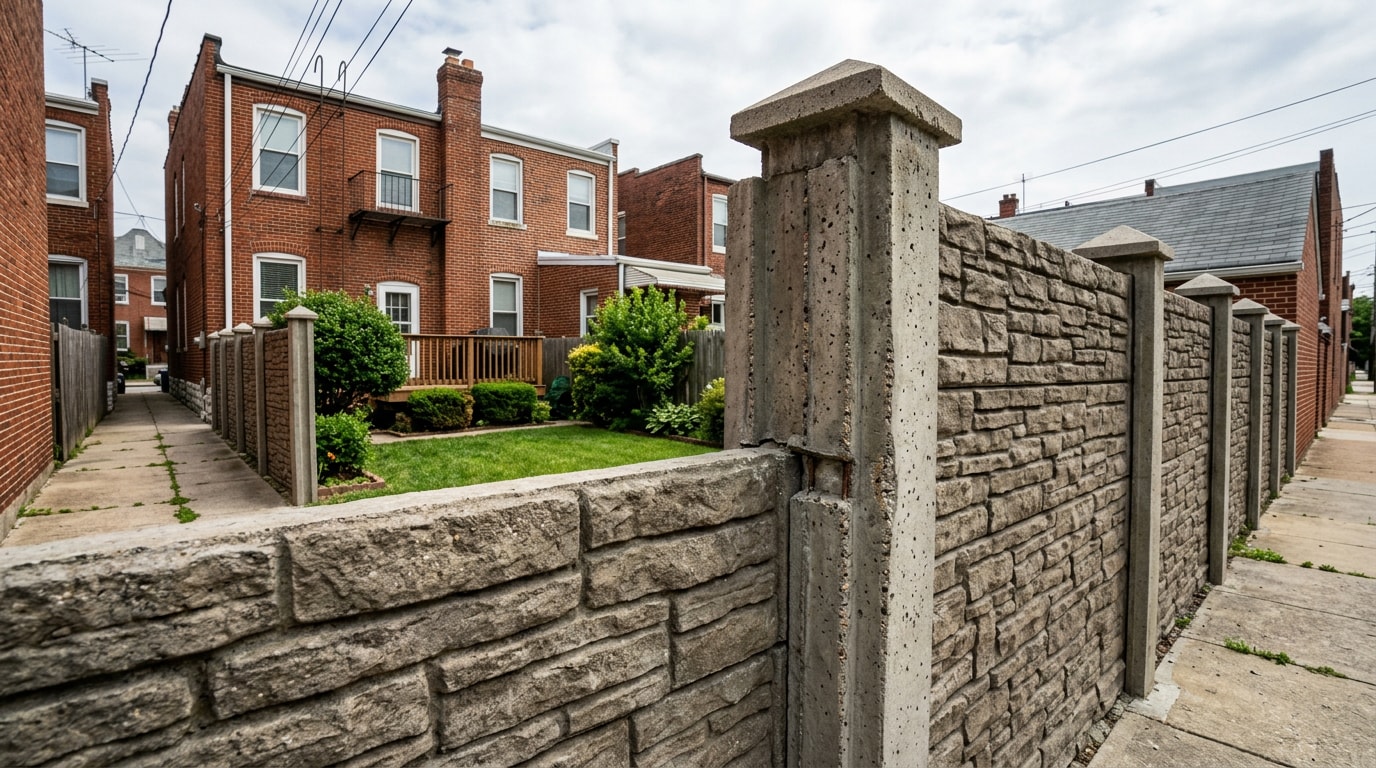
A concrete fence in Baltimore City, MD almost always means a precast panel-and-column system, not a poured wall built board by board on site. Before you call around for quotes, you need two numbers: what the city's permit office will actually approve, and what a straight installation runs per linear foot. Below is both, plus the site-access problems that catch rowhouse owners off guard.
What Is a Concrete Fence?
A concrete fence is a perimeter barrier built from reinforced concrete. In residential Baltimore, that almost always means precast panels manufactured off site, cured in a plant, then trucked in and lifted between columns.
Precast fence posts, or columns, go into drilled footings first. Horizontal concrete panels then stack between the columns to reach finished height, much like a heavier, permanent version of a board-on-board fence.
Baltimore City Fence Permits and Height Limits
Get this section right before you pick a panel style, because the permit office can force a redesign.
Permit requirement. Baltimore City requires a permit before construction begins on any new residential fence, concrete included.
Height limits. Baltimore City's building code caps most fences at 42 inches, measured on the high side, unless the fence falls under a specific exception. Fences enclosing a dwelling are allowed up to 6 feet if they sit in a side or rear yard, which is the exception that lets most backyard privacy panels reach a usable height.
Masonry burial depth. City code treats reinforced concrete fences as masonry fences, and masonry fences must extend at least 2 feet into the ground, regardless of what's visible above grade.
Structural load. Reinforced fences in Baltimore City generally need to resist a 20 psf horizontal force from any direction, which is why footing size and column spacing aren't something a crew should eyeball.
Property line placement. A fence can only be built on the owner's property. Shared property-line fences need a signed agreement from both owners submitted with the permit application.
Documents to have ready:
- A site plan showing the fence location relative to property lines
- Masonry/structural drawings showing footing depth and reinforcement
- A signed adjoining-owner agreement, if the fence sits on a shared line
Full code language is public on the Baltimore City Code, Section 3118 page, which is worth a read before you finalize a design with your contractor.
How Much Does a Concrete Fence Cost in Baltimore?
Baltimore's labor rates and permit requirements tend to push real quotes above the loosely quoted national per-foot figures you'll find in generic cost guides.
| Fence Type | Typical National Range (per linear ft.) | Baltimore-Adjusted Estimate |
|---|---|---|
| Precast panel, 6 ft | $35–$50 | $42–$60 |
| Poured-in-place, 6 ft | $50–$75 | $60–$90 |
These are planning numbers, not a quote. Get a written estimate once your lot, height, and design are set.
Cost by Height
A 4–5 ft fence costs the least because it needs lighter columns and shallower footings. A 6 ft fence, the common privacy height, sits at the midpoint, and it's also the exact threshold where Baltimore's permit rules change for side and rear yards. Taller 7–8 ft sections usually need engineered reinforcement and cost noticeably more per foot.
Precast vs. Poured-in-Place
Precast panels are cured in a controlled plant environment and install faster, which generally keeps labor costs down. Poured-in-place walls are formed and cast on site, which can produce a continuous structure but takes longer and needs more skilled labor on location. Manufacturing and quality-control benchmarks for precast products are set by groups like the National Precast Concrete Association, a useful reference when you're comparing panel suppliers.
Additional Costs to Budget For
- Permit fees through DHCD
- Removal and disposal of an old fence
- Grading or site preparation for uneven lots
- Gate hardware and any custom color or texture upcharge
These add-ons can run several hundred to a few thousand dollars depending on scope.
Design Decisions to Settle Before Anything Gets Cast
Panels are manufactured to order, so a few choices need to be locked in before production starts.
Height, Texture, and Color
Owners typically pick height, surface texture (smooth, stone-look, board-form), and integral color before panels are poured. Confirm your height choice against the permit limits above first.
Engineering for Wind, Soil, and Frost
Footing depth and column spacing are calculated from wind load and soil conditions at the site, not guessed. Maryland's frost depth runs well below the surface; a neighboring county's building department puts the required footing depth at 2 feet 6 inches below finished grade for standard foundations, and a shallower footing risks frost heave over a hard winter.
Site Logistics
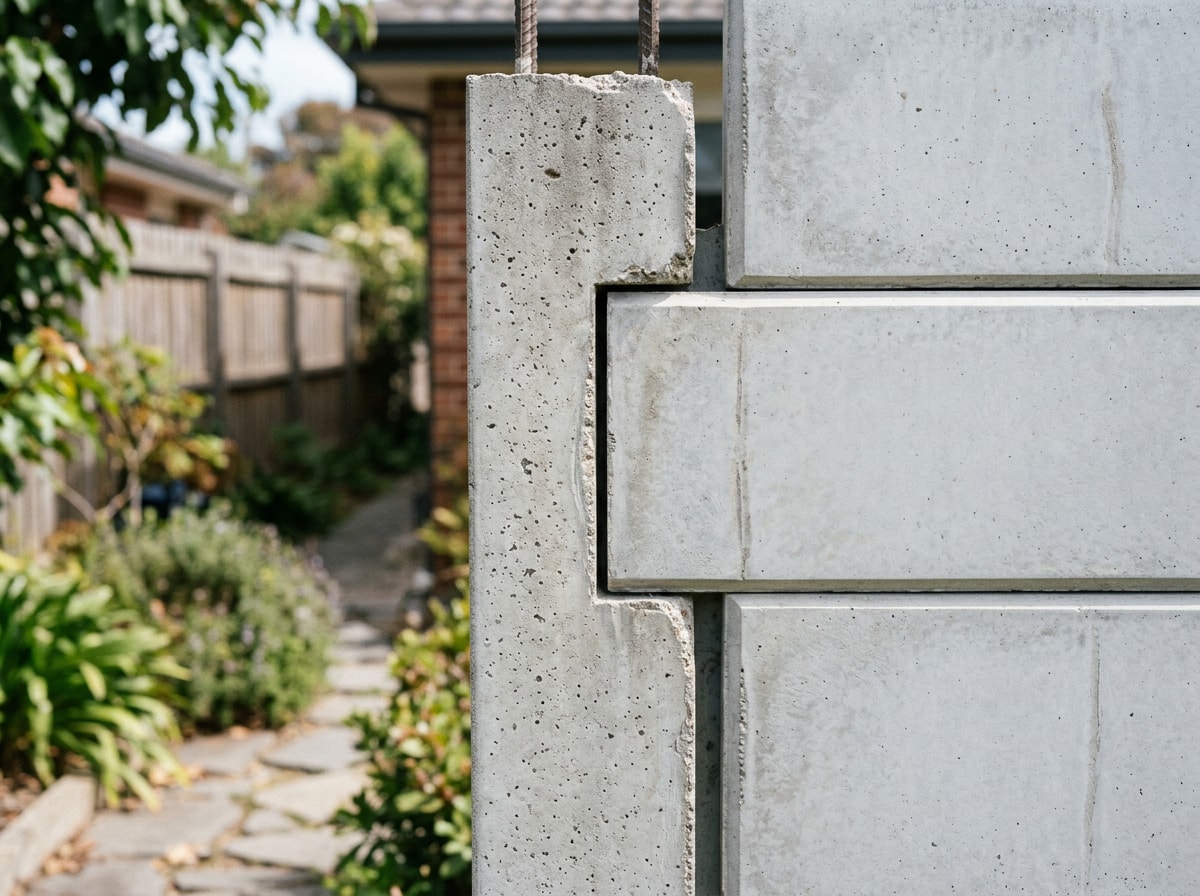
Precast panels weigh hundreds of pounds each, so boom-truck access matters more than most owners expect. Our crews have set panels on more than a few East Baltimore rowhouse blocks where the rear alley is barely wider than the delivery truck, and that reality sometimes forces a smaller panel size or a different lift sequence than a suburban lot would need.
What Installation Actually Looks Like
Installation follows a set sequence, and skipping a step is how fences end up leaning within a few years.
- Survey the lot and lay out the fence line
- Drill and pour column footings to the required depth
- Set columns plumb and let footings cure
- Lift panels into the column slots with a crane or boom truck
- Finish joints and install gate hardware
Because panels can weigh from several hundred to a few thousand pounds, this isn't a weekend project with a post-hole digger. Shallow footings or misaligned columns show up as leaning or cracked sections within a few years, so an experienced crew matters more here than with a wood fence. If an older concrete fence or wall needs to come out first, our concrete repair and debris removal teams can clear the line before the new footings go in.
Thinking through post materials for a different style of fence? Our guide to concrete fence posts in Middle River, MD breaks down the options if you're comparing precast columns against other post types.
Ready to see what your lot and layout actually cost? Get a free estimate before you lock in a panel style or height.
How Long Will a Concrete Fence Last?
A properly installed precast concrete fence commonly reaches several decades of service, with manufacturer warranties and plant quality control playing a bigger role in that number than the material alone. Footings set below frost depth, with correctly spec'd reinforcement, hold up best over time.
Neglected joints or water intrusion around footings can shorten that window considerably. Installation quality, not just the concrete itself, is what separates a fence that lasts 15 years from one that lasts 40.
FAQ
Do I need a permit to build a concrete fence in Baltimore City?
Yes. Baltimore City requires a permit before construction begins on any new residential fence, including precast and poured concrete fences.
How tall can a fence be in Baltimore City?
Most fences are capped at 42 inches. Fences enclosing a dwelling can reach 6 feet if they're in a side or rear yard, not the front.
Is a concrete fence cheaper than wood?
Not upfront. Wood costs less to install initially, but a well-built concrete fence needs far less repainting, board replacement, and post repair over a multi-decade lifespan, which narrows or erases the gap over time.
How much maintenance does a concrete fence need?
Very little. Most precast concrete fences need only occasional washing and periodic joint checks, far less upkeep than staining wood or patching and painting a block wall.
Can I put a concrete fence directly on the property line?
Only on your own property, unless your neighbor agrees in writing. Baltimore City requires a signed statement from both owners submitted with the permit application for any fence built on a shared property line.
About the Author
This guide was prepared by the project estimating team at SEJ Paving, which handles concrete, paving, and site work across the Baltimore metro area. For a walkthrough of your specific lot, permit needs, and panel options, contact SEJ Paving to schedule a free estimate.