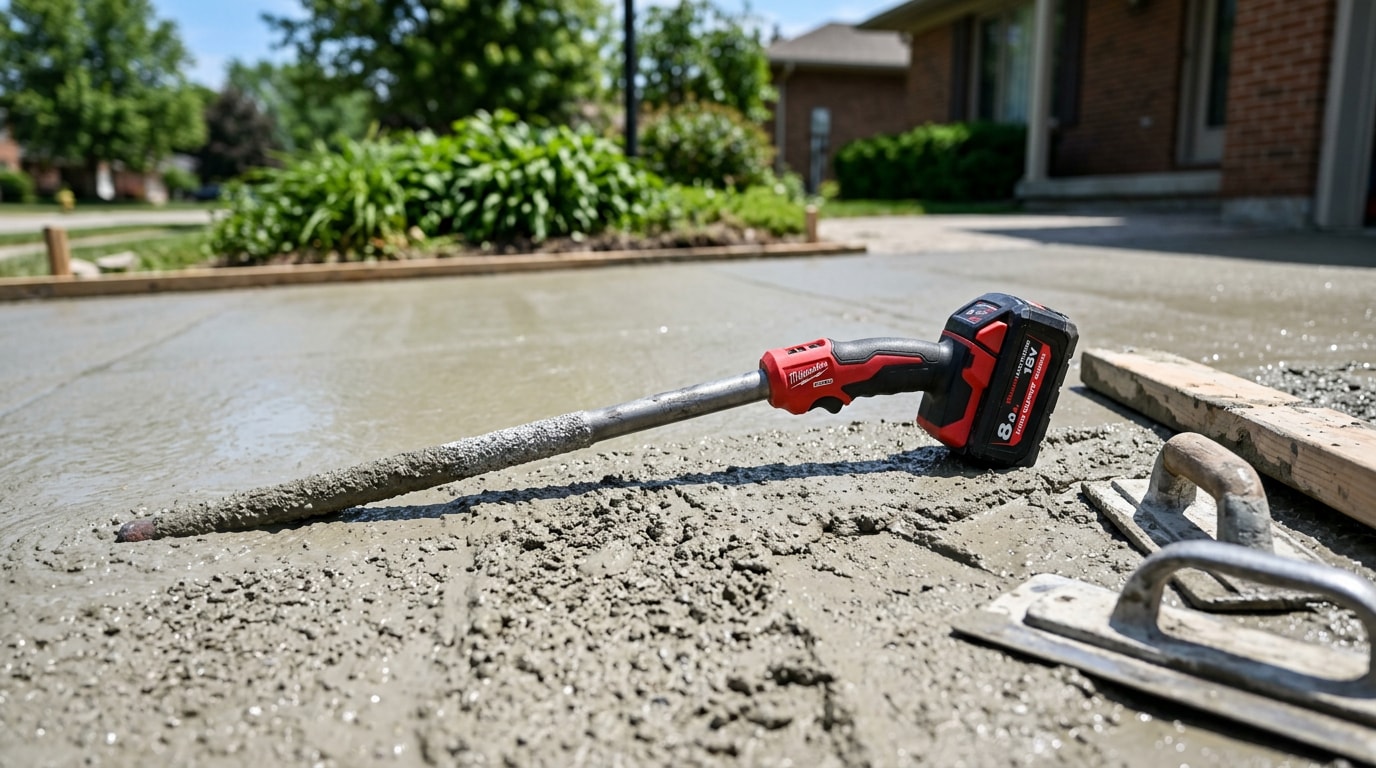
Cordless concrete vibrators in Severn, MD let you consolidate a driveway, footing, or patio slab without dragging a cord across wet concrete and uneven formwork. Pick the wrong model, though, and you end up with a dead battery halfway through a pour and honeycombing nobody wants to patch later. Here's what actually matters before you buy, rent, or borrow one.
What Does a Concrete Vibrator Actually Do?
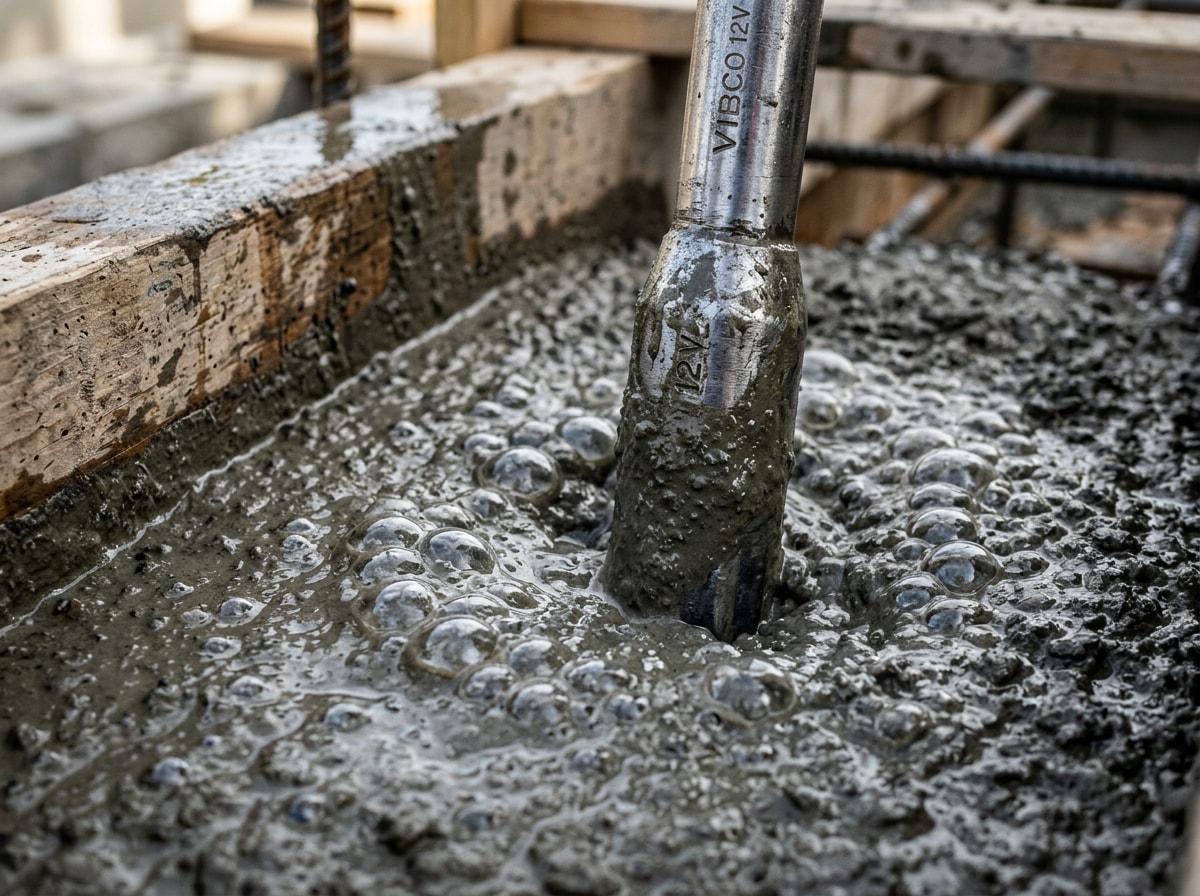
A concrete vibrator consolidates freshly poured concrete. It releases trapped air and settles the mix tightly around reinforcement and into form corners.
Done right, it prevents honeycombing and weak spots. Done wrong, meaning the poker is dragged sideways like a spoon, it causes aggregate segregation instead of consolidation.
Skip the step entirely and you usually get visible voids and gravel pockets where air bubbles never escaped. Those weak, porous spots hurt both appearance and structural strength.
A cordless concrete vibrator does the same consolidation job as a corded or gas model, just without a cord or hose tying you to a power source. For smaller residential pours around Severn, a patio slab, porch footing, or sidewalk section, that freedom to move usually outweighs the trade-off in raw runtime.
Key Features to Look for in Cordless Concrete Vibrators for Severn, MD Projects
Spec sheets throw a lot of numbers at buyers: VPM, amperage, shaft diameter. Most of it only matters once it's filtered through the actual job.
Before comparing models side by side, run through these questions:
- What power source actually fits the site?
- What poker size clears the rebar you're working around?
- How long does the shaft need to reach into the form?
- How much vibration does the mix design need?
- How long does the battery need to last?
- How big is the project, really?
Power Source: Cordless vs. Corded vs. Petrol/Drill-Powered
Cordless vs. corded isn't really a question of which is better. It's which fits the pour.
Cordless models win on small-to-medium jobs, indoor pours, and tight spaces where running an extension cord or air hose is impractical. A battery-powered vibrator also makes sense for crews doing several small pours across one site in a day, since there's no cord to drag between locations.
Corded electric vibrators remain the right call when stable power is already on site, since they offer unlimited runtime for continuous large pours. Petrol and drill-powered units still dominate big commercial slabs and multi-day placements where battery swaps would slow a crew down.
Whichever power source you choose, lithium-ion battery packs need to be handled correctly. In addition to electrical hazards, lithium-ion batteries can present hazards from thermal runaway, a reaction made possible by combining a flammable electrolyte with a significant amount of stored energy. Review your OSHA's lithium-ion battery safety guidance alongside the manufacturer's manual before storing or charging packs on an active job site.
Poker Size and Head Diameter
A larger poker head moves more concrete per insertion but can't always pass through a dense rebar cage. A smaller poker slips into tight reinforcement more easily, at the cost of more insertion points and more time per pour.
Head diameter should be driven by reinforcement spacing and pour depth, not by whichever model looks the most powerful on a shelf. In heavily reinforced areas, vibrators with small diameters may be needed to penetrate between the bars and achieve proper consolidation. A 1-inch poker might suit a thin sidewalk with widely spaced rebar, while a tighter footing calls for a slimmer head even if it takes longer to cover the same area.
Shaft Length and Diameter
Shaft length should match the working distance between the power head and the insertion point, not just whatever comes standard with the tool. Short, rigid shafts work well for slabs, flatwork, and small repairs where the operator stands close to the pour.
Longer, flexible shafts suit deep forms and foundation walls, letting the poker reach formwork the operator can't stand directly over. Thinner shafts flex more easily into congested reinforcement, while thicker shafts generally transmit more energy but need more clearance.
Vibration Frequency (VPM) and Amplitude
Most cordless concrete vibrators run somewhere in the 8,000 to 13,000 VPM range, though figures vary by model and battery charge. Complete concrete vibrators span 6,000 to 16,000 VPM and 0.6 to 3 horsepower, with higher-frequency models suited to mixes with high mortar content and higher-amplitude models suited to heavier coarse-aggregate mixes.
Amplitude, how far the poker head actually moves with each vibration, matters just as much as frequency, though it's listed less often on spec sheets. A higher-amplitude vibrator consolidates a wider radius around the poker, sometimes letting an operator use fewer insertion points without sacrificing quality.
Battery Life and Power Output
A vibrator that dies mid-pour can stall an entire crew while concrete starts to set, so battery life deserves more scrutiny than most buyers give it. Runtime varies by model, battery amp-hour rating, and how hard the vibrator works against the mix.
A smaller battery is fine for a single footing or a quick repair. Anything approaching a full driveway slab calls for a higher-capacity battery or a charged backup pack ready to swap in.
Project Type and Scale
Project scale should steer the buying decision more than any single spec. A small residential job, a shed footing, a short sidewalk section, a patio repair, rarely needs more than a compact cordless unit with a modest battery.
Larger commercial work, multi-day pours, or heavily reinforced sections typically outgrow cordless entirely, favoring corded or gas-powered units with unlimited runtime. For many Severn-area homeowners and small contractors, this really comes down to pour volume per day rather than the size of the structure itself.
Safety Standards and Compliance for Cordless Concrete Vibrators
Operating a vibrator all day exposes hands and arms to sustained vibration. NIOSH has concluded that vibrating hand tools can cause vibration syndrome, also known as vibration white finger, which has adverse circulatory and neural effects including numbness, pain, and blanching in the fingers. Taking regular breaks, wearing anti-vibration gloves, and rotating operators on longer pours all help cut that exposure. For specific break schedules and exposure guidance, NIOSH's Current Intelligence Bulletin on vibration syndrome is a solid reference.
Cordless tools remove one hazard that corded and pneumatic vibrators carry: tripping over cords or air hoses on an active pour site, especially around wet concrete and uneven formwork. That's a real safety upgrade on a crowded residential lot or a tight commercial footprint.
PPE still matters regardless of power source. Insulated gloves, eye protection from splashing concrete, and proper footwear are baseline requirements on any pour.
Top Brands and Models of Cordless Concrete Vibrators in 2026
A handful of established power tool brands dominate this space, mostly because they can build a vibrator motor onto a battery platform contractors already own. Makita's cordless vibrators run on the same 18V LXT system as their other tools, which appeals to crews who've already invested in that ecosystem.
DEWALT's pencil vibrator line targets similar territory, built for flatwork and smaller pours where a compact, lightweight unit beats a heavier flexible-shaft rig. Milwaukee's M18 FUEL vibrator attachments pair a vibrator head with the M18 battery platform many trade crews already carry on their trucks.
Hilti's cordless NCV line delivers 15,000 vibrations per minute through a brushless motor, and the absence of trailing power cords is marketed as a jobsite safety improvement. You can see the full spec sheet on Hilti's NCV 4-22 cordless concrete vibrator page. None of these brands is a universal best pick. The right choice for a Severn, MD jobsite usually comes down to which battery platform a crew already owns and how heavy the expected workload is.
Need a crew that already carries the right equipment for your pour? Get a free estimate from our team, or browse our concrete contractor services to see how we handle everything from site prep through finishing.
Cordless Concrete Vibrator Comparison Table
Specs alone don't tell the whole story, but they're a useful starting point once you know what matters for your pour. The table below compares four representative cordless categories across the factors covered above.
| Model Type | Power Source | VPM Range | Shaft Length | Weight | Approx. Price Range |
|---|---|---|---|---|---|
| Compact pencil vibrator | 18V battery | 8,000-10,000 | 3-4 ft | 4-6 lbs | $150-$300 |
| Mid-duty vibrator | 18V/20V battery | 10,000-12,000 | 4-6 ft | 6-9 lbs | $250-$450 |
| Flexible-shaft vibrator | 18V/20V battery | 10,000-13,000 | 6-10 ft | 8-12 lbs | $350-$600 |
| Heavy-duty/hybrid unit | Battery + AC option | 11,000-15,000 | 6-12 ft | 10-15 lbs | $500-$900 |
Prices and specs shown are general 2026 industry ranges that vary by retailer and promotion. Confirm exact figures before purchasing or renting.
Field Notes: What We've Seen on Local Pours
Spec sheets only go so far. Real jobsite conditions tell a different story, and that's where a lot of buying guides stop short.
On a residential driveway replacement our crew handled in Anne Arundel County, we switched from a corded vibrator to a cordless model specifically to avoid running an extension cord across a freshly graded yard. Makita's published spec for its 18V LXT cordless vibrator lists up to 25 minutes of runtime under load , and that matched what we saw on a stiff, low-slump driveway mix: enough to finish one truckload before swapping to a charged pack.
The lesson we'd pass along: keep at least two batteries charged and ready. Driveway pours rarely pause long enough for a full recharge cycle. A battery delivering 40 minutes on a wet, high-slump mix might deliver half that on a dry, stiff one, so plan around it rather than assuming the manufacturer's best-case number.
How Vibration Affects Concrete Strength
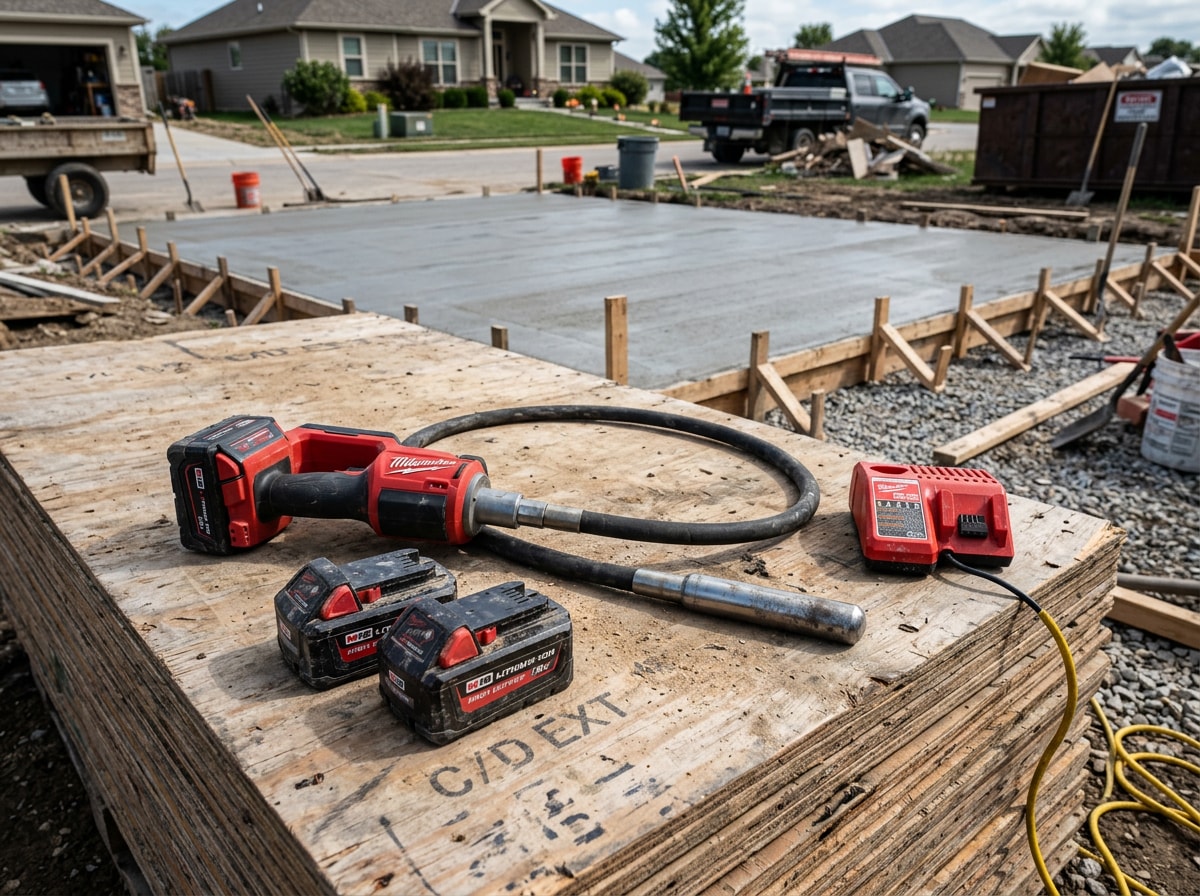
Proper vibration does more than make concrete look smoother. It directly affects structural strength by removing trapped air and reducing porosity, which improves compressive strength and resistance to water penetration over the life of the slab.
ACI guidance calls for vibrator frequency adjustable between roughly 8,000 and 12,000 vibrations per minute depending on mix design and placement conditions, rather than a one-size-fits-all setting. You can stop vibrating at each insertion point once the placement acquires a uniform appearance and its surface starts to glisten, or large bubbles cease to appear. Keep in mind that concrete should not be overvibrated to the point of causing segregation.
The full technical breakdown is in the American Concrete Institute's guide for consolidation of concrete, which covers recommended frequency ranges and application techniques for different mixes.
For a Severn-area pour, the takeaway is simple: a vibrator with the right VPM and amplitude for your mix does more for long-term durability than a slightly cheaper model with inconsistent output. If you're also dealing with an older driveway that's already showing surface damage, our guide on how to get oil out of concrete in Severn, MD covers a related maintenance issue worth knowing before you repour.
Final Buying Advice for Severn, MD Pours
Choose a vibrator by working backward. Start with reinforcement spacing to set the maximum poker diameter that fits, confirm shaft length matches your working distance, decide on power source based on site conditions and pour duration, then check that vibration frequency suits your mix design.
That order, rather than starting with price or brand, tends to reduce honeycombing and produce more predictable results pour after pour. I'm part of the crew at SEJ Paving, and we've run cordless vibrators on dozens of driveway, patio, and footing pours across Anne Arundel County. The buy-versus-rent decision for most homeowners and small contractors comes down to how many pours are planned over the next year or two: one or two projects usually favors renting, while an annual pattern of pours justifies owning a battery platform outright.
If you'd rather skip the tool-buying decision altogether, visit our homepage to see our full range of concrete services, or check out our concrete finishing and concrete paving work in the Severn area. We also serve the nearby Glen Burnie, MD community. Contact us for a free estimate and we'll handle the consolidation, finishing, and everything else.
FAQ
What is the difference between gas, corded, and cordless concrete vibrators?
Gas-powered vibrators offer the longest runtime and highest power for large commercial pours, but add weight, fumes, and maintenance. Corded electric vibrators give unlimited runtime wherever stable power is available, trading mobility for consistency. Cordless concrete vibrators sacrifice some runtime and power, but offer the most freedom of movement, no cord, no hose, no generator, which suits smaller residential and indoor pours particularly well.
What features define the best concrete vibrators?
The best models typically combine 12,000 to 16,000 VPM, variable speed control, a lock-on button for extended use, a waterproof switch, and quick-change brush designs. Professional-grade units often add copper motor windings for durability and a flexible shaft for reaching deep or awkward forms.
What brand of concrete vibrator is recommended for professional use?
Professional crews most often reach for Hilti, Makita, and Milwaukee, along with DEWALT for cordless-specific jobs. No single brand is universally best. The right choice depends on existing battery platforms, typical pour size, and whether a crew needs flexible-shaft reach or compact portability more often.
How long should I vibrate concrete?
Most insertions need 5 to 15 seconds, just long enough for large air bubbles to stop rising and the surface to take on a glossy sheen. Over-vibrating can cause segregation, so pull the poker out once bubbles subside instead of leaving it in longer out of caution.
Can I rent a cordless concrete vibrator instead of buying one?
Yes. Most equipment rental yards carry cordless or corded vibrators by the day or week, which usually makes sense for a single driveway, patio, or footing pour. If you're pouring more than two or three times a year, owning a battery platform you can reuse across other cordless tools often pays for itself faster.
Do I need a vibrator for a small DIY concrete pour?
If the pour includes any rebar, wire mesh, or depth over a few inches, yes. Hand-tamping or rodding alone usually isn't enough to fully consolidate the mix, and skipped vibration is one of the most common causes of cracking and honeycombing in small DIY slabs.
Why do you vibrate concrete?
Vibrating concrete releases trapped air and settles the mix tightly around reinforcement and into form corners, which prevents honeycombing and weak voids. Without proper consolidation, concrete loses compressive strength and becomes more vulnerable to water infiltration and cracking over time.